Report sheds light on pitfalls of H-2B visa program in meatpacking
UFCW releases a statement regarding a report from the Economic Policy Institute on the H-2B visa program.
The United Food and Commercial Workers International Union, which represents 1.2 million essential workers in grocery, meatpacking, food processing, retail and other industries, released the following statement regarding a new report from the Economic Policy Institute on the H-2B visa program. The report demonstrates that the H-2B system has become deeply flawed and has led to depressed wages, wage theft and other workforce issues.
Mark Lauritsen, who is the director of the UFCW’s Food Processing, Packing and Manufacturing Division, released the following statement:
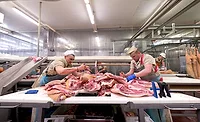
“As the union representing thousands of meatpacking workers across the country, the findings in EPI’s report are alarming. Expanding the use of the H-2B program in the meatpacking industry would drive down wages and working conditions in a sector that provides good, solid jobs in communities across the country, particularly in rural areas.
“Unionized meatpacking plants offer strong wages and benefits that allow workers to take home more money for their families and spend it in their communities. These plants are the economic engine for many local economies. Turning these steady jobs into temporary ones through H-2B would be devastating for states that rely heavily on this industry, like Pennsylvania, Kansas, Minnesota, Texas, Georgia, and many more.
“Meatpacking jobs, and the workers, families, and communities who rely on them, should be protected and invested in, not threatened by expanding failed policies.”
Key report findings
The report from the Economic Policy Institute shows that the H-2B program in its current state is undercutting US wages. In the top 15 H-2B jobs, the average hourly wage paid to H-2B workers was lower than the average hourly wage for all workers in that same job.
In 2024, there were nearly 170,000 H-2B workers employed in the US, a record high. This is more than 2.5 times the size of the original limit of 66,000 set by law.
Over $2.2 billion in wages were stolen from workers, which includes both US-born and immigrant workers, between 2000 and 2024 in the seven major industries in which nearly all H-2B workers are employed.
The EPI report assesses the impact of potential changes to the H-2B program in the meatpacking industry. The industry employs about 560,000 workers, many of whom are represented by UFCW. These workers earn a combined payroll of nearly $30 billion.
Granting permanent status, or a green card, to H-2B workers in the meatpacking industry would raise wages for workers and grow the local economies where meatpacking plants are located by $2.6 billion.
The average economic boost from granting permanent status would be $85 million per state in the 23 states that account for 80% of all meatpacking.
Source: United Food and Commercial Workers International Union
Looking for a reprint of this article?
From high-res PDFs to custom plaques, order your copy today!