Classic BOM vs. reverse BOM: what works best for meat and poultry processors
Rather than combining many inputs into one output, a reverse bill of materials tracks how one input is broken out into many outputs.
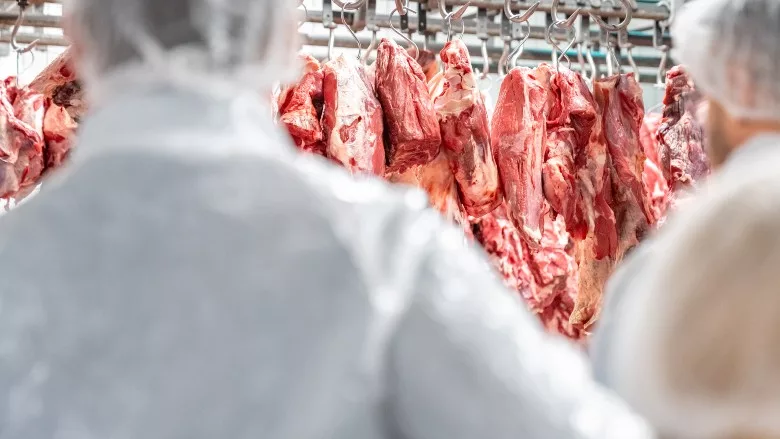
Ask most Enterprise Resource Planning (ERP) vendors whether their system can handle meat processing, and the answer is almost always yes. Dig a little deeper, and a familiar problem tends to surface: their platform was built around a production model that has never really fit how meat and poultry operations work. No amount of configuration fixes that. The mismatch runs deeper, and it starts with the bill of materials, or BOM.
How the standard BOM works — and where it breaks down
The standard BOM was built for assembly. Whether you are manufacturing an airplane, building a bicycle, or making a pot of soup, the logic is the same: take multiple defined inputs and combine them into a single finished output. This works well for formulated foods and packaged goods where finished products are assembled from consistent components in predictable quantities.
Meat and poultry processing runs in the opposite direction. A processor does not start with a set of ingredients and produce a defined quantity of finished goods. They start with a single large raw material, whether a carcass, a primal, or a whole bird, and break it down into multiple outputs. The proportion of those outputs is not fixed. It shifts with every animal, every cutting specification, and every change in customer demand. Processors who try to manage that through a standard BOM end up with costing they cannot trust, yield data that lags reality, and production records that someone has to manually correct, usually at the end of a shift when it is too late to do anything about it.
The reverse BOM and the production worksheet
The correct framework is the reverse BOM. Rather than combining many inputs into one output, a reverse BOM tracks how one input is broken out into many outputs. In practice, this takes the form of a production worksheet: a structured record of raw material consumption and the multiple parts it yields across a production run.
The real advantage of this model is flexibility. A well-designed production worksheet lets processors predefine blends, essentially templates that specify what outputs can potentially be made from a given input, while leaving room to adjust on the fly when market demand shifts or incoming animals grade differently than expected. Rather than locking processors into a fixed plan, the system is built to handle the variability this industry runs on.
A reverse BOM also needs to handle units of weight (pounds, kilograms) and units of volume (boxes, cases) simultaneously and independently. In meat and poultry operations, these two measures do not always move together. Case weights vary; box fills fluctuate. A system that cannot track both at the same time will generate inventory and costing records that are perpetually slightly off, and at the scale most processors operate, small inaccuracies accumulate into significant distortions.
The cost challenge
Cost allocation in a reverse BOM environment is one of the more demanding problems in food ERP. When a single carcass yields outputs with widely different market values, distributing input costs evenly by weight produces misleading profitability data. A high-value center-cut loin and a low-value trim byproduct should not necessarily absorb the same cost per pound of raw material.
Processors need the ability to choose how costs are allocated and to change that choice as the business requires. That might mean assigning zero cost to byproduct, allocating at break-even, distributing proportionally, or using a market-based approach tied to expected selling prices. There is no single right answer; it depends on the operation, the product mix, and what the market is doing. Alongside that flexibility, real-time yield visibility, with data flowing directly from the production floor rather than from a manual end-of-shift reconciliation, is what allows a processor to actually act on cost information when it matters.
AI and the data foundation it will require
Artificial intelligence is drawing growing attention across the meat and poultry industry.
Large-scale AI adoption on the processing floor is still in its early stages, but the direction of the technology points toward applications that could meaningfully change how processors manage yield, cutting decisions, and cost optimization. Yield prediction, dynamic cut optimization based on live market pricing, and real-time irregularity detection on production data are all plausible near-term developments, and each one depends on the same prerequisite: clean, structured, historical production data.
A processor running on spreadsheets and manual reconciliations does not have a data problem that AI will solve; they have a data problem that AI will make more visible. Processors already capturing real-time yield data, tracking inputs and outputs at the lot level, and managing costs through a structured reverse BOM system are building the kind of operational record that future AI tools will actually be able to use. The more pressing question is whether your production system is generating accurate, real-time, structured data at all. For many processors, the honest answer is no. And the reason usually comes back to the same place: a production model built on the wrong kind of BOM.
The right model for the way this industry works
The reverse BOM is not a workaround or a niche requirement for specialist operations. It is the right production model for an industry that starts with whole animals and works forward into variable outputs. Getting it right, with flexible blending, dual-unit tracking, configurable cost allocation, and real-time yield visibility, gives processors a reliable picture of what is actually happening on the floor. That matters today. It will matter even more as AI tools begin to find a genuine footing in this industry.
Looking for a reprint of this article?
From high-res PDFs to custom plaques, order your copy today!



