Provisioner logo
Provisioner logo
search
cart
facebook twitter linkedin youtube
  • Sign In
  • Create Account
  • Sign Out
  • My Account
Provisioner logo
Provisioner logo
  • NEWS
    • Industry News
    • Supplier News
    • Case Studies
    • Recalls
    • Regulations
    • New Consumer Products
  • EXCLUSIVES
    • Newsletters
    • Source Book
    • Sponsored Insights
    • Events
    • Webinars
    • Classifieds
    • White Papers
    • Provisioner Store
    • Market Research
  • MEAT PROCESSING
    • SUSTAINABILITY
    • Processing
    • Packaging
    • Ingredients
    • Formulation
    • Food Safety
    • Special Reports
    • Commentary
  • PROFILES
    • Processor Profiles
    • Processor of the Year
    • Top 100 Processors
  • MEDIA
    • Videos
    • Podcasts
  • DIRECTORY
  • MIHOF
  • INDEPENDENT PROCESSOR
  • EMAG
    • eMagazine
    • ARCHIVE ISSUES
    • Contact
    • Advertise
  • JOIN!
Meat and Poultry Industry NewsPackagingFood Safety

Real-time inspection helps meat processors catch seal defects on the line

Longer distribution chains, higher package-integrity standards and labor shortages are increasing demand for repeatable sealing performance.
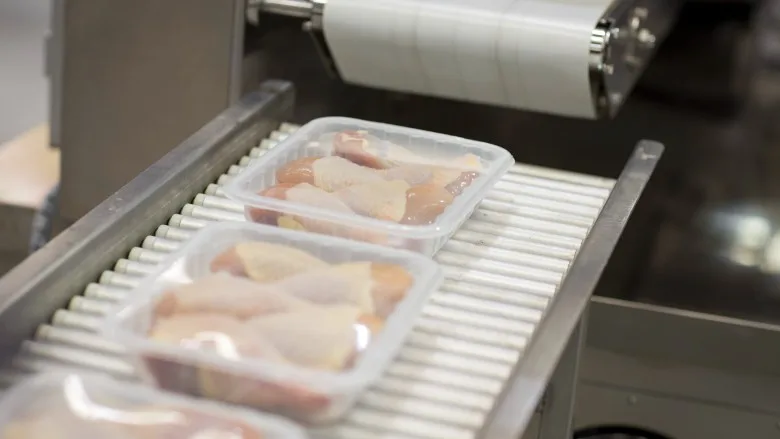
By Sammy Bredar
Ossid Reemaster chicken tray sealer
Courtesy of Ossid

Ossid Reemaster chicken tray sealer

July 27, 2026

Food safety controls are critical at every point of meat and poultry production, including when products reach the packaging line. Seal consistency, package integrity and the ability to identify defects before products leave the plant are critical to protecting products throughout complex distribution chains.

The National Provisioner spoke with Ossid's Andrew Birdwell, vice president of sales, to discuss changing processor expectations, the role of packaging equipment in reducing seal variability and how automated and integrated inspection technologies can support food safety efforts.
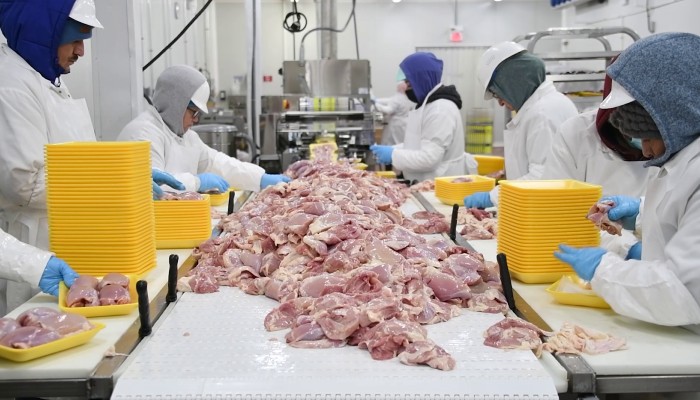
Ossid chicken processingCourtesy of Ossid

What packaging-related food safety challenges are meat and poultry processors most concerned about today?

Andrew Birdwell: Meat and poultry processors are facing an increasingly complex food safety landscape, especially when it comes to packaging, driven by tighter regulations, evolving product offerings and rising retailer and consumer expectations.

Even after a product is fully cooked or processed, packaging remains a critical control point. Processors are focused on preventing contamination and avoiding costly product recalls that could significantly impact brand reputation. One potential vulnerability in product integrity is the package seal. Even microscopic leaks can allow oxygen or bacteria to enter, jeopardizing shelf life and safety, especially in vacuum or modified atmosphere packaging (MAP) applications.

To mitigate these risks, meat processors are increasingly looking for packaging solutions that deliver consistent, repeatable seal quality, along with built-in validation features. Modern systems are capable of producing a variety of packaging styles, such as MAP, vacuum skin, tray lidding and thermoforming, and offer precise control over sealing parameters, helping ensure hermetic seals across a wide range of materials and product types. Advanced features like inline inspection, vacuum and gas control, and robust machine construction provide greater confidence that every package leaving the line meets strict safety and quality standards.

How have meat processor expectations around package integrity changed in recent years?

Andrew Birdwell: Meat processors’ expectations around package integrity have risen significantly in recent years, driven by food safety concerns, longer distribution chains, sustainability demands, and increased scrutiny from retailers and consumers. What was once considered “acceptable quality” is no longer sufficient; today’s standard is closer to zero-defect packaging with comprehensive validation and traceability.

To meet these evolving requirements, processors are increasingly turning to advanced packaging technologies with a proven track record in demanding protein applications. These technologies enhance seal integrity, minimize package variability, and support consistent, repeatable performance. By combining precision engineering with data-driven process control, modern packaging solutions help processors reduce risk, ensure compliance and achieve the level of package integrity required for today’s supply chains.

How can packaging equipment help meat processors improve package integrity and product protection?

Andrew Birdwell: Packaging equipment plays a vital role in helping meat processors enhance package integrity and overall product protection, especially as food safety expectations, shelf-life requirements, and distribution challenges continue to grow. Packaging solutions now go beyond simply sealing a package; they actively monitor, verify, and optimize each step of the process.

Packaging machinery is designed to ensure consistent, hermetic seals, which are essential for preventing contamination and leaks. This is achieved through servo-driven sealing systems that precisely control pressure, temperature and dwell time, as well as controlled sealing jaws that adapt to variations in film thickness or product load.

A high-quality packaging solution specifically tailored for meat processing environments supports package integrity by emphasizing repeatable sealing performance, process consistency, and durable machine design suitable for demanding protein applications. In meat processing environments, variability in product size and throughput pressure can challenge consistency. This level of control helps reduce the risk of weak seals, seal contamination and downstream package failures.

Additionally, modern packaging equipment can incorporate inspection and validation features that help identify seal defects, misalignment, or film issues in real time. This shift toward integrated quality control enables processors to move closer to zero-defect packaging while improving line efficiency and reducing waste.

Looking ahead, how do you see meat processors utilizing packaging technologies to strengthen their food safety efforts?

Andrew Birdwell: Automation and smart packaging technologies are helping meat processors strengthen food safety, improve efficiency and maintain consistent product quality. By reducing human variability and enabling precise, repeatable processes, automated packaging systems lower contamination risks and help ensure every package meets strict quality standards.

One key advantage of modern automated packaging systems is the use of pre-programmed recipes. With ongoing labor shortages and high turnover rates, these recipes allow operators of all skill levels to quickly switch between products while maintaining exact specifications for sealing, portioning and packaging conditions.

Beyond immediate operational benefits, automation and smart packaging solutions also position manufacturers for future growth. Scalable systems can adapt to increasing production demands, new product formats, and evolving regulatory requirements without requiring a complete overhaul of existing lines, ensuring investments made today continue to deliver long-term value.

KEYWORDS: automation Ossid sealing

Share This Story

Looking for a reprint of this article?
From high-res PDFs to custom plaques, order your copy today!


Sbredar headshot

Sammy Bredar is Group Editor of The National Provisioner and Dairy Foods. She covers the meat and dairy processing industries while leading editorial coverage of membrane technology across both publications. Bredar serves on the Board of Directors of the Women's Meat Industry Network and earned a bachelor's degree in English literature from Ball State University.

Recommended Content

JOIN TODAY
to unlock your recommendations.

Already have an account? Sign In

  • A cow eating grass and a chicken standing next to it in a field.

    The Top 100 Meat & Poultry Processors of 2026

    The 2026 Top 100 Meat & Poultry Processors highlights...
    Meat and Poultry Processing
    By: Fred Wilkinson
  • Breaded chicken nuggets on a white plate.

    Food safety programs prioritize prevention, verification, and traceability

    Across processing operations, food safety strategies are...
    Food Safety
    By: Sammy Bredar
  • An open double cheeseburger on a white plate, the top bun beside it, along with a side of seasoned fries.

    How convenience is driving summer grilling innovation in 2026

    Demand for high-quality, convenience-driven formats...
    Independent Processor
    By: Sammy Bredar
You must login or register in order to post a comment.

Report Abusive Comment

Manage My Account
  • eMagazine Subscriptions
  • Manage My Preferences
  • Newsletters
  • Online Registration
  • Subscription Customer Service
  • Connect with The National Provisioner

More Videos

Sponsored Content

Sponsored Content is a special paid section where industry companies provide high quality, objective, non-commercial content around topics of interest to the The National Provisioner audience. All Sponsored Content is supplied by the advertising company and any opinions expressed in this article are those of the author and not necessarily reflect the views of The National Provisioner or its parent company, BNP Media. Interested in participating in our Sponsored Content section? Contact your local rep!

close
  •  two individuals standing by a farm gate
    Sponsored byPIC

    When PRRS Hits Home: The Chinn Family’s Story and a Hopeful Future

  • A smiling man carrying a grocery basket is reaching down to pick up a package of meat in a grocery store.
    Sponsored byPIC

    The Green Light: New Data Shows 12-to-1 Support for Pork from PRRS-Resistant Pigs

  • Close up of a grocery cart full of groceries, a cropped image of a couple pushing the cart and a blurred background of the vegetable aisle.
    Sponsored byPIC

    New Market Research Finds Consumers in Eight Key Pork Markets Are Likely to Purchase Pork from Gene-Edited Pigs

Popular Stories

Kroger logo

Kroger to acquire Giant Eagle for $1.65B

Corporate headquarters groundbreaking

PS Seasoning and Pro Smoker reveal new parent company at headquarters groundbreaking

Farmshare

News and new products from the AAMP 2026 expo floor, part 1

2026 Top 100 Meat & Poultry Processors Report

Events

January 1, 2030

Webinar Sponsorship Information

For webinar sponsorship information, visit www.bnpevents.com/webinars or email webinars@bnpmedia.com.

View All Submit An Event

Products

Food Crime: An Introduction to Deviance in the Food Industry

Food Crime: An Introduction to Deviance in the Food Industry

See More Products
The National Provisioner 2026 Food Safety Report

Related Articles

  • New company helps meat processors improve food safety

    See More
  • Sustainability on the Line: Reducing energy usage and material waste to reduce carbon footprint and cut costs

    See More
  • Niche Meat Processors Assistance Network launches new resource on the basics of local meat processing

    See More

Related Products

See More Products
  • meat inspection.jpg

    Meat Inspection and Control in the Slaughterhouse

See More Products

Related Directories

  • Missouri Assn. of Meat Processors

    The Missouri Association of Meat Processors was founded in 1939, by a small group of meat business operators who were looking for a way to promote their products and businesses. MAMP helps members expand into new markets and learn new skills. Its dual mission of protection and education for members are enhanced by unique marketing opportunities available through the Association. MAMP provides 10 newsletters a year and provides training to keep the small processor ahead of the trends.
  • Pennsylvania Assn. of Meat Processors

    The Pennsylvania Association of Meat Processors was formed in 1939, when a group of frozen food locker owners formed a support group. Our current members range from Processors, Slaughter, Retail, Catering, Game Processing and Suppliers in the industry. PAMP is affiliated with the American Association of Meat Processors. We hold an annual convention every May with educational classes and a supplier showcase. We would love to have you join and attend our show.
  • American Assn. of Meat Processors

    The American Association of Meat Processors (AAMP) is North America’s largest meat trade organization. Membership includes more than 1,600 medium-sized and smaller meat, poultry, and food businesses: slaughterers, packers, processors, wholesalers, in-home food service business, retailers, deli and catering operators, and industry suppliers.
×

Stay ahead of the curve. Unlock a dose of cutting-edge insights.

Receive our premium content directly to your inbox.

SIGN-UP TODAY
  • RESOURCES
    • Advertise
    • Contact Us
    • Directories
    • Store
    • Want More
  • SIGN UP TODAY
    • Create Account
    • eMagazine
    • Newsletter
    • Customer Service
    • Manage Preferences
  • SERVICES
    • Marketing Services
    • Reprints
    • Market Research
    • List Rental
    • Survey/Respondent Access
  • STAY CONNECTED
    • LinkedIn
    • Facebook
    • YouTube
    • X (Twitter)
  • PRIVACY
    • PRIVACY POLICY
    • TERMS & CONDITIONS
    • DO NOT SELL MY PERSONAL INFORMATION
    • PRIVACY REQUEST
    • ACCESSIBILITY

Copyright ©2026. All Rights Reserved BNP Media, Inc. and BNP Media II, LLC.

Design, CMS, Hosting & Web Development :: ePublishing

