Provisioner logo
Provisioner logo
search
cart
facebook twitter linkedin youtube
  • Sign In
  • Create Account
  • Sign Out
  • My Account
Provisioner logo
Provisioner logo
  • NEWS
    • Industry News
    • Supplier News
    • Case Studies
    • Recalls
    • Regulations
    • New Consumer Products
  • EXCLUSIVES
    • Newsletters
    • Source Book
    • Sponsored Insights
    • Events
    • Webinars
    • Classifieds
    • White Papers
    • Provisioner Store
    • Market Research
  • MEAT PROCESSING
    • SUSTAINABILITY
    • Processing
    • Packaging
    • Ingredients
    • Formulation
    • Food Safety
    • Special Reports
    • Commentary
  • PROFILES
    • Processor Profiles
    • Processor of the Year
    • Top 100 Processors
  • MEDIA
    • Videos
    • Podcasts
  • DIRECTORY
  • MIHOF
  • INDEPENDENT PROCESSOR
  • EMAG
    • eMagazine
    • ARCHIVE ISSUES
    • Contact
    • Advertise
  • JOIN!

Regulations & Legislation

Condemnation by concensation

By Dennis R. Johnson
September 11, 2013

Of all the sanitation issues that can occur in processing facilities, condensation is one of the most common. Simply put, condensation is the formation of liquid on a surface caused by the temperature difference between the cool surface and warmer, moist air. Condensation is not limited to summer; it can occur throughout the year due to plant-wide variations in temperature. 

Before addressing condensation, it is important to emphasize that not all moisture on surfaces is caused by condensation. For example, moisture during pre-operational activities might be the result of overspray during cleaning, not condensation. Water dripping from a pipe might be caused by a leak. An establishment needs to address such occurrences, but should not document the occurrence as condensation. Such mischaracterizations can come back to haunt an establishment if regulatory action is taken because of repeated condensation findings.

Under the Food Safety and Inspection Service’s (FSIS) Sanitation Performance Standards, an establishment must control condensation: “to the extend necessary to prevent adulteration of product and the creation of insanitary conditions.” 9 CFR § 416.2(d). This could be interpreted as a zero tolerance for condensation, but that is not the case. A non-compliance only occurs if there is adulteration of product or creation of an insanitary condition. To avoid regulatory entanglements, an establishment should understand the regulatory implications of condensation.

As an initial matter, not all condensation will cause adulteration of product. Under FSIS policy, if condensation comes from a clean and sanitized surface (and this has been documented in a SSOP or SOP program), condensation contacting product does not result in adulteration, nor would it lead to an insanitary condition.

If the condensation does not directly contact product and it is not likely to do so, either because the product is protected (e.g., already packaged in a can) or the condensation is not in an exposed product area, there is no adulteration. However, the presence of condensation in these situations could create an insanitary condition.

In determining whether condensation constitutes an insanitary condition, FSIS will look to the frequency (recurrence), the magnitude of the condensation and how the condensation could result in an insanitary condition (e.g., spreading through the facility by employees’ foot traffic, causing boxes to become wet, etc.). Each occurrence of condensation can be linked to demonstrate an unwillingness or inability to comply with the condensation standard. For linkage, it makes no difference whether the condensation contaminated product or whether condensation occurred in different areas of the plant; all situations where insanitary conditions occur are added together.

To minimize problems:

  • When documenting condensation in your own programs, do not mischaracterize situations which are not condensation, otherwise those instances are counted as a condensation (and in this case, more is not better).
  • Whenever possible, use stainless steel on surfaces where condensation can form and include daily sanitation and inspection of these surfaces in your SSOP.
  • Respond to condensation by seeking to eliminate its occurrence rather than control the condensation before it drips. It is far better to improve ventilation and air exchange than to have a “bucket brigade” wiping down surfaces.
  • Be alert to possible linkage by inspectors. Do not mindlessly repeat the same corrective actions. If you are undertaking a facility improvement, work with the inspector on the improvement and timing. Even if there is agreement, you still need to put interim measures in place to address condensation.

Given the nature of processing operations, condensation may be reasonably likely to occur, but that does not mean regulatory non-compliance is inevitable.

KEYWORDS: government and agency regulations meat and poultry processors sanitation

Share This Story

Looking for a reprint of this article?
From high-res PDFs to custom plaques, order your copy today!


Dennis R. Johnson is a principal with Olsson Frank Weeda Terman Matz PC in Washington, D.C. Mr. Johnson has 30 years experience in food-safety law and regulation, representing large and small meat and poultry companies.

Recommended Content

JOIN TODAY
to unlock your recommendations.

Already have an account? Sign In

  • Double Charburger

    Premiumization drives burger category

    Shoppers seek out premium meat offerings to fulfill...
    Meat and Poultry Industry News
    By: Sammy Bredar
  • JJS Adult Pekin duck

    Poultry Report 2025: Convenience propels poultry at retail

    Despite continued economic pressures, the poultry...
    Meat and Poultry Industry News
    By: Sammy Bredar
You must login or register in order to post a comment.

Report Abusive Comment

Manage My Account
  • eMagazine Subscriptions
  • Manage My Preferences
  • Newsletters
  • Online Registration
  • Subscription Customer Service
  • Connect with The National Provisioner

More Videos

Sponsored Content

Sponsored Content is a special paid section where industry companies provide high quality, objective, non-commercial content around topics of interest to the The National Provisioner audience. All Sponsored Content is supplied by the advertising company and any opinions expressed in this article are those of the author and not necessarily reflect the views of The National Provisioner or its parent company, BNP Media. Interested in participating in our Sponsored Content section? Contact your local rep!

close
  • A smiling man carrying a grocery basket is reaching down to pick up a package of meat in a grocery store.
    Sponsored byPIC

    The Green Light: New Data Shows 12-to-1 Support for Pork from PRRS-Resistant Pigs

  • Close up of a grocery cart full of groceries, a cropped image of a couple pushing the cart and a blurred background of the vegetable aisle.
    Sponsored byPIC

    New Market Research Finds Consumers in Eight Key Pork Markets Are Likely to Purchase Pork from Gene-Edited Pigs

  • Close up of a young pig with a blurred background.
    Sponsored byPIC

    New Research Forecasts Significant Economic and Market Impacts with PRRS-Resistant Pig Adoption

Popular Stories

Spam Dog

Hormel rolls out Spam hot dog for foodservice applications

Niman Ranch Uncured Grass-Fed Beef Bacon

Niman Ranch introduces beef bacon

Various new Primal snack sticks on a table amongst pencils, apples, a pair of glasses, lunch bags and a water bottle.

Protein demand drives snacking occasions

2026 Top 100 Meat & Poultry Processors Report

Events

June 11, 2026

From Fresh to Frozen in 3 Minutes Flat: Unlocking the Secrets to Temperature Control

Join Tony Vacaro, Foods Industry Manager, and Emile Klein, Foods Market Strategy Manager at Air Products and Chemicals, Inc. , as they tackle key questions surrounding heat removal in food processing. 

January 1, 2030

Webinar Sponsorship Information

For webinar sponsorship information, visit www.bnpevents.com/webinars or email webinars@bnpmedia.com.

View All Submit An Event

Products

Food Crime: An Introduction to Deviance in the Food Industry

Food Crime: An Introduction to Deviance in the Food Industry

See More Products
From Fresh to Frozen in 3 Minutes Flat: Unlocking the Secrets to Temperature Control Webinar Sponsored by Air Products

Related Articles

  • Pathogen subtyping: methods and uses

    See More
  • Purchasing raw intact beef for non-intact uses

    See More
  • FSIS proposes mandating grinding logs at establishments, retailers

    See More

Related Products

See More Products
  • utilization.jpg

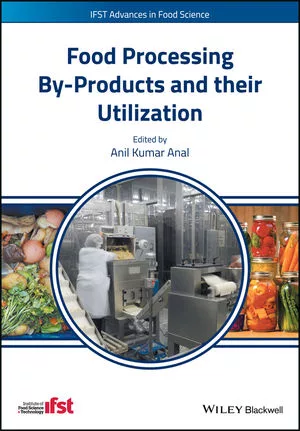
    Food Processing By-Products and their Utilization

  • Food Plant Sanitation: Design, Maintenance, and Good Manufacturing Practices, Second Edition

See More Products

Events

View AllSubmit An Event
  • January 25, 2023

    Facility Inspection Package Training by USDA-APHIS

    Are you engaged in your company's export activities? Specifically, preparing inspections packages for rendered products, animal-based feed or pet food? Then join us for an interactive training and Q&A with USDA-APHIS. Learn directly from APHIS how to better prepare packets and for facility inspections. This program is ideal for those actively preparing packets and facility inspections and those working directly with APHIS field staff (not a policy meeting).This agenda has been approved for 4 ARPAS CEU's.
View AllSubmit An Event
×

Stay ahead of the curve. Unlock a dose of cutting-edge insights.

Receive our premium content directly to your inbox.

SIGN-UP TODAY
  • RESOURCES
    • Advertise
    • Contact Us
    • Directories
    • Store
    • Want More
  • SIGN UP TODAY
    • Create Account
    • eMagazine
    • Newsletter
    • Customer Service
    • Manage Preferences
  • SERVICES
    • Marketing Services
    • Reprints
    • Market Research
    • List Rental
    • Survey/Respondent Access
  • STAY CONNECTED
    • LinkedIn
    • Facebook
    • YouTube
    • X (Twitter)
  • PRIVACY
    • PRIVACY POLICY
    • TERMS & CONDITIONS
    • DO NOT SELL MY PERSONAL INFORMATION
    • PRIVACY REQUEST
    • ACCESSIBILITY

Copyright ©2026. All Rights Reserved BNP Media, Inc. and BNP Media II, LLC.

Design, CMS, Hosting & Web Development :: ePublishing