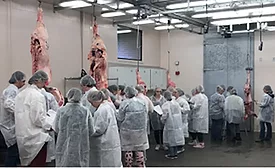
The Arkansas-based processor has a customer base ranging from individual farm families raising one or two animals per year for personal consumption all the way up to large direct-to-consumer e-commerce brands shipping product nationwide.
This year’s event features three activity options before the convention, various educational sessions, some product demos, a cured-meat competition, a large show floor and more.
Beef producers continue to address the challenge of improving production efficiency and sustainability while balancing the consumer demand for high-quality, tender, fresh beef. Feeding strategies to improve the efficiency of beef cattle production, such as supplementation of the beta-agonist ractopamine hydrochloride (RH) and the trace mineral zinc (Zn), can positively impact the sustainability of beef production.
Most people in the United States had never experienced empty store shelves, but the pandemic in 2020 provided evidence of the lack of robustness in the meat supply chain.
U.S. Department of Labor investigation finds the company employed at least two 16- and 17-year-old children to operate meat-processing equipment in violation of federal child-labor hazardous orders.
The Department of Animal Sciences at Washington State University (WSU) with approximately 550 undergraduate students has recently reinvigorated its offering of meat science-focused classes, extension programs, and student opportunities.
The PRIME Act would amend the Federal Meat Inspection Act to allow custom slaughter facilities to sell uninspected meat directly to consumers, restaurants and foodservice, as well as at retail.