Since 1963, Meats by Linz has been crafting a legacy built on precision cuts, portion control and premium Angus, all while modernizing to meet evolving demands.
While positive effects of dry aging on meat quality attributes have been reported in several scientific studies, specific chemical compounds associated with this unique dry-aging flavor have not been fully established.
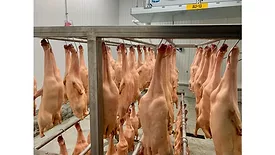
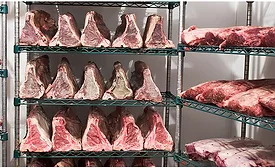
Dry aging, whereby storing whole beef carcasses or unpackaged primals/subprimals in a controlled cooler, has been practiced for decades as a traditional butchery process.
Dry-aging is a traditional butchery process to store whole carcasses or unpackaged primals or sub-primals under a controlled environment for a certain period of time.
After years of meat science education, research and experience, I have gained a better understanding of the mechanisms of beef aging and differences in eating quality that can be derived from it.