Provisioner logo
Provisioner logo
search
cart
facebook twitter linkedin youtube
  • Sign In
  • Create Account
  • Sign Out
  • My Account
Provisioner logo
Provisioner logo
  • NEWS
    • Industry News
    • Supplier News
    • Case Studies
    • Recalls
    • Regulations
    • New Consumer Products
  • EXCLUSIVES
    • Newsletters
    • Source Book
    • Sponsored Insights
    • Events
    • Webinars
    • Classifieds
    • White Papers
    • Provisioner Store
    • Market Research
  • MEAT PROCESSING
    • SUSTAINABILITY
    • Processing
    • Packaging
    • Ingredients
    • Formulation
    • Food Safety
    • Special Reports
    • Commentary
  • PROFILES
    • Processor Profiles
    • Processor of the Year
    • Top 100 Processors
  • MEDIA
    • Videos
    • Podcasts
  • DIRECTORY
  • MIHOF
  • INDEPENDENT PROCESSOR
  • EMAG
    • eMagazine
    • ARCHIVE ISSUES
    • Contact
    • Advertise
  • JOIN!
Food Safety

Food Safety

Bacteriophages: Ready for battle

Bacteriophages are on the market but have not garnered mainstream acceptance as quickly as anticipated.

By Megan Pellegrini
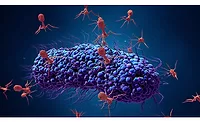
Bacteriophages naturally exist in the environment and have long been studied for their ability to infect and kill pathogens

Bacteriophages naturally exist in the environment and have long been studied for their ability to infect and kill pathogens.

September 20, 2016

Bacteriophages have been the next big thing for several years. Will this be the year phages break through for critical acceptance?

“From a research perspective, product applications and interest have certainly increased,” says Manan Sharma, Ph.D., research microbiologist at the Environmental Microbial & Food Safety Lab, U.S. Department of Agriculture, Agricultural Research Service, based in Beltsville, Md. “There could be more applications, public acceptance and improved methodology going forward.”

Bacteriophages naturally exist in the environment and have long been studied for their ability to infect and kill pathogens. They fell out of favor in the 20th century after antibiotics were discovered, but are regaining interest as a natural alternative to chemical antimicrobials and antibiotics.

“Very few companies have an approved product on the market,” says Tom Denes, Ph.D., assistant professor, University of Tennessee at Knoxville.

Researchers use different methodologies for phage application studies but the same language is used to describe the results, which makes the data hard to compare across studies, Denes says.

How it works

Phages are either imbedded in the product or applied to the surface of a product to kill pathogens, Denes says. According to Denes, post-harvest surface applications generally work better than imbedding.

Companies also see better results when they use higher concentrations of phages, he says.

“So, how much phage can be produced in a cost effective manner?” Denes asks.

Using a variety of phages produces a cocktail that is more effective against pathogens, Sharma says.

“The key is to figure out when to apply phages in the processing chain,” he says. “And it depends on the nature of the pathogens, as well.”

If processors apply a high number of phages to inoculate the product, they will get a quick reduction but not much effect after that, Sharma says.

“From looking at several papers, phages can reduce populations of pathogens, and combined with refrigeration temperatures of 4 degrees Celsius, will prevent E. coliand Salmonellaspp. from resuscitation in most cases,” he says.

What’s new

It’s hard to get market data on product use from the companies, but intervention options are limited, says Jason Gill, Ph.D., assistant professor of bacteriophage biology & microbiology in the Department of Animal Science at Texas A&M University, based in College Station, Texas.

An anti-O157:H7 phage product continues to be used as a pre-harvest intervention in cattle, he says.

“The product was recently spun off to [a company that is] continuing to market and develop the product,” Gill says. He adds that the product is reportedly used by several large beef processors, particularly in summer months when O157 prevalence is high. Development continues for phage products against the shiga-toxigenic E. coli (STEC), Salmonella and Campylobacter.

“Poultry is a big application but when, where and how to use phages in that system is still being worked on by the companies,” Gill says.

The poultry industry has generally been receptive to phages and some products are being used, he says.

“But the phage has to be both effective and economical for the industry to adopt it,” says Gill. “Some applications may work okay but require so much phage that it’s no longer economical. These issues are still being worked out for new applications.” 

In some applications, phages are also competing with tools like lactic acid and peroxyacetic acid (PAA), which are very inexpensive. 

“Salmonella in poultry has been a tough one partly because it’s a very diverse species, unlike E. coli O157 or Listeria monocytogenes, so getting good efficacy against all serovars [a distinct variation within a species of bacteria or virus] can be tough,” Gill says.

Poultry processors still need to figure out where to intervene in the pre- or post-harvest process:  should the phage be fed to the live birds, sprayed on live birds before harvest, put in the chill water, etc.

“A big seven ETEC (E. coli) phage for beef has been in development for a while and hopefully will be on the market in a year or so,” Gill says.

What’s possible

An improved understanding of bacteriophages by the public will make it more likely that producers use them in the future, Denes says.

“People don’t understand that bacteriophages are abundant in the environment and in food,” he says.

To better select phages for applications, more research needs to be conducted on how phages interact with pathogens and how they attach themselves to bacteria, Denes says.

“I absolutely think phages have value, but the question is: What are the best ways to use them?” Denes says. “As more work is done, the products will improve. Phages evolve, so there are almost endless possibilities of their potential.”

Phage research is continuing on the same path and the rate of discovery is increasing, notes Sharma.

“More comprehensive studies are being conducted in a shorter amount of time,” says Sharma. “From a research perspective, we can focus on execution now, not on design. So the enzymes in phages, for example, can be further explored and exploited to target bacteria.” NP

KEYWORDS: Bacteriophages food-safety ingredients

Share This Story

Looking for a reprint of this article?
From high-res PDFs to custom plaques, order your copy today!


Megan pellegrini
Megan Pellegrini is a contributing writer.

Recommended Content

JOIN TODAY
to unlock your recommendations.

Already have an account? Sign In

  • Double Charburger

    Premiumization drives burger category

    Shoppers seek out premium meat offerings to fulfill...
    Burgers
    By: Sammy Bredar
  • JJS Adult Pekin duck

    Poultry Report 2025: Convenience propels poultry at retail

    Despite continued economic pressures, the poultry...
    Chicken
    By: Sammy Bredar
You must login or register in order to post a comment.

Report Abusive Comment

Manage My Account
  • eMagazine Subscriptions
  • Manage My Preferences
  • Newsletters
  • Online Registration
  • Subscription Customer Service
  • Connect with The National Provisioner

More Videos

Sponsored Content

Sponsored Content is a special paid section where industry companies provide high quality, objective, non-commercial content around topics of interest to the The National Provisioner audience. All Sponsored Content is supplied by the advertising company and any opinions expressed in this article are those of the author and not necessarily reflect the views of The National Provisioner or its parent company, BNP Media. Interested in participating in our Sponsored Content section? Contact your local rep!

close
  • A smiling man carrying a grocery basket is reaching down to pick up a package of meat in a grocery store.
    Sponsored byPIC

    The Green Light: New Data Shows 12-to-1 Support for Pork from PRRS-Resistant Pigs

  • Close up of a grocery cart full of groceries, a cropped image of a couple pushing the cart and a blurred background of the vegetable aisle.
    Sponsored byPIC

    New Market Research Finds Consumers in Eight Key Pork Markets Are Likely to Purchase Pork from Gene-Edited Pigs

  • Close up of a young pig with a blurred background.
    Sponsored byPIC

    New Research Forecasts Significant Economic and Market Impacts with PRRS-Resistant Pig Adoption

Popular Stories

Spam Dog

Hormel rolls out Spam hot dog for foodservice applications

Various new Primal snack sticks on a table amongst pencils, apples, a pair of glasses, lunch bags and a water bottle.

Protein demand drives snacking occasions

Several cuts of beef, pork and chicken on a wooden board, cast iron pan and salt.

Validated thermal lethality data and a new tool for ensuring safety of RTE meats

2026 Top 100 Meat & Poultry Processors Report

Events

June 11, 2026

From Fresh to Frozen in 3 Minutes Flat: Unlocking the Secrets to Temperature Control

Join Tony Vacaro, Foods Industry Manager, and Emile Klein, Foods Market Strategy Manager at Air Products and Chemicals, Inc. , as they tackle key questions surrounding heat removal in food processing. 

January 1, 2030

Webinar Sponsorship Information

For webinar sponsorship information, visit www.bnpevents.com/webinars or email webinars@bnpmedia.com.

View All Submit An Event

Products

Food Crime: An Introduction to Deviance in the Food Industry

Food Crime: An Introduction to Deviance in the Food Industry

See More Products
From Fresh to Frozen in 3 Minutes Flat: Unlocking the Secrets to Temperature Control Webinar Sponsored by Air Products

Related Articles

  • Bacteriophages Fighting Bacteria

    Phages: Ready for the next step?

    See More
  • Our take: Tyson, Pilgrim’s Pride battle for Hillshire Brands

    See More
  • Cybersecurity

    Food security: Are you ready for the next cyberattack?

    See More

Related Products

See More Products
  • advanced tech.jpg

    Advanced Technologies for Meat Processing

  • meat.jpg

    Non-Thermal Processing Technologies for the Meat, Fish, and Poultry Industries

  • food safety.jpg

    Food Safety in the Seafood Industry: A Practical Guide for ISO 22000 and FSSC 22000 Implementation

See More Products

Related Directories

  • International Assn. for Food Protection

    The International Association for Food Protection (IAFP) represents a broad range of members with a singular focus — protecting the global food supply. Within the association, you will find educators, government officials, microbiologists, food industry executives and quality control professionals who are involved in all aspects of growing, storing, transporting, processing and preparing all types of foods.
×

Stay ahead of the curve. Unlock a dose of cutting-edge insights.

Receive our premium content directly to your inbox.

SIGN-UP TODAY
  • RESOURCES
    • Advertise
    • Contact Us
    • Directories
    • Store
    • Want More
  • SIGN UP TODAY
    • Create Account
    • eMagazine
    • Newsletter
    • Customer Service
    • Manage Preferences
  • SERVICES
    • Marketing Services
    • Reprints
    • Market Research
    • List Rental
    • Survey/Respondent Access
  • STAY CONNECTED
    • LinkedIn
    • Facebook
    • YouTube
    • X (Twitter)
  • PRIVACY
    • PRIVACY POLICY
    • TERMS & CONDITIONS
    • DO NOT SELL MY PERSONAL INFORMATION
    • PRIVACY REQUEST
    • ACCESSIBILITY

Copyright ©2026. All Rights Reserved BNP Media, Inc. and BNP Media II, LLC.

Design, CMS, Hosting & Web Development :: ePublishing