Processing Tech
Operational challenges of cooked, fried and smoked meat and poultry
The heat is on: Providers of cooked, fried and smoked meat and poultry must deal with a unique array of operational challenges.
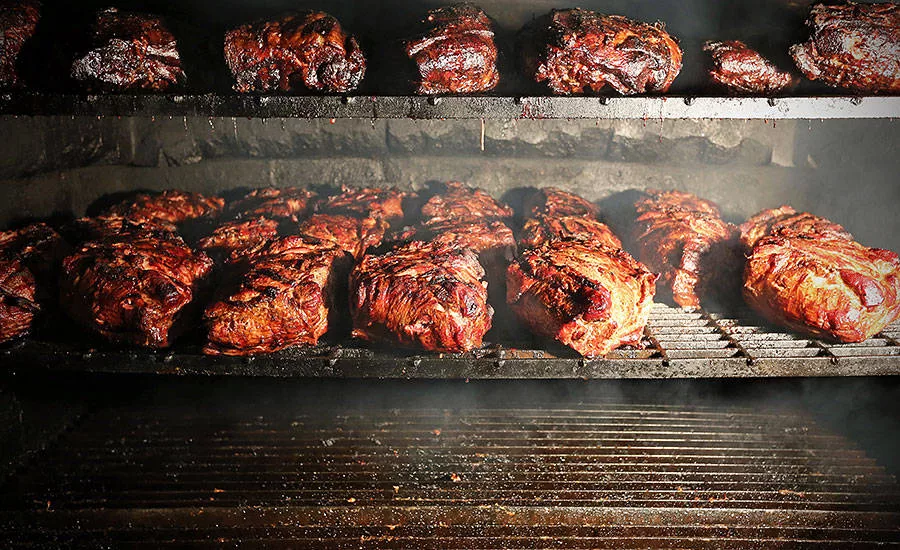
The interest by an expansive base of shoppers in cooked, fried and smoked meat and poultry creates attractive revenue opportunities for retailers. With a robust segment of consumers willing to pay more for the convenience of ready-to-eat or heat-and-eat selections and the unique flavor profiles of such items, astute meat and poultry processors can generate greater payback from the category.
The Power of Meat 2017 report, for instance, notes 40 percent of shoppers say they purchase ready-to-eat meat and poultry at least once a week, up from 33 percent in 2010. Forty-five percent of shoppers, meanwhile, say they prepare heat-and-eat items at least once a week, an increase from 29 percent in 2010.
In addition, the share of shoppers who claim they never prepare or buy ready-to-eat meat and poultry fell from 32 percent in 2010 to 21 percent in 2017, while the amount of those who report they never prepare or buy heat-and-eat selections declined from 40 percent in 2010 to 27 percent in 2017.
Shopper insights for The Power of Meat 2017 is from a November 2016 national online consumer survey of 2,382 adults who mirror the U.S. population. The respondents have or share full responsibility for grocery shopping for their household and purchase or consume meat and poultry at least on occasion. The report is published by the Arlington, Va.-based Food Marketing Institute and the Washington, D.C.-based North American Meat Institute. A San Antonio-based research and marketing firm, 210 Analytics LLC, collected the data.
Rolling in red tape
While sales opportunities are strong in the sector, processors seeking to grow activity will likely face a host of complex production requirements inherent to developing cooked, fried and smoked options. They include financial, technological and administrative issues.
Complying with governmental and internal food safety regulations, for instance, is a huge operational challenge for processors, says Jonathan Campbell, assistant professor and extension meat specialist in the Department of Animal Science at Pennsylvania State University in State College. It includes the arduous task of producing the appropriate paperwork that demonstrates to United States Department of Agriculture (USDA) regulators that the operators are in compliance with their own food safety program regulations, including Hazard Analysis and Critical Control Point (HACCP) mandates.
“Companies need to follow what they told the federal government they were going to do with their food safety plans,” he says. “If they state they are going to take the temperatures of cooked products every hour, it is important that they comply and have the appropriate records to prove it.”
Unlike for raw products, in which consumers typically kill pathogens when they cook the proteins at home, processors offering ready-to-eat and heat-and-eat items must consistently test for the Listeria monocytogenes bacteria in their facilities.
“The USDA has a zero tolerance policy for Listeria in meat and poultry products so processors must devote ample resources toward preventing that type of issue,” Campbell says. “There must be specific testing for Listeria in both the processing and packaging environments and in the finished product itself. Plants also must have good sanitation and employee hygiene programs and manufacturing practices that reduce the risk of contaminating cooked products that are free of pathogens.”
A quest for knowledge
Also onerous is the need to hire and retain workers who have expertise in efficiently and effectively producing cooked, fried and smoked proteins, he says.
“High turnover rates are especially a challenge for the smaller processors who already are taxed with limited resources,” Campbell says. “Producing ready-to-eat and heat-and-eat meat and poultry requires high worker proficiency, including knowledge of the production techniques. Such processing work may not be as physically demanding as some other duties in plants, but it is still hard and not always attractive.”
The employees must especially know how to deal with the prospect of Listeria monocytogenes as the pathogen is “far and away, the No. 1 operational problem in the meat and poultry industry,” says Keith Belk, professor of animal science in the Department of Animal Science at Colorado State University in Fort Collins. “It is a food-wide issue for products that are cooked within plants. Because outbreaks have been front-page news, it is going to be the top focus for producers of ready-to-eat or heat-and-serve products.”
Plant technologies and the layout of facilities have a big impact on processors’ susceptibility to contamination in their operations. Older ovens, for instance, often have just one door in which to place raw products and retrieve the cooked, fried or smoked proteins. Such a design increases the chance of post-cooking contamination.
“Processors are going to have to spend money to address the problem of having to take cooked products out of ovens in areas where there is raw meat present if they are going to stem contamination,” Belk says. “Those types of arrangements are no longer going to be acceptable.”
Instead, operators need to leverage equipment that can straddle separate work areas in plants to enable the placement of raw proteins in ovens on one side of a wall and have cooked products exit on the other end, he says. “The facilities must emulate a hospital surgical suite in which the surgical rooms are more sterile than other locations,” Belk says. “Once the product is cooked and all organisms are killed, the meats must go into a room that is designated and managed as a high-risk area.”
A greater adoption of such designs is inevitable as an increasing number of retailers will likely mandate such precautions from their suppliers, he notes. “Many operators across the U.S. are using equipment that was built in the 1970s or earlier and they are going to have to make modifications,” Belk says. “The pressure is going to be there. Not many retailers will want to take risks on Listeria as it is so deadly.”
Change is not cheap
Because it can cost millions of dollars for meat and poultry processors to purchase newer ovens with separate doors for raw and cooked proteins and to redesign plants to further minimize the chance of contamination, enactments will be slow, particularly for smaller processors, he says. All plants will be under close government scrutiny to ensure
“Many operators are a long way from meeting both USDA and U.S. Food and Drug Administration (FDA) expectations as well as Global Food Safety Initiative certification requirements for ready to eat products,” Belk says. “There is market pressure, as well as regulatory pressure, to make the changes. More retailers will require producers to be GFSI certified if the processors want to be in their supply chain.”
The Global Food Safety Initiative is a collaboration between food safety experts from retail, manufacturing and food service companies, as well as international organizations, governments, academia and service providers. Member objectives include reducing food safety risks and managing costs in the global food system.
Creating a HACCP plan to address food safety in the handling of cooked, fried or smoked proteins, meanwhile, also is challenging because it requires the development and implementation of programs that often are more elaborate than those for raw meat and poultry, says Brandon Wolf, executive vice president of sales and marketing for Old Hickory Smokehouse LLC, a Lewisburg, Tenn.-based producer of smoked, rotisserie and roasted pork, beef, chicken and salmon.
Processors, for instance, must pinpoint parameters such as how long and when they will cook the proteins and the optimal cooking temperatures, he says.
Old Hickory Smokehouse’s food safety initiatives include having separate rooms to isolate the raw, cooked and smoked meat production areas and using different wash-down stations and building entrances to prevent unauthorized employees from going into a multitude of plant sections and risking cross contamination, Wolf says. “Workers who attempt to enter a new room have to go outside of the building, move through a security checkpoint and then walk through a separate security checkpoint on another side of the building,” he says. “Even the forklift operators unload their cargo in only a raw or cooked side and do not leave those assigned areas.”
In addition to following stringent food safety guidelines, producers of cooked, fried and smoked proteins also must adhere to high production standards if their products are to stand out in a crowded market, Wolf says. That includes leveraging the optimal technologies for producing top-quality and tasty meat and poultry, he says.
Old Hickory Smokehouse uses custom designed ovens and smokers that support its unique cooking methodologies, Wolf says.
“Having specifically designed equipment was the only way to get cutting-edge technologies that mix an oven, rotisserie and smoker,” he says. “But the final result is less about the technology and more about methodologies. The goal is to produce cooked proteins that are not overprocessed in order to generate an authentic taste, texture and feel of the products.”
Consistency is a concern
Developing cooked, fried and smoked meats that retain consistent flavors and texture is challenging as there is a natural variability in raw materials and a need for equipment that can adequately support the entire production process, says Paul Kafer, vice president of engineering for Smithfield, Va.-based protein producer Smithfield Foods Inc. Technologies must support such preparation steps as injecting, tumbling, mixing and grinding, which all have strict operational requirements, and a thermal process with multiple variables, including air flow, temperature and humidity controls, he says.
In addition, frying brings the additional complexity of maintaining oil quality, Kafer says, and methods for cooling and storing products after thermal processing and prior to packaging must be precise and carefully controlled.
“Many producers recognize all of the above, and the challenge is that there are instances where the existing process features older technology that must be replaced and updated over time,” he says.
To most effectively manage the evolving production issues, it is critical for workers to fully understand the production process and the food science behind the process, Kafer says. Smithfield educates employees on its products, food production techniques and theory by conducting courses at Iowa State University.
Topics include the use of newer Smithfield technologies, such as equipment that provides distinctive characteristics to formulations, says Doug Sutton, Smithfield vice president of research and development.
“The rapid pace of technology advancement is one of the major production challenges in recent years,” Kafer says, noting that a lack of available workers with the skills to manage the newer equipment adds to the demands.
“The answer is not to avoid new technology, but to continue to invest in education for the workforce,” Kafer says. “Without further worker education about emerging technologies, this challenge will only increase in the coming years. What has worked since the 1980s will probably not work in the 2020s and beyond.” NP
Looking for a reprint of this article?
From high-res PDFs to custom plaques, order your copy today!