Food Safety
Can genomics advance pre-harvest intervention strategies?
Common-sense prevention still works for pre-harvest intervention, while new food safety tools continue to be researched.
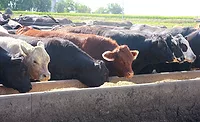
Is grass-fed beef safer than conventional beef? As that debate rages on in the consumer world, researchers are testing the effects of a grass-fed diet versus grain-fed in cattle’s stomach.
Researchers are harnessing a still-developing field of study, microgenomics, to limit pathogens in the pre-harvest stage of cattle, while common sense methods are still being used to protect poultry.
On feedlots, cattle are given Tylosin and Rumensin antibiotics — sometimes regardless of health status (depending on the producer) — to fight the side effects of a grain-fed diet that can lead to liver abscesses and intestinal disease. Livestock still receive the bulk of antibiotics administered in the United States — about 70 percent to 80 percent of antibiotic sales, in fact. Reports have surfaced of antibiotic-resistant bacteria turning up in turkey, pork chops and ground beef in the U.S., alarming the public and creating further strain on the protein production process. Non-meat eaters aren’t immune from the reach of pharmaceuticals either as antibiotic residue has been found in groundwater, drinking water and streams and fertilizer in feedlots. Keeping animals safe and healthy appears to be a true challenge for the future.
But “for the first time in a long time, tools are on the horizon that are actually pretty exciting” to increase food safety at the pre-harvest stage. These tools don’t rely on antibiotics and vaccines, says Keith Belk, Ph.D., professor of meat safety and quality at Colorado State University, in Fort Collins, Colo.
Belk’s team has targeted various compounds for use in feedlot cattle’s diet or water to see which have the greatest impact on the organisms in the cattle’s rumen (the first chamber of its stomach) and microbiome (the community of microorganisms that live in or on the animal).
“The feedlot steer is our core organism of interest,” he says. “Communities of bacteria develop on their outside and in their environment based on their micro niche, like feces. So if we modify the pan-genome [the entire gene set of all strains of a species] composition, it could theoretically impact the safety of the product.”
Belk’s team — including nutritionists and a Ph.D. microbiome scientist — is creating simulated rumens of steers, injecting them with a compound and seeing what transpires.
“Using simulated rumens, we’re able to screen a whole bunch of compounds, pull out combinations — such as three out of hundreds — and conduct a feedlot study,” Belk says.
So, how would this work in the real world? If Tylosin is removed from cattle’s feed, the animals may have an increase of liver abscesses, most likely by 15 percent. Belk’s team could use a simulated system to manipulate the microbiome to find the bacteria that cause abscesses and remove it, for example.
“In the next 18 months, we will see real products that use this technology,” says Belk. “There won’t be a one-size-fits-all product, though. A pan-genomic system will be different for a Colorado feedlot than one in Texas.”
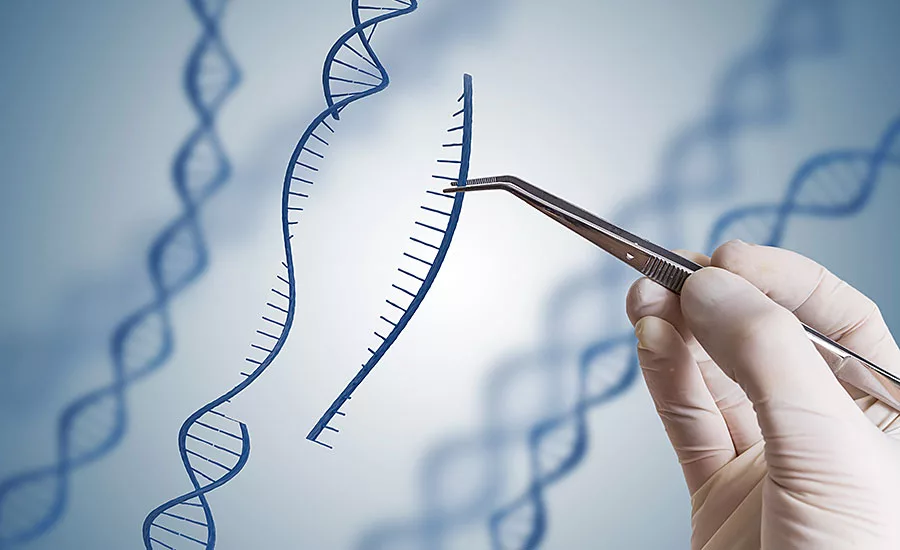
Belk’s team is also working on using CRISPR technology to mark genes, cut them out and not replace them so those cells die. For example, a team could go into a microbiome, apply this technology and kill everything with Shiga toxin, which is part of the E. coli 01857 strain.
“We know the system works, but need a delivery system to the cattle’s rumen,” says Belk. He is working with phages right now, which wouldn’t be too pricey if they work.
Finding the right tools
Antibiotics may not cause the super bugs that consumers think they do, but they should still be handled with care.
“It’s important to break treatments up to prevent resistance issues in the food chain,” Belk says. “Microbiomes can re-establish themselves as a ‘normal’ community if antibiotics are given through ‘pulsing.’”
Some products are using antimicrobial phages to colonize the rumen and minimize the shedding of 01857.
“Vaccines have been used but are not a silver bullet; they provide reductions but not a full solution,” says Marcos Sanchez-Plata, Ph.D., associate professor in the department of animal and food science at Texas Tech University, based in Lubbock, Texas.
Another tool, video surveillance, is more effective at processing plants to minimize contamination from outside the carcass to its inside, Sanchez-Plata says. The timing of carcass washes, however, is up for debate.
“If cattle is washed before it reaches the plant, there’s an argument that it decreases cross-contamination and there’s less fecal matter,” he says. “But some plant data shows that the wash can spread contamination even though the cattle are carrying less fecal material.”
In fact, plant water can spread pathogens. “Dust can also transfer pathogens but by air,” says Sanchez-Plata. “Also at the farm and plant, aerosols may carry E. coli.”
Protecting poultry
As far as poultry’s pre-harvest interventions are concerned, biosecurity and health care play a big role.
“The National Poultry Improvement Program released guidelines to set up a biosecurity plan that we encourage producers to adopt,” says Rafael Rivera, manager of food safety and production programs with the U.S. Poultry & Egg Association, in Tucker, Ga. “It covers 11 points to follow and having a functional biosecurity program also helps reduce food safety hazards.”
Pre-harvest intervention programs should include pest control programs, as well. “Rodents, darkling beetles and flies, to name a few, are known to carry Salmonella and expose birds to the foodborne pathogen,” Rivera says. “You can also transmit Salmonella and Campylobacter by not managing your water and feed resources adequately. Having wet litter, for example, can attract pests and there is moisture that promotes a healthy environment for these types of pathogens.”
If feeders aren’t in good repair, birds could eat feed that had been spilled over, which allows them to eat possibly contaminated feed. “It can also attract pests that can also transmit disease,” he says.
Vaccination programs are available to reduce bacteria, but they can’t be as effective if the management at the farm is not adequate. “Antibiotics are also a good resource to reduce bacteria, but with the changes in antibiotic use occurring throughout the industry, this tool is much more limited,” Rivera says. Another thing that producers are looking into is washing and sanitizing transport modules.
“This is not widespread, but there are processors investing in equipment to wash and disinfect these modules before they go out to a farm to harvest birds,” he says.
So pre-harvest intervention solutions today range from the theoretical (manipulating animal cells) to the practical (fix feeders, sanitize transport vehicles and stay on top of pest control). NP
Looking for a reprint of this article?
From high-res PDFs to custom plaques, order your copy today!