Provisioner logo
Provisioner logo
search
cart
facebook twitter linkedin youtube
  • Sign In
  • Create Account
  • Sign Out
  • My Account
Provisioner logo
Provisioner logo
  • NEWS
    • Industry News
    • Supplier News
    • Case Studies
    • Recalls
    • Regulations
    • New Consumer Products
  • EXCLUSIVES
    • Newsletters
    • Source Book
    • Sponsored Insights
    • Events
    • Webinars
    • Classifieds
    • White Papers
    • Provisioner Store
    • Market Research
  • MEAT PROCESSING
    • SUSTAINABILITY
    • Processing
    • Packaging
    • Ingredients
    • Formulation
    • Food Safety
    • Special Reports
    • Commentary
  • PROFILES
    • Processor Profiles
    • Processor of the Year
    • Top 100 Processors
  • MEDIA
    • Videos
    • Podcasts
  • DIRECTORY
  • MIHOF
  • INDEPENDENT PROCESSOR
  • EMAG
    • eMagazine
    • ARCHIVE ISSUES
    • Contact
    • Advertise
  • JOIN!
Food Safety

Food Safety

Technology intervenes on pre-harvest interventions

Consumer demand for antibiotic-free products requires new
 pre-harvest interventions.
By Megan Pellegrini
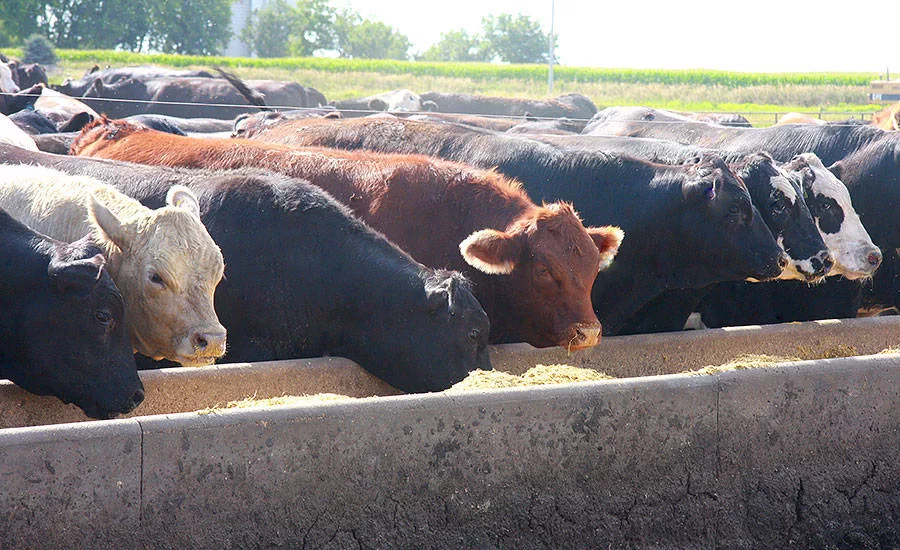
One result of the trend towards antibiotic-free production is the industry must use new ingredients in feeds
June 22, 2017

Consumers increasingly demand antibiotic-free meat and poultry. So how do processors prevent contamination during the pre-harvest stage without using this common antimicrobial?

“Antimicrobial resistance [AMR] is frequently being blamed, at least in part, on use of antimicrobials in production,” says Keith E. Belk, professor, department of animal sciences, Colorado State University, Fort Collins, Colo. “There is not good evidence about whether this is an accurate assumption or not, but our studies thus far indicate that very little AMR is transmitted via the food [meat] chain.”

Nevertheless, many consumers continue to demand reduced use of antibiotics in agriculture — so processors are looking for ways to eliminate or reduce the need for them.   

Colorado State University, for example, has researchers working with large research partners on a series of projects that aim to replace Tylosin, an antibiotic routinely fed to livestock during the finishing production stage. 

“We feel that this is a likely target for improving pre-harvest food safety — at least from the perception viewpoint,” Belk says.

At the farm level, biosecurity practices are always the best intervention, but producers also rely on overall health monitoring, and interventions through vaccines and, in other cases, with antibiotics, says Rafael Rivera, manager, food safety and production programs, U.S. Poultry & Egg Association, based in Tucker, Ga.

“With the veterinary feed directive coming into effect recently and the trends toward antibiotic-free production, the industry has had the need to rethink its approach to general husbandry and use new ingredients in feeds, such as pre- and probiotics to help manage bacterial populations inside the gut and around the birds’ environment,” Rivera says. 

Cleaning and disinfection between flocks has also acquired a new level of importance, he says. 

“It’s not just about disease control anymore; it also helps controlling foodborne pathogens at the farm level,” says Rivera.

At the plant level, new interventions such as part washes and sprays are being used to meet the new parts performance standards and reduce pathogen levels even more, Rivera says.

“The important thing is tracking your progress and applying what you learn from flock to flock,” Rivera says. “There is no standard way of minimizing pathogens pre- and post-harvest.”

A multiple-hurdle approach is still the gold standard for pre-harvest interventions as strategies are needed that encompass pre-harvest technologies all the way to the finished product.  

“Although there are multiple hurdles on treating the carcass, the emphasis has moved upstream to … not cross-contaminating the carcass in the beginning of the process,” says Angie Siemens, vice president of food safety, quality and regulatory for Cargill Protein in Wichita, Kan.

Optimizing and reducing the variation in each step can improve the overall result. “Every job on the floor is well-defined and monitored to assure appropriate behaviors are maintained,” Siemens says.

In addition, new intervention spray cabinets that have more monitoring capabilities, use less water and direct the antimicrobial more appropriately are some of the new application methods available. 

“Antimicrobial intervention application continues to be our biggest hurdle,” Siemens says.

Improvements in real-time data from remote video auditing and operational sensors help provide immediate feedback to the harvest line, so immediate corrective action can be taken, she says. 

Imaging software also provides real-time feedback on detection and quantification of contamination or foreign material.

“We are mostly working to optimize the current [antimicrobial interventions] technologies by a systems review,” says Siemens. “By looking at the entire system, we do not look at each intervention independently but by understanding all the procedures and interventions from live animal to finished package.” 

Cattle conditions continue to present issues such as dirty or muddy cattle.

“We are having a dialogue with feedlot operators, and there are an increased number that are helping to ensure that their cattle are cleaner coming into the plants,” Siemens says. “There are some trials being conducted with probiotics and other feed augments that show some promise, however, not consistently. Many factors affect the shedding of E. coli and Salmonella which impact the success of these products.”

Today’s larger cattle present their own set of challenges regarding ensuring antimicrobial treatments are applied to all of the carcasses in some of the cabinets, she says.

To prevent residues today, there is more dialogue between processors and live-animal suppliers, so suppliers have a greater appreciation for the potential consequences of residue failures.

“The detection systems for physical hazards throughout the supply chain [including grind] have become better; thus, there is a better understanding that preventing the potential for a physical hazard is a better approach than hoping to find all the physical hazards that may exist,” Siemens says.  NP

KEYWORDS: antibiotic antimicrobial pre-harvest interventions

Share This Story

Looking for a reprint of this article?
From high-res PDFs to custom plaques, order your copy today!


Megan pellegrini
Megan Pellegrini is a contributing writer.

Recommended Content

JOIN TODAY
to unlock your recommendations.

Already have an account? Sign In

  • Double Charburger

    Premiumization drives burger category

    Shoppers seek out premium meat offerings to fulfill...
    Meat and Poultry Industry News
    By: Sammy Bredar
  • JJS Adult Pekin duck

    Poultry Report 2025: Convenience propels poultry at retail

    Despite continued economic pressures, the poultry...
    Turkey
    By: Sammy Bredar
You must login or register in order to post a comment.

Report Abusive Comment

Manage My Account
  • eMagazine Subscriptions
  • Manage My Preferences
  • Newsletters
  • Online Registration
  • Subscription Customer Service
  • Connect with The National Provisioner

More Videos

Sponsored Content

Sponsored Content is a special paid section where industry companies provide high quality, objective, non-commercial content around topics of interest to the The National Provisioner audience. All Sponsored Content is supplied by the advertising company and any opinions expressed in this article are those of the author and not necessarily reflect the views of The National Provisioner or its parent company, BNP Media. Interested in participating in our Sponsored Content section? Contact your local rep!

close
  • A smiling man carrying a grocery basket is reaching down to pick up a package of meat in a grocery store.
    Sponsored byPIC

    The Green Light: New Data Shows 12-to-1 Support for Pork from PRRS-Resistant Pigs

  • Close up of a grocery cart full of groceries, a cropped image of a couple pushing the cart and a blurred background of the vegetable aisle.
    Sponsored byPIC

    New Market Research Finds Consumers in Eight Key Pork Markets Are Likely to Purchase Pork from Gene-Edited Pigs

  • Close up of a young pig with a blurred background.
    Sponsored byPIC

    New Research Forecasts Significant Economic and Market Impacts with PRRS-Resistant Pig Adoption

Popular Stories

JBS USA logo

JBS USA closing pair of processing facilities

Various new Primal snack sticks on a table amongst pencils, apples, a pair of glasses, lunch bags and a water bottle.

Protein demand drives snacking occasions

Several cuts of beef, pork and chicken on a wooden board, cast iron pan and salt.

Validated thermal lethality data and a new tool for ensuring safety of RTE meats

2026 Top 100 Meat & Poultry Processors Report

Events

January 1, 2030

Webinar Sponsorship Information

For webinar sponsorship information, visit www.bnpevents.com/webinars or email webinars@bnpmedia.com.

View All Submit An Event

Products

Food Crime: An Introduction to Deviance in the Food Industry

Food Crime: An Introduction to Deviance in the Food Industry

See More Products
From Fresh to Frozen in 3 Minutes Flat: Unlocking the Secrets to Temperature Control Webinar Sponsored by Air Products

Related Articles

  • Pre-harvest interventions beef up biosecurity

    See More
  • Pre-harvest interventions

    See More
  • Antimicrobial sprays are a simple and quick method to cover most or all parts of meat products and protect against food pathogens

    Pre-harvest interventions, carcass washes give meat a clean start

    See More

Related Products

See More Products
  • Handbook of Poultry Science and Technology, Two-Volume Set

  • Handbook of Poultry Science and Technology, Volume 2, Secondary Processing

  • Handbook of Poultry Science and Technology, Volume 1, Primary Processing

See More Products

Events

View AllSubmit An Event
  • June 11, 2026

    From Fresh to Frozen in 3 Minutes Flat: Unlocking the Secrets to Temperature Control

    On Demand Join Tony Vacaro, Foods Industry Manager, and Emile Klein, Foods Market Strategy Manager at Air Products and Chemicals, Inc. , as they tackle key questions surrounding heat removal in food processing. 
View AllSubmit An Event

Related Directories

  • Clean Water Technology

    Clean Water Technology (CWT) offers industrial wastewater treatment solutions built on decades of R&D. Its proprietary GEM® System outperforms traditional DAF technology, delivering up to 98% removal of TSS, FOG, and undissolved BOD/COD with a smaller footprint, sustainability, and operational savings.
×

Stay ahead of the curve. Unlock a dose of cutting-edge insights.

Receive our premium content directly to your inbox.

SIGN-UP TODAY
  • RESOURCES
    • Advertise
    • Contact Us
    • Directories
    • Store
    • Want More
  • SIGN UP TODAY
    • Create Account
    • eMagazine
    • Newsletter
    • Customer Service
    • Manage Preferences
  • SERVICES
    • Marketing Services
    • Reprints
    • Market Research
    • List Rental
    • Survey/Respondent Access
  • STAY CONNECTED
    • LinkedIn
    • Facebook
    • YouTube
    • X (Twitter)
  • PRIVACY
    • PRIVACY POLICY
    • TERMS & CONDITIONS
    • DO NOT SELL MY PERSONAL INFORMATION
    • PRIVACY REQUEST
    • ACCESSIBILITY

Copyright ©2026. All Rights Reserved BNP Media, Inc. and BNP Media II, LLC.

Design, CMS, Hosting & Web Development :: ePublishing