Provisioner logo
Provisioner logo
search
cart
facebook twitter linkedin youtube
  • Sign In
  • Create Account
  • Sign Out
  • My Account
Provisioner logo
Provisioner logo
  • NEWS
    • Industry News
    • Supplier News
    • Case Studies
    • Recalls
    • Regulations
    • New Consumer Products
  • EXCLUSIVES
    • Newsletters
    • Source Book
    • Sponsored Insights
    • Events
    • Webinars
    • Classifieds
    • White Papers
    • Provisioner Store
    • Market Research
  • MEAT PROCESSING
    • SUSTAINABILITY
    • Processing
    • Packaging
    • Ingredients
    • Formulation
    • Food Safety
    • Special Reports
    • Commentary
  • PROFILES
    • Processor Profiles
    • Processor of the Year
    • Top 100 Processors
  • MEDIA
    • Videos
    • Podcasts
  • DIRECTORY
  • MIHOF
  • INDEPENDENT PROCESSOR
  • EMAG
    • eMagazine
    • ARCHIVE ISSUES
    • Contact
    • Advertise
  • JOIN!
Supplier News

Fortress shrinks food inspection footprints
By Industry News
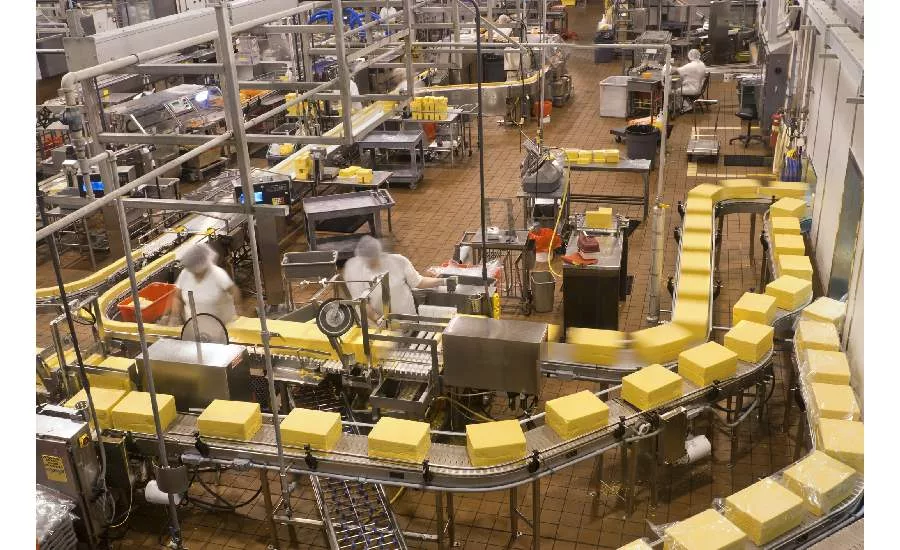
Fortress Technology footprint
December 1, 2020

When it comes to buying criteria for inspection equipment, commercial viability will often make or break decisions. Yet right now, the COVID-19 crisis is pushing space-optimized design and remote diagnostics to the top of the agenda. To mark the launch of their new compact Raptor Combination metal detector and precision checkweigher system, Fortress Technology explores why smaller-footprint food inspection systems are rapidly becoming the ‘new normal’.

Footprint has long been a consideration when choosing packaging and processing equipment. In North America, rent per square foot in industrial manufacturing plants currently averages US$6.36[i]. Given that factory space is at a premium and the ever-increasing cost of real estate, each cubic foot has to be maximized.

In production and packaging facilities where every inch counts, establishing new practices that will enable factory personnel to work safely during the COVID-19 pandemic is a huge challenge. Preventing the spread of the virus within the workplace is all about creating distance and physical barriers between workers, but space is in short supply in most facilities.

Moving people, not machinery
Redesigning factory layouts is not easy, requiring considerable investment. However, producers have a duty of care to operators to ensure they are working in a safe environment. Rather than reconfiguring production line layouts, companies are examining how they can redeploy and organize operators in a safer way, for example, by altering shift patterns. In other words, the focus is on moving people rather than machinery.

As factories adapt to these new ways of working, Fortress Technology Engineer Matthew Gidman anticipates equipment compactness will become even more important.

“From a factory floor perspective, adapting to COVID-19 is all about creating space. Smaller footprint equipment creates more space for people to move around without being restricted to certain pathways,” he comments.

Making room for combi systems
One of the ways in which companies can save line space is to opt for a combined checkweighing and metal detection system – mounting these systems on the same conveyor results in a far smaller footprint than stand-alone units would occupy.

Combination metal detector/checkweighers are not a new concept. Fortress itself recently unveiled at Pack Expo Connects its first ever offering in the space under the Raptor marque. Available as a standalone checkweigher or combination system utilizing Fortress Stealth or Interceptor metal detector models, the system delivers flexibility, hygienic design and user-friendly operation, with the Raptor Combi starting at 1.7 meters in overall length, virtually half the length of comparable models on the market.

The machine dimensions have been minimized via several innovative design features. Intelligent configuration of the reject mechanisms, for example, means that this new system occupies much less space without sacrificing the exceptional performance that Fortress strives to deliver.

“You can’t get away from the fact you need separate rejects for weighing and metal as the rework required for rejected products is very different. However, Fortress has designed the Raptor checkweigher so it can slot alongside existing metal detectors with opposing rather than sequential rejects. This helps to reduce the length of the reject system by nearly 20 inches,” explains Gidman.

“20 inches might not sound like a lot of space. Yet, it can be the difference between a safe working space and one that doesn’t meet requirements. Also, if you equate it to the amount you are paying per square foot, it translates to a tangible cost saving,” he adds.

Another way in which the Raptor system offer space-saving advantages over rival systems is through the flexibility this platform offers. Although Fortress manufactures a standard Raptor system for customers wanting a short lead-time system for handling products up to 15 inches (500mm) in size and up to 17lbs in weight, the company can also custom manufacture a system that’s virtually half the length for inspecting smaller products.

One scenario where space-optimized combi systems can really come into their own is on labor-intensive food production lines, where multiple ingredients are added manually. Here, where individual working space can’t be maintained, factories have had to install physical barriers to separate operators. Either solution increases the line space required to safely perform this operation, so downstream equipment space savings are needed to free up space.

Distanced diagnostics
As well as creating a further driver for more compact systems, the COVID-19 pandemic is accelerating adoption of remote access functionality on inspection equipment.

“Most modern metal detectors and checkweighers have in-built remote diagnostics but until now this function has been under-utilized. However, recent months have seen it taking on increasing importance as companies seek to protect staff and reduce travel and face-to-face contact,” notes Gidman.

There are several reasons for this shift in behavior. Some areas of the food industry have faced unprecedented demand in recent months as consumer spending has shifted from the hospitality and food service sector to retail grocery. Additionally, food supermarkets have grappled with unpredictable purchasing behaviors and patterns. Issues with equipment have had to be resolved as quickly as possible, with minimal disruption and person-to-person contact. In these circumstances, remote troubleshooting is the ideal solution. Even if the issue cannot be resolved remotely, it can serve as a first line approach, arming engineers with valuable information so that site visits can be as brief as possible. A practice that Fortress has always encouraged to bring value to its customers.

Now that companies have started to realize the benefits of remote assistance, Fortress believes it is unlikely that the industry will revert to a more traditional face-to-face approach and that it will be a focus for innovation in years to come.

Likewise, the food industry will continue to demand inspection systems with ever more compact dimensions. Whilst technological progress will continue to forge ahead in this area, there comes a point when both physics and the need to guarantee product quality, place limitations on reducing system size. It is about finding that sweet spot, where footprint, reliability and cost of ownership can all be balanced.

For more information visit www.fortresstechnology.com.


[i] https://www.statista.com/statistics/626555/average-rent-per-square-foot-paid-for-industrial-space-usa-by-type/

KEYWORDS: Fortress Technology product inspection

Share This Story

Looking for a reprint of this article?
From high-res PDFs to custom plaques, order your copy today!

Recommended Content

JOIN TODAY
to unlock your recommendations.

Already have an account? Sign In

  • Double Charburger

    Premiumization drives burger category

    Shoppers seek out premium meat offerings to fulfill...
    Beef
    By: Sammy Bredar
  • JJS Adult Pekin duck

    Poultry Report 2025: Convenience propels poultry at retail

    Despite continued economic pressures, the poultry...
    Chicken
    By: Sammy Bredar
You must login or register in order to post a comment.

Report Abusive Comment

Manage My Account
  • eMagazine Subscriptions
  • Manage My Preferences
  • Newsletters
  • Online Registration
  • Subscription Customer Service
  • Connect with The National Provisioner

More Videos

Sponsored Content

Sponsored Content is a special paid section where industry companies provide high quality, objective, non-commercial content around topics of interest to the The National Provisioner audience. All Sponsored Content is supplied by the advertising company and any opinions expressed in this article are those of the author and not necessarily reflect the views of The National Provisioner or its parent company, BNP Media. Interested in participating in our Sponsored Content section? Contact your local rep!

close
  • A smiling man carrying a grocery basket is reaching down to pick up a package of meat in a grocery store.
    Sponsored byPIC

    The Green Light: New Data Shows 12-to-1 Support for Pork from PRRS-Resistant Pigs

  • Close up of a grocery cart full of groceries, a cropped image of a couple pushing the cart and a blurred background of the vegetable aisle.
    Sponsored byPIC

    New Market Research Finds Consumers in Eight Key Pork Markets Are Likely to Purchase Pork from Gene-Edited Pigs

  • Close up of a young pig with a blurred background.
    Sponsored byPIC

    New Research Forecasts Significant Economic and Market Impacts with PRRS-Resistant Pig Adoption

Popular Stories

Spam Dog

Hormel rolls out Spam hot dog for foodservice applications

Various new Primal snack sticks on a table amongst pencils, apples, a pair of glasses, lunch bags and a water bottle.

Protein demand drives snacking occasions

Several cuts of beef, pork and chicken on a wooden board, cast iron pan and salt.

Validated thermal lethality data and a new tool for ensuring safety of RTE meats

2026 Top 100 Meat & Poultry Processors Report

Events

June 11, 2026

From Fresh to Frozen in 3 Minutes Flat: Unlocking the Secrets to Temperature Control

Join Tony Vacaro, Foods Industry Manager, and Emile Klein, Foods Market Strategy Manager at Air Products and Chemicals, Inc. , as they tackle key questions surrounding heat removal in food processing. 

January 1, 2030

Webinar Sponsorship Information

For webinar sponsorship information, visit www.bnpevents.com/webinars or email webinars@bnpmedia.com.

View All Submit An Event

Products

Food Crime: An Introduction to Deviance in the Food Industry

Food Crime: An Introduction to Deviance in the Food Industry

See More Products
From Fresh to Frozen in 3 Minutes Flat: Unlocking the Secrets to Temperature Control Webinar Sponsored by Air Products

Related Articles

  • Fortress Interceptor

    ARM powers Fortress food inspection

    See More
  • The National Provisioner Supplier News

    How Fortress revolutionized flat flake food inspection

    See More
  • Fortress Technology Interpack preview

    Fortress: New titan of food inspection systems coming to Interpack 2020

    See More

Related Products

See More Products
  • meat inspection.jpg

    Meat Inspection and Control in the Slaughterhouse

  • food-crime.jpg

    Food Crime: An Introduction to Deviance in the Food Industry

  • Food Plant Sanitation: Design, Maintenance, and Good Manufacturing Practices, Second Edition

See More Products

Events

View AllSubmit An Event
  • January 25, 2023

    Facility Inspection Package Training by USDA-APHIS

    Are you engaged in your company's export activities? Specifically, preparing inspections packages for rendered products, animal-based feed or pet food? Then join us for an interactive training and Q&A with USDA-APHIS. Learn directly from APHIS how to better prepare packets and for facility inspections. This program is ideal for those actively preparing packets and facility inspections and those working directly with APHIS field staff (not a policy meeting).This agenda has been approved for 4 ARPAS CEU's.
  • April 25, 2013

    Food Plant of the Future: Global Food Safety Impact on Facilities

    On demand SQF 2000, FSMA, ISO 22000/PAS220 and other standards continue to gain traction in an attempt to create safer foods and beverages.
View AllSubmit An Event

Related Directories

  • Eagle Product Inspection

    Eagle Product Inspection, part of METTLER TOLEDO since 2011, specializes in advanced x-ray inspection technologies, including dual energy, photon-counting, and fat analysis systems. Eagle pairs deep expertise with the global reach and innovation leadership of METTLER TOLEDO to deliver solutions that enhance product safety and quality across markets worldwide.
×

Stay ahead of the curve. Unlock a dose of cutting-edge insights.

Receive our premium content directly to your inbox.

SIGN-UP TODAY
  • RESOURCES
    • Advertise
    • Contact Us
    • Directories
    • Store
    • Want More
  • SIGN UP TODAY
    • Create Account
    • eMagazine
    • Newsletter
    • Customer Service
    • Manage Preferences
  • SERVICES
    • Marketing Services
    • Reprints
    • Market Research
    • List Rental
    • Survey/Respondent Access
  • STAY CONNECTED
    • LinkedIn
    • Facebook
    • YouTube
    • X (Twitter)
  • PRIVACY
    • PRIVACY POLICY
    • TERMS & CONDITIONS
    • DO NOT SELL MY PERSONAL INFORMATION
    • PRIVACY REQUEST
    • ACCESSIBILITY

Copyright ©2026. All Rights Reserved BNP Media, Inc. and BNP Media II, LLC.

Design, CMS, Hosting & Web Development :: ePublishing