Independent Processor | Cover Story
Setting a new standard in Meat Science Education
The new Meat Science & Animal Biologics Discovery building at the University of Wisconsin-Madison explores the future of meat science education.
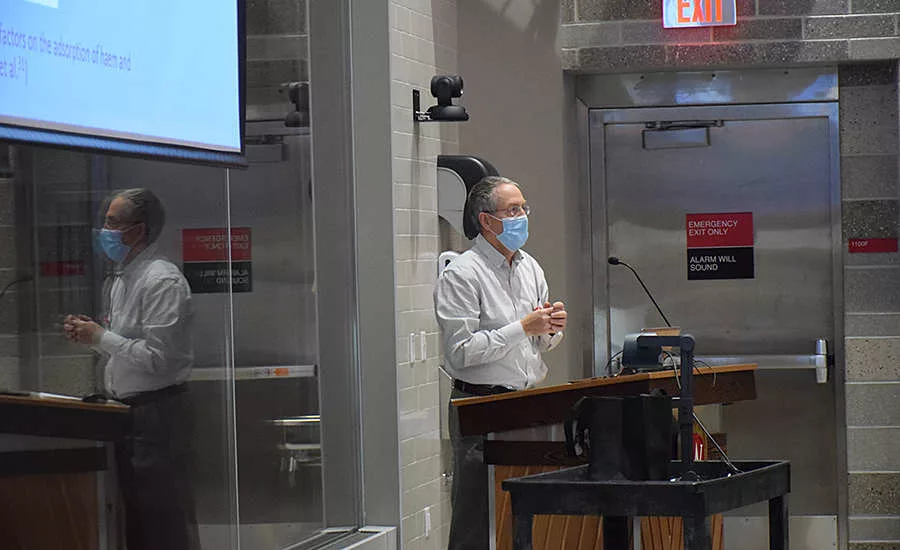
All photos by Sam Gazdziak.
Back in 2014, the Animal Sciences Department at the University of Wisconsin-Madison began to ponder the question: How do we teach meat science in the future? What will a classroom look like, and how will students get the best education possible? What role will technology play in the future? What research will be necessary, and what new technologies can bring additional revenue streams both to the industry in general and the University itself? Those questions ultimately led to the all-encompassing question of, “What kind of building will allow us to set the gold standard for meat science education in the United States?”
What followed was a 6-year (and then some) journey through setting goals, drawing plans, raising funds, hiring contractors and doing construction work (and occasional rework) until the vision was complete. The net result is the Meat Science & Animal Biologics Discovery Building, a new gem on UW-Madison’s campus. With state-of-the-art classrooms, a USDA-inspected meat plant, a biosafety level 2 facility, new animal biologics research capabilities and more, the building represents a $57 million investment into the future of meat science education.
Due to the COVID pandemic, the University of Wisconsin-Madison campus isn’t as full as it normally is. The MSABD Building has not reached full occupancy either, but a fair number of students are attending in-person classes there. While visiting the campus, Independent Processor editor Sam Gazdziak spoke with three of the students about their career aspirations and their thoughts on the new building.
And then a global pandemic came along and made in-person learning a near impossibility. Fortunately, some of the technological investments made for the future of education came in pretty handy to facilitate remote learning in the present time.
“I think it puts us at the head of the class,” Steven Ricke, director of the MSABD program, says of the school’s new home. A UW-Madison grad himself, he joined the program from the University of Arkansas, and the potential that the new building holds was a big draw.
“I realized that we could do some things here that are pretty special, that nobody else in the country could do,” he adds.
For example, animal biologics, which has long been a part of the animal sciences program at UW-Madison, is getting a big boost, with new faculty and new resources. The goal of the biologics program is to study the parts of the animal carcass that would normally be discarded, and find uses for them that can benefit human or animal health.
“I think it generates a whole new world for meat processing, because we have this totally unique revenue source for biomedical purposes, and I think this building is set up to help facilitate that,” Ricke says.
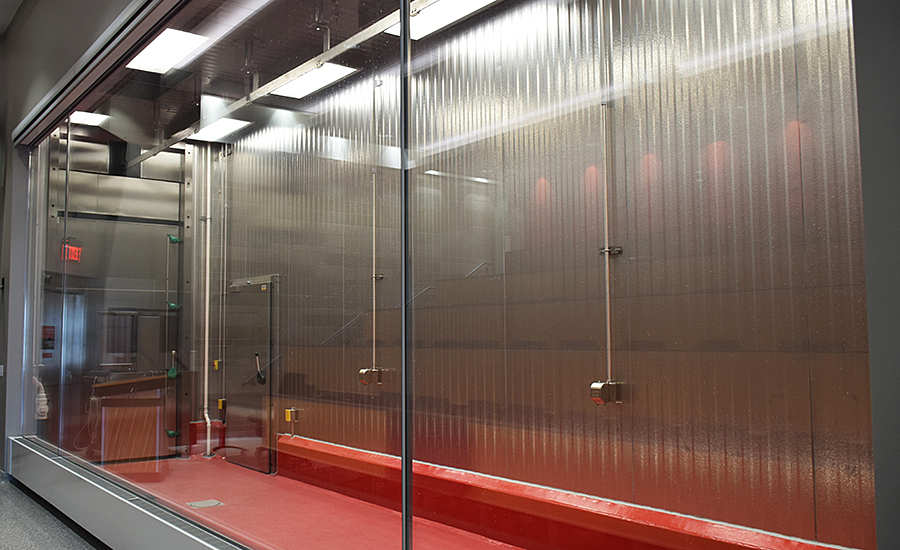
The two main lecture halls are each separated from a USDA-inspected production area by a 1-inch-thick pane of glass. Instructors can use the space for live fabrication demonstrations.
Building from the ground up
The building, which is more than 68,000 square feet in size, represents a $57.1 million investment. The state of Wisconsin and many corporate and individual donors helped to bring the project to completion. Jeff Sindelar, Professor & Extension Meat Specialist, has been one of the leading forces behind the design and ensuing construction of the building. His ideas for classroom technology, laboratory space and processing innovations have created a series of “firsts” in meat science education. The processing plant, for instance, has a CO2 stunning system for hogs – likely the only one found in a university meat plant -- and a one-of-a-kind knock box for cattle that has the most humane design imaginable.
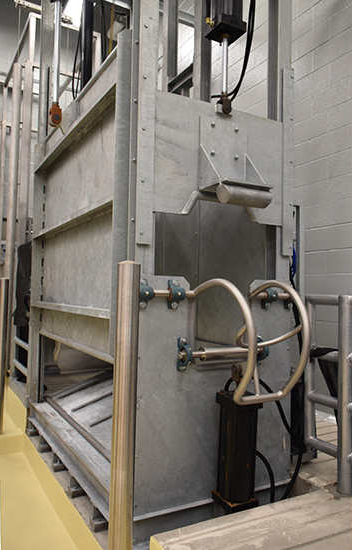
This custom-designed cattle knock box is made to keep the animal's head secure, virtually eliminating the risk of a mis-stun.
“We spent a lot of money, and we tried to do it right because this building is expected to last for 80 to 100 years,” Sindelar explains. “We want to be the best, and not for selfish reasons. We know that if we are viewed as leaders among other universities with the meat sciences facilities, it’s helping us grow our program while helping other Universities in other states aspire to be better, and that’s a good thing as there’s plenty of opportunities for academic meat science need and value to be realized by everyone. ”
The USDA inspected plant is managed by Dillon Walker, a recent hire, and it will be staffed by 40 to 50 undergraduates starting with little to no experience in meat processing. That situation necessitated some of the technology, Sindelar adds.
“We have to do things where we train students to prepare them for the future and do things so you can get students interested in the industry.”
The facility, when it is fully up and running, will harvest cattle, hogs and sheep. The holding area was designed by Dr. Kurt Vogel of the University of Wisconsin-River Falls, who trained under Dr. Temple Grandin. The live animal area has exacting specifications for the comfort of the livestock, and the original concrete floor was jackhammered out and re-poured because it was not quite up to specifications. The cattle knock box is a custom design that was originally intended for a kosher processing plant. It comes with a chin rest that elevates the cow’s head and prevents it from moving around, and Sindelar and Vogel made other changes to the design to fit the plant. As a result, Sindelar notes, the animal’s head is so secured that the chances of a mis-stun are virtually nil. Not only does it remove any unnecessary trauma on the part of the animal, but it does the same for the undergrads who may never have witnessed this part of the process. The knock box is also sure to catch the eye of processors who may tour the facility.
“The beauty of this is that a small processor or a large processor can see this and say, ‘Gee, I can make a chin lift on mine!’ It gives people ideas and inspiration,” Sindelar notes.
First-class classrooms
Even in a hands-on program like meat science, classroom learning is a key component to an education. To that end, UW-Madison has developed some of the most impressive and high-tech rooms available. They have become particularly well-suited to today’s pandemic environment, where some students are attending live, some are livestreaming and some are watching a recorded class.
The instructors can use their lectern to share screens, play videos and bring in live speakers via teleconference. Each of the two main lecture halls has an A/V cart with a high resolution camera. Sandwiched between the two halls are two small, USDA-inspected demonstration coolers. Both halls have a 1-inch-thick, 10-foot by 28-foot glass wall that looks into the USDA-inspected cooler. When curtains are drawn, it becomes a screen to share videos, slides and more. When the curtains are raised on either (or both) sides, students have a view of inside the cooler. The instructor can don a wireless mic and go into the cooler to lead the students through up-close meat processing demonstrations.
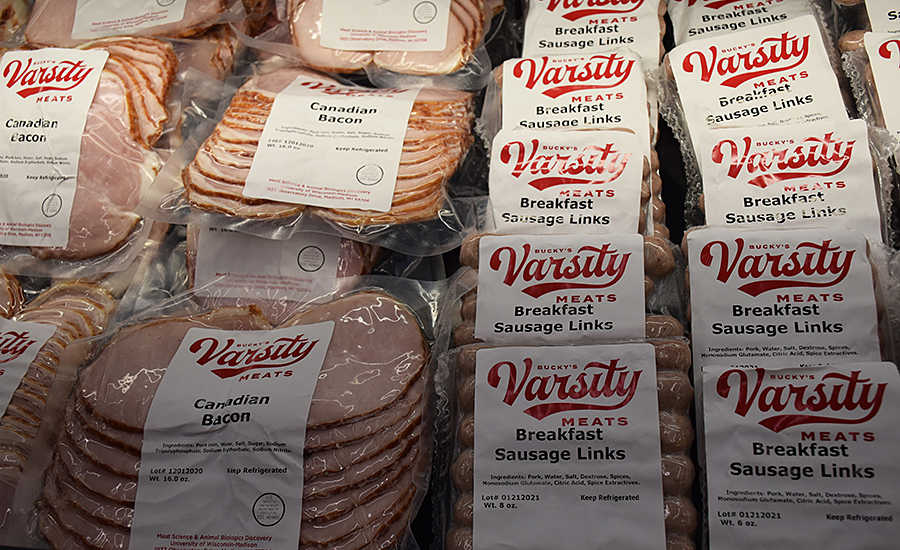
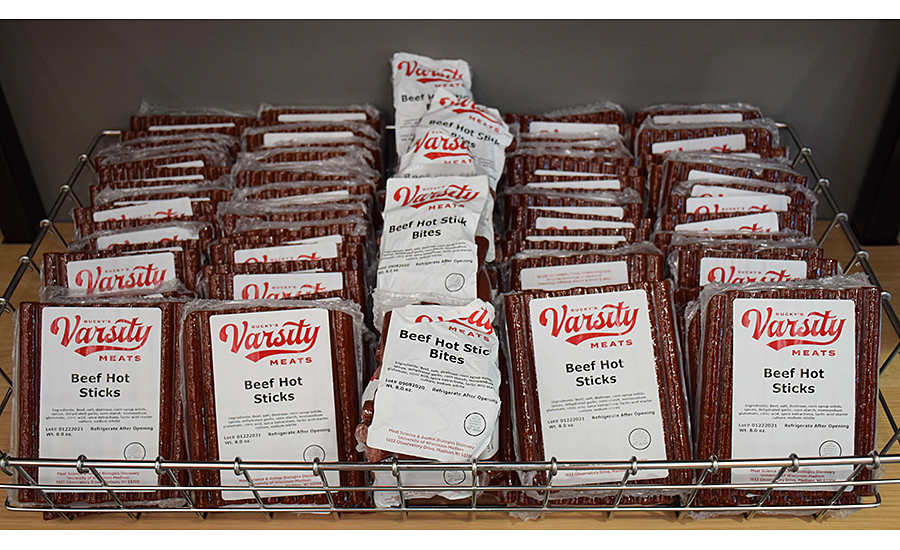
The products made by the students in the USDA-inspected meat-processing facility are packaged and sold at the school's own retail store.
“The idea is that you can take the camera, mount it onto a table, bring in a bandsaw, roll in carcasses, and you can do a fabrication,” explains Sindelar. The cameras have such good definition that even the muscle fibers and connective tissue are clearly visible and distinguishable. Students, whether learning remotely or in-person, get the same educational experience and don’t have to spend an hour or two in a cold processing environment.
Professor Jim Claus believes that it will take the faculty a year or more to really appreciate all the things that the building and the corresponding technology will allow them to do. But he has embraced the possibilities.
“I get so excited about the labs I have coming up. I’ve been wanting to teach pork carcass fabrication,” he says. With this system in place, a team of two or three students can each get a side of pork and watch their monitors, whether the instructor is working in the hallway or in the plant.
“They can place the saw, make this cut, make that cut, do this knifing. We can orchestrate the whole thing instead of the old fashioned way, which is have 26 students in the class, a handful of knives and saws, and after I tell them what to do, I’m running around while they’re asking, ‘Dr. Claus, Dr. Claus, what do I do next?’ That’s not efficient,” he adds.
Sindelar notes that the setup also can revolutionize the school’s Extension programs including seminars and short courses, where attendees can participate in some or all events virtually without leaving their businesses and flying into Madison for a few days.
“That was not planned. The original plan during design was, ‘How do we teach meat science in the future? How do we refrigerate the meat but not the people?’” Sindelar says. “What we’re learning is that this can actually fold into what post-COVID education looks like. When I start doing more short courses, maybe there is an in-person version and a virtual version. Or before you show up for in-person education, preliminary basic presentations on meat science and basics of sanitation and microbiology could occur remotely with the in-person focused on the more technical and hands-on program elements which are likely more impactful when done in person.”
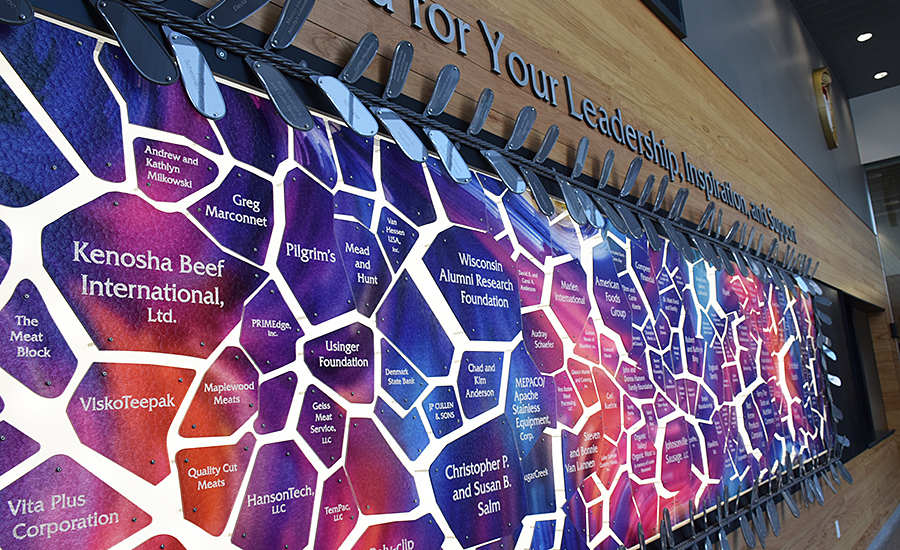
The donor wall inside the MSABD building recognizes those individuals and corporations who contributed to the fundraising efforts for the facility.
The MSABD building comes with many more features and future benefits to the industry. As a research facility, the BSL2 lab features a fully equipped processing floor – though it is smaller than the USDA space and is not federally inspected. It can make a variety of products, but those products are ultimately incinerated after their intended use is complete. Production is not the goal, though. The lab is designed for research into various pathogens and working with different types of bacteria. Equipment from industry suppliers can be brought in, and their sanitary design can be tested and examined. Kill steps can be verified and new science-based methods for achieving regulatory expectations can be examined.
Cindy Austin, the BSL2 lab manager, had worked in food safety with Oscar Mayer for 15 years. She is a UW-Madison grad as well.
“We’re just getting geared up and starting several projects with outcomes important to the meat industry,” she says. As an example, “right now the USDA has changed the parameters for cooling meat products. One of the big projects we’re doing is using antimicrobials and cooling meat products so that industry can use some of these antimicrobials to extend the time they’re allowed to cool meat products.”
She notes that the ability to use a fully functioning meat plant equipped with pilot plant scale processing equipment (e.g. grinders, stuffers, smokehouse, etc.) to mimic industry processing practices will be a game-changer for research. “There’s nowhere else, really, where you can do that as well as this facility can, so it’s really exciting to be able to start using it.”
As far as the products that are made at the USDA-inspected facility, they can be sold at Bucky’s Varsity Meats, the school’s retail outlet. The store is open, although it is currently available for pickup orders only. It has a variety of cured meats like sausages, bacon and meat snacks, as well as a fresh meat case and frozen meats as well. The new store manager, Mitch Monson, has worked at Whole Foods in Chicago previously, and he has added items like T-shirts and koozies to help add to the Bucky’s experience.
UW-Madison has also made a renewed commitment to animal biologics, bringing in faculty like Vanessa Leone as an assistant professor in the department. She is following in the footsteps of Professor Mark Cook, who had a distinguished career in the field at the university before his untimely death in 2017.
“He had this vision on how we can identify more uses for animal co-products that would otherwise get discarded at the time of animal harvest,” she says. Some of Cook’s work came in researching the intestines in harvested animals and discovering antibodies that could be given to livestock for improved health. Animal biologics would also bring benefits to human health and even pet health; Cook’s investigations into cat hairballs led to breakthroughs in hairball remedies found in today’s pet food portfolio.
“Those are the things that can spin out of this type of program,” Leone explains, “whether it’s finding direct uses for this type of animal tissue or trying to solve an issue that is plaguing animal agriculture or companion animals. It’s a really exciting space to be in.
Dr. Vanessa Leone and Animal Biologics
The University of Wisconsin-Madison has had a strong presence in animal biologics for many years. Dr. Vanessa Leone, one of the newest additions to the UW-Madison faculty, is carrying on that tradition with her own research. In this video, she describes her work at the school and what the biologics program does.
“As producers in the industry start to notice that we’re on the map, I think the possibilities are really endless. You can look at what’s remaining [of the carcass after the meat harvest] and kind of let your mind go about what’s in each of those tissues and how it could be beneficial,” she adds.
People like Leone, Claus and Sindelar, as well as the rest of the staff and faculty, have plenty of industry expertise and ideas, and they alone make UW-Madison a leading meat science school. “We have top-notch researchers here, and I’m first in line to brag about that. It makes us all better, because we’re pushing each other to push the boundaries, to understand things better than we did before. UW has had that tradition for a long time,” Ricke says.
The building, with all its technology and flexibility, will enhance their capabilities, as well as provide extra educational and revenue-generating capabilities. Sindelar points out that the MSABD building benefits not just UW-Madison. It will have a ripple effect that will help the industry and other meat science schools as well.
“Every university has their role, their reason, their specialty, and there’s some duplication, but there’s absolutely no reason to be competitive,” he says. “If we are the best meat lab in the country, that helps us, and that helps the rest of the United States. Hopefully this will drive the importance of these facilities at other universities and technical schools.” IP
Looking for a reprint of this article?
From high-res PDFs to custom plaques, order your copy today!




