Provisioner logo
Provisioner logo
search
cart
facebook twitter linkedin youtube
  • Sign In
  • Create Account
  • Sign Out
  • My Account
Provisioner logo
Provisioner logo
  • NEWS
    • Industry News
    • Supplier News
    • Case Studies
    • Recalls
    • Regulations
    • New Consumer Products
  • EXCLUSIVES
    • Newsletters
    • Source Book
    • Sponsored Insights
    • Events
    • Webinars
    • Classifieds
    • White Papers
    • Provisioner Store
    • Market Research
  • MEAT PROCESSING
    • SUSTAINABILITY
    • Processing
    • Packaging
    • Ingredients
    • Formulation
    • Food Safety
    • Special Reports
    • Commentary
  • PROFILES
    • Processor Profiles
    • Processor of the Year
    • Top 100 Processors
  • MEDIA
    • Videos
    • Podcasts
  • DIRECTORY
  • MIHOF
  • INDEPENDENT PROCESSOR
  • EMAG
    • eMagazine
    • ARCHIVE ISSUES
    • Contact
    • Advertise
  • JOIN!
Special Reports

Recovering from a challenging year
By Kurt D. Vogel PhD
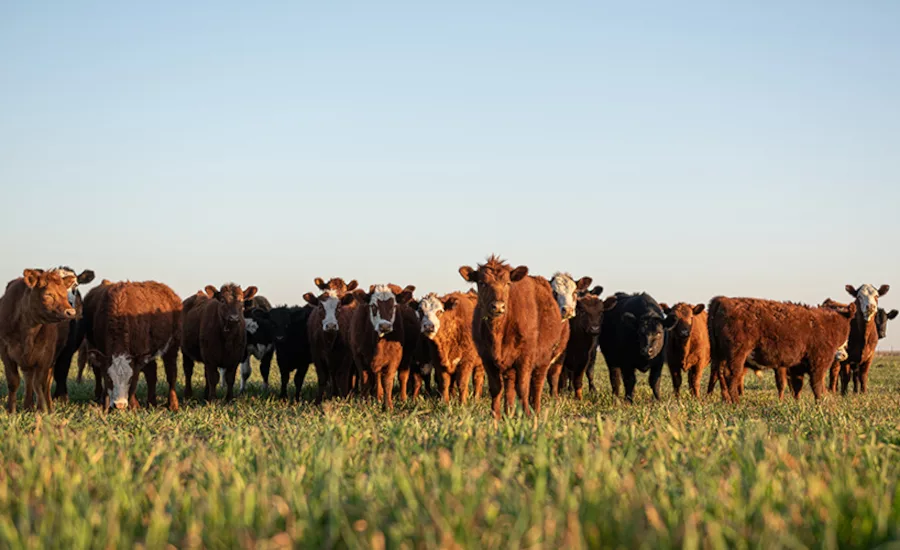
cattle
Getty Images/iStockphoto
October 26, 2021

During the escalation of the COVID-19 pandemic in the summer of 2020, the entire live-animal supply chain was disrupted as slaughter establishments dealt with internal virus outbreaks and resulting reductions in slaughter capacity. The reduction in capacity caused a backlog of livestock that were ready for slaughter and the difficult decision to depopulate when animals couldn’t be placed on maintenance diets and retained until capacity returned. The effects were the most burdensome for producers of high-turnover species, such as pigs, where each phase of production was operating near full capacity, and it didn’t take much time for a backup to overwhelm upstream capacity. At that time, some slaughter facilities that could not maintain full operation became depopulation and carcass disposal sites, because there wasn’t a good way to safely operate the entire slaughter and fabrication process. It was a very difficult time for the entire livestock production sector and a reminder of how the efficiencies in our production systems leave precious little room for bottlenecks. 

One of the challenges that gained emphasis from the pandemic-associated depopulations was the difficulty in effectively euthanizing and stunning large pigs, like breeding sows and boars, with captive bolt tools. A few research studies have been published recently that have focused on alternative captive bolt locations for those large animals in a temporal position along the side of the head and behind the ear. More refinement in captive bolt tools and placement guidance are needed before either of those positions can be used as reliably as the typical front-of-the-head location, but they seem to have potential for future use. 

Summary of enforcement actions

In the annual analysis of the USDA’s Food Safety and Inspection Service’s (FSIS) Humane Handling Enforcement Actions, the Animal Welfare Lab at the University of Wisconsin – River Falls recorded nearly 88% (87/99) of enforcement actions as stunning-related from 2020. Out of those 87 enforcement actions, approximately 83% (72/87) were associated with gunshot and captive bolt applications. The primary reason for mechanical stunning enforcement actions couldn’t be discerned reliably, because slightly more than half of stunning-related enforcement action letters did not provide a clear description of the causative factors behind the incidents they reported. For a more detailed analysis of the 2020 enforcement actions, click here.

The take-home message from the 2020 humane handling enforcement action analysis is to continue to pay attention to captive bolt and firearm stunning in all areas that affect the outcome. That means we need to continue to focus on training, monitoring and tool refinement. 

Kurt Vogel is an Associate Professor in the Animal and Food Science Department at the University of Wisconsin – River Falls. He is also the President of Vogel Livestock Solutions, a food animal welfare consulting company. If you have any questions or comments, email kurt.vogel@uwrf.edu or phone (715) 425-4704.

KEYWORDS: animal welfare humane handling

Share This Story

Looking for a reprint of this article?
From high-res PDFs to custom plaques, order your copy today!

Kurt vogel 20191209

Dr. Kurt D. Vogel is the director of the Humane Handling Institute and a professor of animal welfare and behavior at the University of Wisconsin-River Falls. If you have any questions or comments, you can reach out to Dr. Vogel by email: kurt.vogel@uwrf.edu or phone: (715) 425-4704.

Recommended Content

JOIN TODAY
to unlock your recommendations.

Already have an account? Sign In

  • Double Charburger

    Premiumization drives burger category

    Shoppers seek out premium meat offerings to fulfill...
    Burgers
    By: Sammy Bredar
  • JJS Adult Pekin duck

    Poultry Report 2025: Convenience propels poultry at retail

    Despite continued economic pressures, the poultry...
    Chicken
    By: Sammy Bredar
You must login or register in order to post a comment.

Report Abusive Comment

Manage My Account
  • eMagazine Subscriptions
  • Manage My Preferences
  • Newsletters
  • Online Registration
  • Subscription Customer Service
  • Connect with The National Provisioner

More Videos

Sponsored Content

Sponsored Content is a special paid section where industry companies provide high quality, objective, non-commercial content around topics of interest to the The National Provisioner audience. All Sponsored Content is supplied by the advertising company and any opinions expressed in this article are those of the author and not necessarily reflect the views of The National Provisioner or its parent company, BNP Media. Interested in participating in our Sponsored Content section? Contact your local rep!

close
  • A smiling man carrying a grocery basket is reaching down to pick up a package of meat in a grocery store.
    Sponsored byPIC

    The Green Light: New Data Shows 12-to-1 Support for Pork from PRRS-Resistant Pigs

  • Close up of a grocery cart full of groceries, a cropped image of a couple pushing the cart and a blurred background of the vegetable aisle.
    Sponsored byPIC

    New Market Research Finds Consumers in Eight Key Pork Markets Are Likely to Purchase Pork from Gene-Edited Pigs

  • Close up of a young pig with a blurred background.
    Sponsored byPIC

    New Research Forecasts Significant Economic and Market Impacts with PRRS-Resistant Pig Adoption

Popular Stories

JBS USA logo

JBS USA closing pair of processing facilities

Various new Primal snack sticks on a table amongst pencils, apples, a pair of glasses, lunch bags and a water bottle.

Protein demand drives snacking occasions

Several cuts of beef, pork and chicken on a wooden board, cast iron pan and salt.

Validated thermal lethality data and a new tool for ensuring safety of RTE meats

2026 Top 100 Meat & Poultry Processors Report

Events

January 1, 2030

Webinar Sponsorship Information

For webinar sponsorship information, visit www.bnpevents.com/webinars or email webinars@bnpmedia.com.

View All Submit An Event

Products

Food Crime: An Introduction to Deviance in the Food Industry

Food Crime: An Introduction to Deviance in the Food Industry

See More Products
From Fresh to Frozen in 3 Minutes Flat: Unlocking the Secrets to Temperature Control Webinar Sponsored by Air Products

Related Articles

  • Sara Lee CEO recovering from stroke

    See More
  • Datassential logo

    Foodservice segment recovering from COVID impacts

    See More
  • Jeff Shearer, chief automation officer at Morris & Associates, one of the speakers at the Cyber Security and Risk Management Summit.

    USPOULTRY’s Cyber Security and Risk Mitigation Summit focused on safeguarding systems and recovering from attacks

    See More

Related Products

See More Products
  • Optimizing Social Media from a B2B Perspective

  • food safety.jpg

    Food Safety in the Seafood Industry: A Practical Guide for ISO 22000 and FSSC 22000 Implementation

See More Products

Related Directories

  • A&B Ingredients

    With a deep-rooted heritage of research and development, A&B Ingredients is a clean label manufacturer and supplier of unique ingredients that enable food processors to develop new and improved products. A&B Ingredients offers a broad range of natural food ingredients that enable you to create added value food products.
×

Stay ahead of the curve. Unlock a dose of cutting-edge insights.

Receive our premium content directly to your inbox.

SIGN-UP TODAY
  • RESOURCES
    • Advertise
    • Contact Us
    • Directories
    • Store
    • Want More
  • SIGN UP TODAY
    • Create Account
    • eMagazine
    • Newsletter
    • Customer Service
    • Manage Preferences
  • SERVICES
    • Marketing Services
    • Reprints
    • Market Research
    • List Rental
    • Survey/Respondent Access
  • STAY CONNECTED
    • LinkedIn
    • Facebook
    • YouTube
    • X (Twitter)
  • PRIVACY
    • PRIVACY POLICY
    • TERMS & CONDITIONS
    • DO NOT SELL MY PERSONAL INFORMATION
    • PRIVACY REQUEST
    • ACCESSIBILITY

Copyright ©2026. All Rights Reserved BNP Media, Inc. and BNP Media II, LLC.

Design, CMS, Hosting & Web Development :: ePublishing