Provisioner logo
Provisioner logo
search
cart
facebook twitter linkedin youtube
  • Sign In
  • Create Account
  • Sign Out
  • My Account
Provisioner logo
Provisioner logo
  • NEWS
    • Industry News
    • Supplier News
    • Case Studies
    • Recalls
    • Regulations
    • New Consumer Products
  • EXCLUSIVES
    • Newsletters
    • Source Book
    • Sponsored Insights
    • Events
    • Webinars
    • Classifieds
    • White Papers
    • Provisioner Store
    • Market Research
  • MEAT PROCESSING
    • SUSTAINABILITY
    • Processing
    • Packaging
    • Ingredients
    • Formulation
    • Food Safety
    • Special Reports
    • Commentary
  • PROFILES
    • Processor Profiles
    • Processor of the Year
    • Top 100 Processors
  • MEDIA
    • Videos
    • Podcasts
  • DIRECTORY
  • MIHOF
  • INDEPENDENT PROCESSOR
  • EMAG
    • eMagazine
    • ARCHIVE ISSUES
    • Contact
    • Advertise
  • JOIN!
Meat and Poultry Industry NewsMeat and Poultry ProcessingSustainabilitySpecial Reports

Producers advance their sustainability goals
By Emily Solis
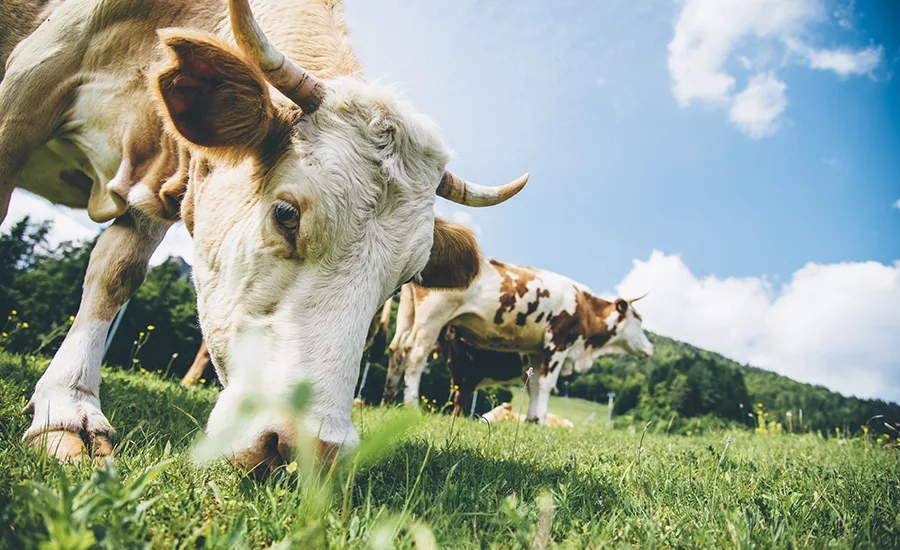
Cow on pasture, eating grass.
Getty Images/iStockphoto
October 26, 2022

Sustainability. It’s a topic everyone is talking about — from media outlets to policymakers to concerned grocery store customers. When it comes to agriculture, people want to know that the foods they’re purchasing and consuming are raised in a sustainable manner. However, it begs the question: what is “sustainability?”

The tricky thing with sustainability conversations is everyone has their own subjective definition. At the Animal Agriculture Alliance, we define it as meeting the needs of the present without compromising the ability of future generations to meet their needs. This definition encompasses more than simply taking care of the environment. It also includes ensuring farming and ranching is economically viable while balancing social responsibility.

Each pillar of sustainability — environmental stewardship, economic viability, and social responsibility — needs to be considered in decisions, as well as other tradeoffs and potential consequences. One of the largest “solutions” we’ve seen presented in sustainability conversations is the claim that reducing (or even eliminating) meat, milk, poultry, and eggs will save the planet. This is often touted as an overly simple “solution” by extremist organizations whose sole mission is to put an end to animal agriculture. However, experts agree that this will have minimal impact on the environment and greenhouse gas emissions but will have devastating effects on human nutrition, which depends on these foods as a nutrient-dense source of protein, vitamins, and minerals.

We’ve also seen calls for the removal of animal proteins (and animal agriculture) in the political sphere as policymakers and world leaders consider what they believe a “sustainable food system” should look like. The state of our current food system was thrown into the global spotlight in 2021 when the United Nations held its inaugural Food Systems Summit, aimed at addressing issues like hunger, health, and climate. This trend continued into 2022 when the United States announced that they would be holding the first White House Conference on Hunger, Nutrition, and Health in over 50 years. The goal of the event is to “end hunger and increase healthy eating and physical activity by 2030” to reduce diet-related diseases. The same anti-animal agriculture players that we saw engaged in the Food Systems Summit are now turning their attention to this conference to continue calls to take meat, milk, poultry, and eggs off store shelves and tables. 

The fact of the matter (and what extremist groups don’t want you to know) is that animal agriculture plays a vital role in a sustainable food system, and thanks to the work of farmers, ranchers, processors, and everyone involved along the food supply chain, it only continues to become more sustainable over time. Environmental improvements include:

  • From 1944 to 2007, U.S. dairy farmers decreased their overall carbon footprint by 63%. Their commitment to continuous improvement in the area of environmental stewardship helped them to reduce their carbon footprint an additional 19% from 2007 to 2017.
  • Between 1961 and 2018, the U.S. beef community, through continued sustainability efforts and improved resource use, has reduced emissions per pound of beef produced by more than 40% while also producing more than 66% more beef per animal.
  • From 1960 to 2015, pig farmers in the U.S. used 75.9% less land, 25.1% less water, 7% less energy, and have a 7.7% lower carbon footprint. 
  • The resources used to produce one dozen eggs have been cut considerably with 26% less feed, 32% less water, and a 71% lower carbon footprint since 1960.

On top of progress already made, the U.S. animal agriculture community remains committed to continuing the work. Several sectors of animal agriculture have publicly committed to reaching new goals:

  • The U.S. dairy community is working to becoming greenhouse gas neutral or better by 2050.
  • The U.S. beef community committed to becoming carbon neutral by 2040.
  • By 2030, the U.S. pork community has pledged to reduce greenhouse emissions 40% from a 2015 baseline.

There’s no doubt in my mind that the topic of sustainability will continue to dominate headlines, policy meetings, and friendly conversations beyond 2022. I also have no doubts that the U.S. animal agriculture community will continue to achieve progress in its sustainability-focused goals. For more on U.S. animal agriculture’s commitment to sustainability efforts, view the Alliance’s Sustainability Impact Report. 

Emily Solis is manager, communications and content, for Animal Agriculture Alliance.

KEYWORDS: animal agriculture state of the industry sustainability

Share This Story

Looking for a reprint of this article?
From high-res PDFs to custom plaques, order your copy today!


Emily Solis is a Communications Specialist, Animal Agriculture Alliance.

Recommended Content

JOIN TODAY
to unlock your recommendations.

Already have an account? Sign In

  • Double Charburger

    Premiumization drives burger category

    Shoppers seek out premium meat offerings to fulfill...
    Meat and Poultry Industry News
    By: Sammy Bredar
  • JJS Adult Pekin duck

    Poultry Report 2025: Convenience propels poultry at retail

    Despite continued economic pressures, the poultry...
    Turkey
    By: Sammy Bredar
You must login or register in order to post a comment.

Report Abusive Comment

Manage My Account
  • eMagazine Subscriptions
  • Manage My Preferences
  • Newsletters
  • Online Registration
  • Subscription Customer Service
  • Connect with The National Provisioner

More Videos

Sponsored Content

Sponsored Content is a special paid section where industry companies provide high quality, objective, non-commercial content around topics of interest to the The National Provisioner audience. All Sponsored Content is supplied by the advertising company and any opinions expressed in this article are those of the author and not necessarily reflect the views of The National Provisioner or its parent company, BNP Media. Interested in participating in our Sponsored Content section? Contact your local rep!

close
  • A smiling man carrying a grocery basket is reaching down to pick up a package of meat in a grocery store.
    Sponsored byPIC

    The Green Light: New Data Shows 12-to-1 Support for Pork from PRRS-Resistant Pigs

  • Close up of a grocery cart full of groceries, a cropped image of a couple pushing the cart and a blurred background of the vegetable aisle.
    Sponsored byPIC

    New Market Research Finds Consumers in Eight Key Pork Markets Are Likely to Purchase Pork from Gene-Edited Pigs

  • Close up of a young pig with a blurred background.
    Sponsored byPIC

    New Research Forecasts Significant Economic and Market Impacts with PRRS-Resistant Pig Adoption

Popular Stories

Various new Primal snack sticks on a table amongst pencils, apples, a pair of glasses, lunch bags and a water bottle.

Protein demand drives snacking occasions

Spam Dog

Hormel rolls out Spam hot dog for foodservice applications

Several cuts of beef, pork and chicken on a wooden board, cast iron pan and salt.

Validated thermal lethality data and a new tool for ensuring safety of RTE meats

2026 Top 100 Meat & Poultry Processors Report

Events

January 1, 2030

Webinar Sponsorship Information

For webinar sponsorship information, visit www.bnpevents.com/webinars or email webinars@bnpmedia.com.

View All Submit An Event

Products

Food Crime: An Introduction to Deviance in the Food Industry

Food Crime: An Introduction to Deviance in the Food Industry

See More Products
From Fresh to Frozen in 3 Minutes Flat: Unlocking the Secrets to Temperature Control Webinar Sponsored by Air Products

Related Articles

  • Packaging Recycling Summit

    Packaging summit helps professionals advance sustainability goals

    See More
  • IPPE logo

    Animal Agriculture Sustainability Summit focuses on achievable sustainability goals

    See More
  • Tyson Foods accelerates programs to meet sustainability goals

    See More

Related Products

See More Products
  • utilization.jpg

    Food Processing By-Products and their Utilization

  • The 10 Principles of Food Industry Sustainability

  • meat quality.jpg

    Meat Quality: Genetic and Environmental Factors

See More Products
×

Stay ahead of the curve. Unlock a dose of cutting-edge insights.

Receive our premium content directly to your inbox.

SIGN-UP TODAY
  • RESOURCES
    • Advertise
    • Contact Us
    • Directories
    • Store
    • Want More
  • SIGN UP TODAY
    • Create Account
    • eMagazine
    • Newsletter
    • Customer Service
    • Manage Preferences
  • SERVICES
    • Marketing Services
    • Reprints
    • Market Research
    • List Rental
    • Survey/Respondent Access
  • STAY CONNECTED
    • LinkedIn
    • Facebook
    • YouTube
    • X (Twitter)
  • PRIVACY
    • PRIVACY POLICY
    • TERMS & CONDITIONS
    • DO NOT SELL MY PERSONAL INFORMATION
    • PRIVACY REQUEST
    • ACCESSIBILITY

Copyright ©2026. All Rights Reserved BNP Media, Inc. and BNP Media II, LLC.

Design, CMS, Hosting & Web Development :: ePublishing