Latin American buyers study US processing, product innovations
Buyers travel to the US to participate in hands-on training and practical activities in the Colorado State University meat lab.
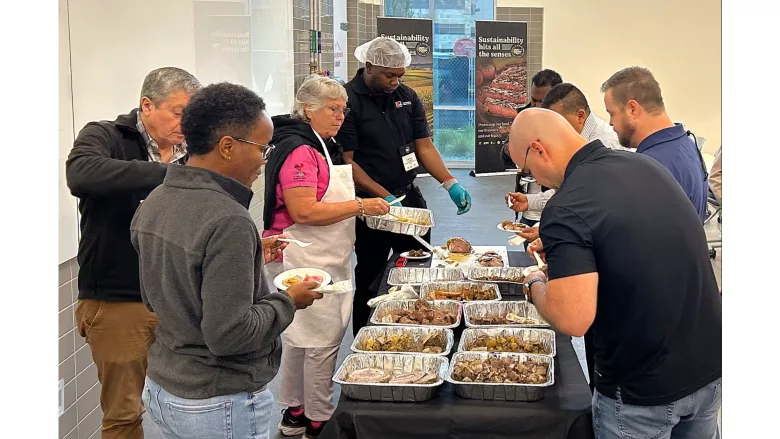
The buyer team participates in a taste panel at Colorado State University for the sous vide products they developed the previous day.
The US Meat Export Federation led a team of Latin American importers, distributors and processors to Colorado for a symposium about US meat industry innovations in food safety, processing, packaging and value-added production. The team included 19 buyers from 10 countries‒current customers of US red meat‒and was accompanied by USMEF representatives from those markets. USMEF’s Denver office coordinated with Colorado State University professors on the design and implementation of the Global Innovation Symposium.
“We brought commercial partners to CSU to learn from the technical expertise available here and the professors’ experience in working with the industry,” said Paige Parker, USMEF’s manager of technical programs. “We designed this symposium so team members could learn new concepts and new ideas and then have discussions with the professors, our staff and each other about how to apply what they learned to their own operations.”
USMEF Central America Representative Lucia Ruano stressed the value to her team of being able to engage with the professors about how things are done in the US.
“Our commercial partners wanted to learn about the raw materials that are being used in the US for processed products and about the equipment that US plants are using. They are hungry for knowledge about innovations, different processing techniques, trends in packaging and the way these products are merchandised and sold in retail stores,” said Ruano.
The team learned from professors about US production processes, safety standards and meat processing basics in a classroom setting at CSU. Instruction also took place in CSU’s meat lab, where the team experienced hands-on training while learning about innovations in food safety, yield management and processing. Adding value was a focus of the classroom curriculum and meat lab experiences. One of the hand-on challenges involved sous vide, a cooking method in which food is placed in a vacuum-sealed bag and cooked in a temperature-controlled water bath.
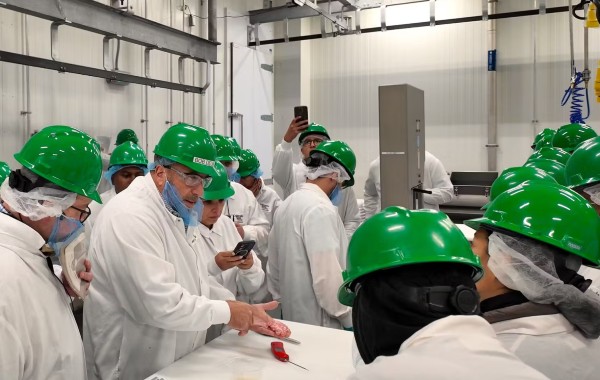
Colorado State University Professor Robert Delmore discusses yield management during an instructional session in the meat lab. Photo courtesy of the US Meat Export Federation
“They learned about sous vide, what it is, how it works and how it can be applied commercially,” said David Velasco, director of food science innovation at Colorado Premium, a USMEF member. “We then had them go into the meat lab to design new sous vide products from scratch. The next day, the team participated in a taste panel of the cooked products they had developed.”
The opportunity to participate in hands-on training and practical activities in the meat lab was a major reason team members had invested their time and resources to come to the US. Throughout the symposium, they asked the professors about the equipment and processing configurations, often drawing comparisons between how things are done in the US and in their respective companies’ practices.
“All the courses were really helpful but the area that caught my attention was sous vide,” said Sergio René Garza, a project director in Mexico. “We're not running sous vide in our plant but I think we can implement it for some of our soup products for foodservice. That way we can regulate how it is processed and have clear specifications for our cooks.”
Lorenzo Elizalde, USMEF trade manager in Mexico, sees strong potential for products developed through the sous vide cooking process in Mexico’s foodservice sector. “Sous vide products from the US are safe and high-quality. The products are already cooked, and restaurants simply finish them on the grill. They are convenient, save time and the result is a consistent, high-quality eating experience for customers.”
Following the symposium, USMEF led the team on tours of a JBS value-added plant, the Colorado Premium sous vide plant, Five Rivers Cattle Feeding and retail visits.
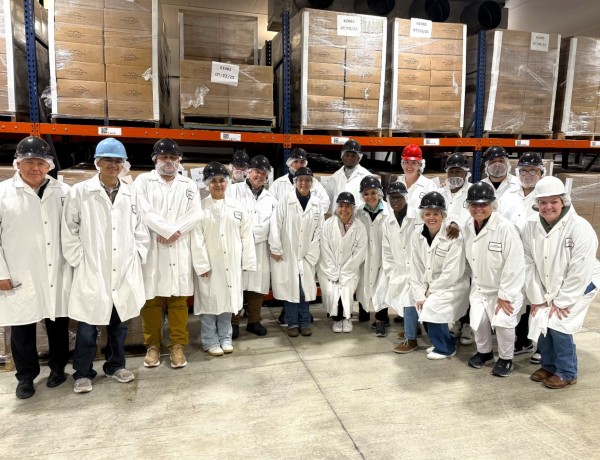 The team of buyers tours the sous vide plant of Colorado Premium. Photo courtesy of the US Meat Export Federation
“A major benefit of having our in-country representatives accompany their teams to the symposium is the follow-up. It gives us the opportunity to continue engaging with our partners in-country about their products and processes while continuing to share new ideas related to raw materials and value-added products,” said Parker.
The symposium was made possible through funding from the Beef Checkoff Program, the National Pork Board, National Corn Growers Association, South Dakota Soybean Research & Promotion Council and USDA’s Market Access Program and Regional Agricultural Promotion Program.
Source: US Meat Export Federation
Looking for a reprint of this article?
From high-res PDFs to custom plaques, order your copy today!