Study shows broad-spectrum UV can double shelf life of fresh chicken
PureFize Technologies trial comprises more than 300 breast fillets of fresh chicken.
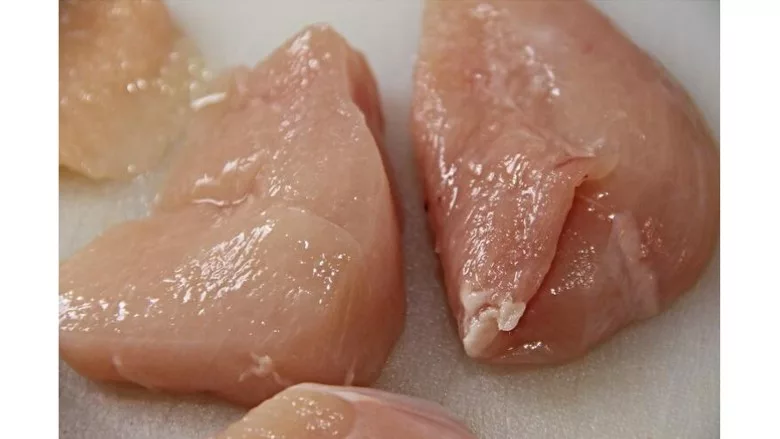
Raw chicken
Billions are lost each year as fresh chicken spoils within days, driving food waste and emissions. Swedish company PureFize Technologies is reporting a breakthrough: Its broad-spectrum UV can double the shelf life of fresh chicken and enhance microbial safety, without chemicals and without affecting taste, texture or appearance.
One third of all food produced is lost or wasted, according to the FAO, with meat among the most affected categories. Poultry is particularly sensitive, typically spoiling within just 1–2 days under refrigeration, according to USDA guidance. In an extensive trial comprising more than 300 breast fillets of fresh chicken, a one-time treatment with PureFize broad-spectrum UV reduced bacterial levels by more than 90% and significantly extended the shelf life of fresh chicken, in some cases doubling preservation time, without chemicals and without affecting taste, texture, color or weight loss.
"By extending shelf life we don’t just save costs and improve food safety — we also cut waste, lower emissions, and honour the resources that produced that chicken," said Dr. Fernando Mendoza, senior food technology expert at PureFize Technologies.
Chain reaction of benefits
For producers, longer shelf life translates into improved profitability, stronger retailer relationships and expanded distribution opportunities. A model plant processing 50,000 tons of chicken annually could save millions of euros per year via reduced spoilage and returns. Consumers benefit from safer products with more time to use them, and society gains significant carbion dioxide reductions tied to reduced food waste.
"When we run the numbers, that model plant could save as much as €5.7 million annually by reducing spoilage and returns. Naturally, all producers have different circumstances in which they operate and consequently numbers can vary, but regardless we see a significant potential to improve bottom line, and it comes in addition to the sustainability gains of cutting waste," said Johan Tingsborg, CPO for PureFize Technologies.
PureFize broad-spectrum UV
PureFize emits a broad UV spectrum (250–350 nm) featuring two key germicidal peaks around 262 (UVC) and 295 nm (UVB). This combination creates a synergistic germicidal effect that disrupts the DNA and RNA of microorganisms, as well as their proteins and lipids, while effectively penetrating stubborn biofilms. The outcome is an effective and long-lasting microbial control solution.
Integration with the PureFize Velon platform
The results are applied via the PureFize Velon platform, an adaptable, modular broad-spectrum UV system designed for easy integration into processing and packaging lines. PureFize Velon requires no cooling, enabling fast, cost-efficient adoption in existing workflows.
"We’re in discussions with several industry players to take this from lab to line, cutting food waste, saving costs and scaling quickly," said Tingsborg. "We did the study on fresh chicken bought in retail. By applying our technology earlier in the supply chain, we are confident to improve the result even more."
About the study:
- UV dose tested: 17.8 and 33.7 mJ/cm² (single exposure at day 0)
- Trials: Fve independent trials, 320 fillets; microbial counts via ISO 4833-2.
- Quality: No significant differences in pH, weight loss, color or texture vs control.
- Shelf-life assessment: The total viable count (TVC) was monitored, with a reference limit set at 6 log CFU/cm² to determine shelf-life.
Source: PureFize Technologies AB
Looking for a reprint of this article?
From high-res PDFs to custom plaques, order your copy today!