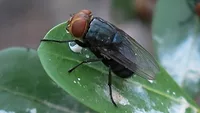
Mexico confirms case of New World screwworm less than 70 miles from US border
USDA finds that the potential link to animal movement underscores the non-negotiable need for Mexico to fully implement and comply with the US–Mexico Joint Action Plan for NWS in Mexico.

Mexico’s National Service of Agro-Alimentary Health, Safety, and Quality has confirmed a new case of New World screwworm in Sabinas Hidalgo, located in the state of Nuevo León, less than 70 miles from the US-Mexico border.
This is now the northernmost detection of NWS during this outbreak, and the one most threatening to the American cattle and livestock industry. Sabinas Hidalgo is located near the major highway from Monterrey, Nuevo Leon, to Laredo, Texas, which is one of the most heavily trafficked commercial thoroughfares in the world.
"Protecting the United States from NWS is non-negotiable and a top priority of the Trump Administration,” said US Secretary of Agriculture Brooke Rollins. “This is a national security priority. We have given Mexico every opportunity and every resource necessary to counter NWS since announcing the NWS Bold Plan in June 2025.
"Nevertheless, American ranchers and families should know that we will not rely on Mexico to defend our industry, our food supply, or our way of life. We are firmly executing our five-pronged plan and will take decisive action to protect our borders, even in the absence of cooperation. Furthermore, we will pursue aggressive measures against anyone who harms American livestock.”
The previous northernmost detection was reported on July 9, 2025, in Veracruz, approximately 370 miles farther south. Preliminary reports from SENASICA indicate that the affected animal—an 8-month-old cow—had recently been moved to a certified feedlot in Nuevo León from a region in southern Mexico with known active NWS cases. USDA finds that the potential link to animal movement underscores the non-negotiable need for Mexico to fully implement and comply with the US–Mexico Joint Action Plan for NWS in Mexico.
Currently, US ports remain closed to imports of cattle, bison, and horses from Mexico.
Since July, USDA, alongside Mexico, has been actively monitoring nearly 8,000 traps across Texas, Arizona and New Mexico. To date, more than 13,000 screening samples have been submitted, with no NWS flies detected. USDA is analyzing all new information related to the recent case in Nuevo León and will pursue all options to release sterile flies in this region as necessary.
Additionally, USDA will soon release a plan to help rebuild the American cattle supply.
USDA leads national response
Under the decisive leadership of Secretary Rollins, USDA has made substantial progress in implementing its five-pronged plan to protect the nation’s livestock, wildlife and public health from the growing threat of NWS.
USDA serves as the lead coordinating agency, deploying advanced surveillance systems; ramping up domestic preparedness; investing in innovative detection, control and response tools and strategies; and supporting robust cross-border response efforts in Mexico and Central America to combat the pest and push it away from the United States. USDA’s comprehensive strategy includes the following immediate actions:
1. Innovating the way to eradication
USDA is investing $100 million in breakthrough technologies through the NWS Grand Challenge, which will solicit ideas to enhance sterile fly production and develop new tools such as advanced traps, lures and therapeutics.
USDA is also exploring and validating technologies like e-beam and C-ray sterilization, genetically engineered flies and modular sterilization facilities through public listening sessions and ongoing evaluations.
2. Protecting the US border
USDA has begun construction on a domestic sterile fly dispersal facility at Moore Air Force Base in Edinburg, Texas. This $8.5 million facility, expected to be substantially complete by the end of 2025, will be capable of dispersing up to 100 million sterile flies per week.
Planning is also underway with the US Army Corps of Engineers for construction of a domestic sterile fly production facility in Southern Texas, with a projected capacity of 300 million sterile flies per week.
3. Strengthening surveillance and detection
USDA continues to disperse 100 million sterile flies per week in Mexico, sourced from the COPEG facility in Panama. USDA is providing support to Mexico to renovate a production facility in Metapa, which is expected to produce an additional 60–100 million sterile flies.
4. Enhancing public awareness and education
APHIS has published an updated national disease response strategy and is providing training and webinars for federal, state, tribal and veterinary partners.
Outreach materials, including pest ID cards and alerts, are being distributed along the US–Mexico border. APHIS has held over 50 stakeholder meetings and continues to expand outreach efforts.
5. Coordinating with Mexico and international partners
Following detections in Oaxaca and Veracruz, USDA closed southern ports of entry to livestock trade after a case was reported 370 miles from the US border.
USDA is conducting monthly audits of Mexico’s NWS response and is helping Mexico develop a more risk-based trapping plan, especially in Veracruz and along the border. Mexico currently deploys traps in high-risk areas, with USDA support.
USDA is supporting hiring of over 200 surge staff for trapping and animal movement control in Mexico.
SENASICA has launched a dashboard that tracks NWS cases across Mexico. This tool significantly enhances USDA’s ability to monitor the situation south of the border, better assess risk and deliver more effective operational responses in coordination with Mexican authorities.
Unprecedented interagency collaboration
USDA is working in close partnership with federal agencies to ensure a unified national response. The Centers for Disease Control and Prevention is leading human health surveillance and response, providing diagnostic support, educating healthcare providers and coordinating One Health efforts across federal, state and international partners.
The Food and Drug Administration is working to ensure veterinarians, farmers and animal health officials have timely access to the tools they need to protect pets, livestock and the nation’s food supply by authorizing the emergency use of certain animal drugs to treat or prevent infestations caused by the New World screwworm. Additionally, on Aug. 19, 2025, FDA issued a declaration that enables Emergency Use Authorizations for animal drugs to treat or prevent infestations caused by the New World screwworm.
The Department of the Interior is ensuring wildlife surveillance and environmental compliance, particularly on federal lands. The Department of Energy is exploring and validating new sterilization technologies to enhance our ability to combat NWS.
The Department of Homeland Security is supporting surveillance, intelligence sharing and emergency planning, including training Customs and Border Protection and Immigrations and Customs Enforcement personnel to identify and respond to NWS cases. The Environmental Protection Agency is expediting pesticide approvals and supporting emergency exemptions, while the Department of State is leading diplomatic engagement to combat NWS by coordinating with host governments and interagency partners to share information, align technical assistance and deliver consistent messaging.
This collaboration is guided by the US One Health Coordination Unit for NWS, co-led by USDA, CDC and DOI. Together, these agencies are executing a phased response strategy that includes early detection, rapid containment and long-term eradication efforts.
What to do
NWS maggots can infest livestock and other warm-blooded animals, including people. They most often enter an animal through an open wound and feed on the animal’s living flesh.
USDA urges residents on the southern border to check their pets and livestock for signs of NWS. To do so, residents can look for draining or enlarging wounds and signs of discomfort, as well as screwworm larvae (maggots) and eggs in or around body openings, such as the nose, ears, and genitalia or the navel of newborn animals. Anyone who suspects their animal is infected with screwworm should contact their state animal health official or USDA area veterinarian immediately.
Source: USDA
Looking for a reprint of this article?
From high-res PDFs to custom plaques, order your copy today!