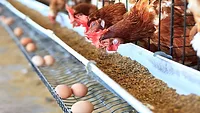
Emerging issues concerning avian flu
While the current public health risk to humans is low, the CDC is watching the situation carefully.
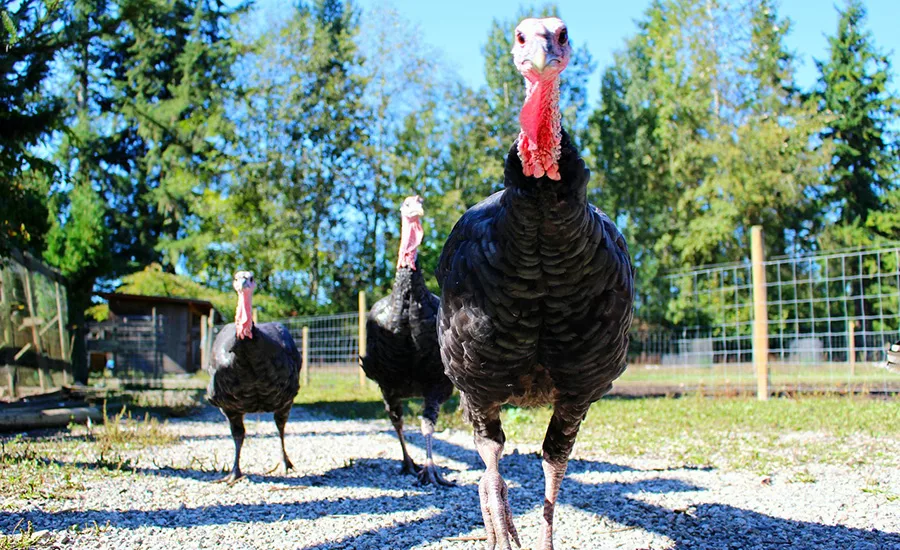
I have been following avian flu globally since 2005 it continues to be a moving target. What’s important is that we need to continue to adapt as it mutates and evolves.
First, avian flu was strictly in wild birds. As it mutates, it spreads to poultry. Recently, it moved into cows, cats and humans. H5 bird flu is widespread in wild birds worldwide and is causing outbreaks in poultry and US dairy cows, with sporadic human cases in US dairy and poultry workers.
Human cases are very limited but will continue to increase; infections in US dairy cows are accelerating dramatically and are an important part of the equation. Manure from cows gets spread on farmers' fields as part of manure management. In California, manure composting is mandatory.
Most recently, it has been carried into poultry houses by poultry workers, bugs, rodents, and other critters. We've known one key strategy to eliminate Salmonella is dramatically reducing the rodent/ Insect population. Redoubling this effort will help prevent the spread of bird flu.
I suggest we have a discussion with our dairy farmers and cattle farmers around the US, especially in the Midwest, California, Idaho, Washington, Oregon and all dairy states, to manage the practices of spreading manure near poultry houses to avoid spreading bird flu.
How wild birds migrate
Wild birds migrate every year. Globally, they fly from Alaska/Canada, where they mingle with international birds from Asia and Russia, then they fly through to the US and South America. When they mingle with international birds, they carry whatever the newest strain of bird flu is back to the US and to South America. They fly there in the spring/summer, and they fly back south in the fall.
The paths followed by migratory birds in North America can be grouped into four general flyways that follow the topographical features of the US in a north-to-south direction. The main flyway routes depend on the boundaries on either side. Food, shelter, and an abundance of water make these routes ideal for birds that are just passing through. Routes and timing change slightly every year, depending on modifications in the environment and the habitat.
- The Atlantic Flyway follows the eastern coast of the US from the Bahamas to the tip of Maine, with major migration routes intersecting in Southern South Carolina and the Delaware Bay.
- You can think of the Mississippi Flyway as one big funnel, with the bowl extending upwards and outwards from the intersection of the Mississippi and Missouri Rivers, and the narrow part following the path of the Mississippi towards the Gulf of Mexico
- The main route of the Central Flyway follows the east side of the Rocky Mountains from Canada to Southern Colorado, where it moves across Oklahoma and Eastern Texas to continue down the Texas Gulf coast into Mexico. A second, smaller artery follows the west side of the Rockies and intersects with the main route in Northern Texas.
- The Pacific Flyway hugs the Pacific Coast, with a minor migration route right beside the western artery of the Central Flyway and intersecting in northern Oregon, central California, and the California-Mexican border.
The flyways follow the topographical features of the US in a north-to-south direction. The main flyway routes depend on the boundaries on either side. Food, shelter, and an abundance of water make these routes ideal for birds that are just passing through.
While the current public health risk to humans is low, the CDC is watching the situation carefully and working with states to monitor people with animal exposures.
The CDC is using its flu surveillance systems to monitor for H5 bird flu activity in people.
HPAI spreads primarily through the secretions of infected birds, including saliva and excrement. Wild birds, particularly waterfowl, can carry the virus asymptomatically and transmit it to commercial poultry operations. This creates a constant risk for poultry farms. Although the virus can be introduced through contaminated water sources, equipment, and even workers who encounter infected birds, it is believed that when biosecurity precautions are in place, most farm introductions are from contact with wild birds.
The economic toll of HPAI
According to John Drake, a professor at the University of Georgia, the current HPAI panzootic began in the US in February 2022, when the first case was reported in Dubois County, Ind., according to the CDC.
Since then, 868 commercial poultry flocks across the country have been affected, including broilers (meat chickens), layer hens, and turkeys, according to data published by the USDA. The economic consequences have been substantial. As of November 2024, the outbreak had cost the country approximately $1.4 billion, the majority of which is for indemnity and compensation payments to farmers for flocks that have been culled.
Despite the widespread impact of HPAI on poultry and the economy, the CDC considers the health risk to the general population to be low. Even among hunters who handle wild birds, the likelihood of infection is minimal. However, there is some occupational risk for those working in poultry farms and dairy operations. Of the 67 human cases of HPAI reported in the US over the past year, only four (about 6%) were unrelated to commercial poultry or dairy operations. While these four are indeed concerning, this suggests that the virus does not easily spread to humans, although continued vigilance is necessary to monitor for mutations that increase human transmissibility.
Looking ahead
HPAI continues to reshape the landscape of US poultry farming, posing challenges for farmers, policymakers and researchers. As the virus persists, biosecurity measures, surveillance and research into vaccines and mitigation strategies will be critical to protecting poultry operations and minimizing losses.
While the risk to human health is low, some scientists have suggested that we may be heading for another pandemic, while the economic impact and disruptions to the poultry industry highlight the need for continued investment in prevention and response efforts. For now, HPAI is a reality that we must contend with.
Sources
Looking for a reprint of this article?
From high-res PDFs to custom plaques, order your copy today!