

How Smarter Safety Strategies Are Shaping the Future of Meat & Poultry
The New Reality for Meat and Poultry Manufacturers
The U.S. meat and poultry industry continues to demonstrate remarkable resilience. According to the 2025 Power of Meat report, meat and poultry remain foundational to the American diet, with 98% of U.S. households purchasing these products and average annual household spend reaching $871. In 2024 alone, retail meat and poultry sales climbed to a record $104.6 billion, making the category the largest perimeter department in retail.
Yet, with scale comes responsibility. When products are purchased weekly, or even multiple times per week, the effects of safety or quality failures are magnified. In today’s environment, manufacturers face increasing pressure to deliver not only safe products, but also consistent quality across longer, more complex supply chains shaped by shifting consumer behaviors, inflationary pressures, and heightened expectations for transparency.
Why Safety Has Become a Strategic Priority
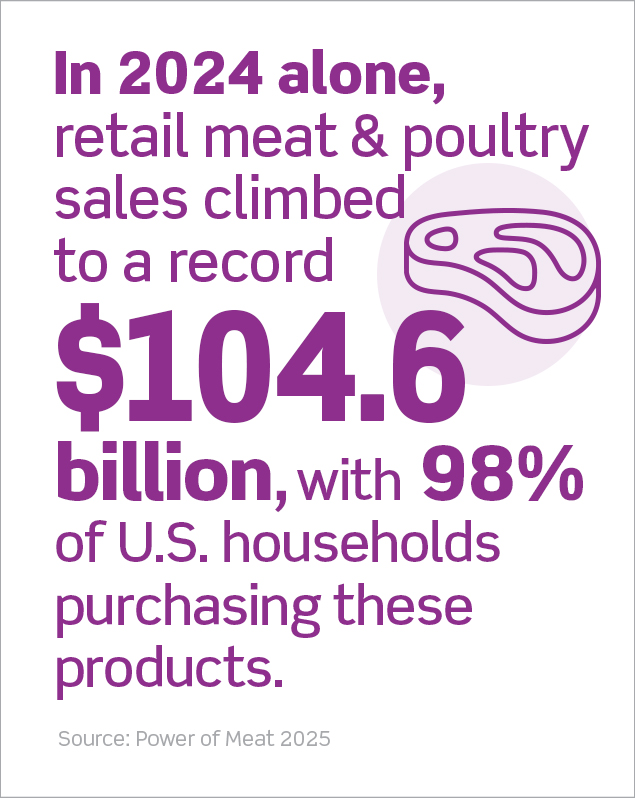
Image courtesy of Corbion
Food safety has long been a regulatory necessity, but it is now a strategic differentiator. A single contamination event or recall can disrupt supply chains, strain retailer relationships, and erode hard-earned brand equity. For consumers, safety is no longer an assumed backdrop. It is an active part of the purchase evaluation.
According to the 2025 U.S. Poultry & Red Meat 360 Category Report from Innova, product safety ranks among the most influential purchase drivers for meat and poultry products, alongside protein content and the use of real or natural ingredients. This signals a meaningful shift. Consumers increasingly expect safety to be built into the product experience, not addressed only through compliance or crisis response.
For manufacturers, this evolution demands a more proactive approach, one that anticipates risk rather than reacting to it.
Preservation and Consistency: Protecting the First Experience
In a category driven by repeat purchases, consistency matters. Consumers may tolerate price fluctuations or packaging changes, but they are far less forgiving when quality expectations are not met. According to shopper data from the Power of Meat 2025 study, 91% of consumers say they will not repurchase a meat or poultry product if it fails to deliver on taste or quality the first time, regardless of price.
This places preservation squarely at the intersection of safety and brand performance. Strategic and effective preservation strategies help ensure that products maintain their intended sensory quality, including flavor, texture, and appearance, throughout product shelf life, while also supporting microbial stability. In this way, preservation becomes not just a tool for waste reduction but a key safeguard for consumer loyalty.
Shelf Life as an Operational and Consumer Value
As consumers cook more meals at home and shop for fewer meals at a time, shelf life and stability are increasingly relevant beyond the manufacturing floor. The Power of Meat 2025 report found that 32% of consumers actively focus on using perishable foods before they go bad, highlighting the downstream importance of product durability and freshness.
For manufacturers, longer and more reliable shelf life can support greater flexibility in production planning, distribution, and inventory management, especially as supply chains face ongoing variability. When achieved without compromising quality, preservation supports both operational efficiency and consumer satisfaction.
Data-Driven Safety in a Complex Supply Chain
Modern meat and poultry supply chains are more interconnected than ever, spanning multiple processing environments, distribution channels, and storage conditions. Traditional safety programs alone are often insufficient to account for this complexity.
Consumer shifts in shopping frequency, pack sizes, and at-home preparation place new demands on manufacturers to manage variability and maintain consistent product performance. As a result, manufacturers are increasingly turning to data-driven and predictive tools such as the Corbion Listeria Control Model to better understand how formulation changes, processing conditions, and temperature exposure can effect microbial behavior over time.
This proactive mindset reflects a broader industry shift from reactive quality control to predictive, science-led risk management.
Clean Label Expectations Raise the Bar
While safety expectations rise, formulation constraints continue to tighten. According to Innova Market Insights, protein remains the primary nutritional driver in meat and poultry purchases, but consumers also place strong emphasis on real or natural ingredients and product safety, often ahead of secondary claims such as sustainability or indulgence.
This dynamic challenges manufacturers to deliver robust microbial control and shelf life within simpler, more transparent product formulations. Success in this space requires deep technical expertise and an understanding of how preservation strategies interact with complex meat and poultry systems, without compromising sensory performance or label integrity.
Partnership as a Strategic Advantage
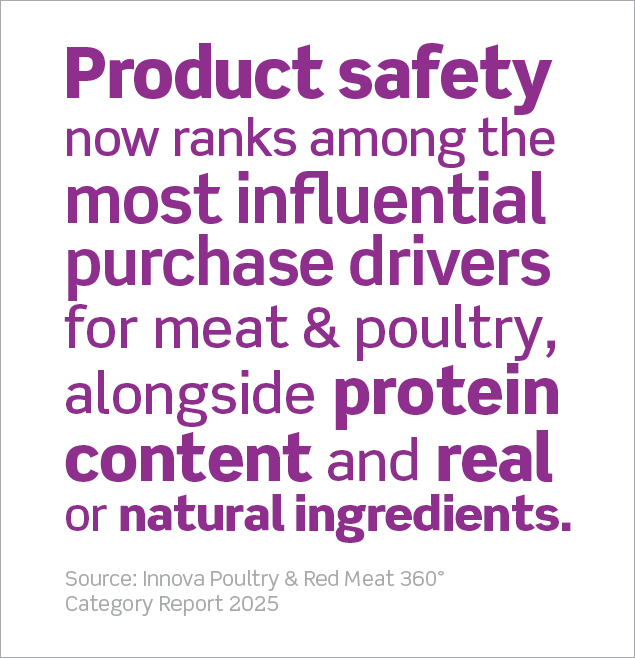
Image courtesy of Corbion
In this environment, the role of ingredient and solution partners has evolved. Partnering with a collaborative solution provider who offers not only ingredient technology but also scientific expertise, predictive tools, and applied experience is vital. These partnerships help manufacturers tailor safety strategies to specific products and processes, accelerate innovation responsibly, and stay ahead of regulatory and consumer expectations.
When aligned effectively, a partnership transforms food safety from a fundamental requirement into a strategic enabler of growth.
Looking Ahead: Safety as a Growth Enabler
The meat and poultry category is poised for continued evolution, driven by new product formats, value-added offerings, and expanding eating occasions. As highlighted in the Power of Meat 2025 outlook, future growth will depend on manufacturers’ ability to deliver safe, high-quality products with consistency and confidence every time.
Manufacturers that embrace proactive, science-based safety and preservation strategies will be best positioned to navigate risk, protect brand equity, and support long-term growth. In a marketplace where trust is built through experience, safety is no longer just about compliance. It is a competitive advantage.
Sources:
- Food Marketing Institute (FMI) and The Meat Foundation. The Power of Meat 2025. Published jointly on behalf of the Annual Meat Conference. Data and insights provided by 210 Analytics with Circana sales overlay.
- Innova Market Insights. Poultry & Red Meat in the U.S. 360° Category Report 2025.
Looking for a reprint of this article?
From high-res PDFs to custom plaques, order your copy today!


