Lower cattle slaughter expected both in short and medium term
US cattle numbers are likely to remain limited well into 2028.
Black Angus cow
There continues to be a lot of talk about prospects of cattle herd rebuilding and future supply. Set aside the fact that, given the increase in weights, we may not need as many cows as in the past. The expectation is that with robust beef demand and record prices, producers will divert more heifers away from feedlots and into their herds.
Indeed, heifer inventories are down although not as much as expected. The latest feedlot survey showed that as of January 1 there were 4.435 million heifers on feed, 3.1% lower than a year ago. This represented about 38.7% of the total inventory. During herd rebuilding years, we have seen a significant shift in the share of heifers in feedlots, reflecting the heifer retention activity.
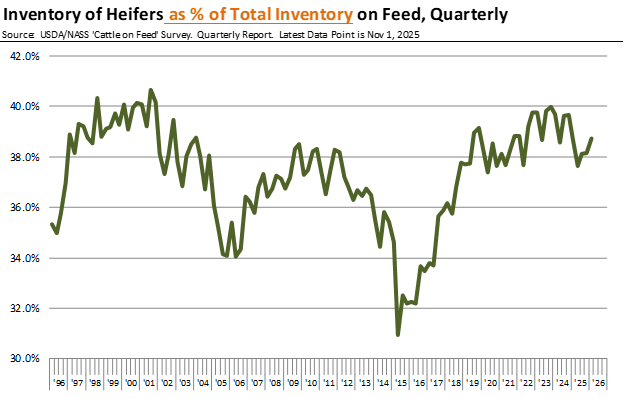 USDA/NASS 'Cattle on Feed' Survey
So far, that share remains on the high end of the range, suggesting any herd rebuilding activity remains very limited. We will get more confirmation of this in the next cattle inventory survey and something we will cover more in depth in a future update. The implication, however, is that US cattle numbers are likely to remain limited well into 2028.
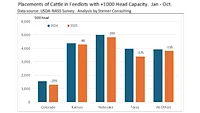
As for the near term, cattle numbers this spring are expected to be limited. Large feedlots (those with capacity of 1000+ head) had 373,000 head of cattle less than a year ago at the start of the year. We suspect smaller feedlots (farmer feeder) have even less inventory given the sharp increase in feeder cattle values and margin pressures.
What stands out when looking at the latest inventory numbers is that feedlots have far more long fed cattle than in the past. The supply of cattle with 150+ days on feed remains well above last year, estimated at 2.728 million head, 462,000 head higher than a year ago. Normally this would suggest feedlots are behind in marketings and will look to get more current by accelerating the pace of marketings. However, the reason for so many more long-fed cattle is that feedlots simply cannot find enough replacements and thus are incentivized to slow the pace of marketings and maximize finished pounds.
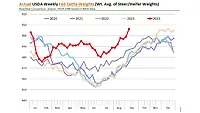
Steer weights have jumped by more than 5% in the last two years and started the year at 989 pounds dressed, 3.1% higher than a year ago. Packers that need to buy a minimum number of cattle to run production have had to raise bids in order to get covered. Even with one large plant now out of production and another running at half capacity, packers will find it difficult to reconcile their needs with what is available at feedlots in any given week.
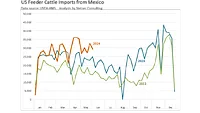
Bottom line for processors and their customers is that cattle, and therefore beef, prices are likely to remain elevated given the lower pipeline supplies and ongoing suspension of cattle trade with Mexico.
Looking for a reprint of this article?
From high-res PDFs to custom plaques, order your copy today!