Upcycled brewery grains support beef cattle feeding
Keeping spent grains out of the landfill provides operational benefits for both Viewpoint Brewing Co. and Flying F Ranch.
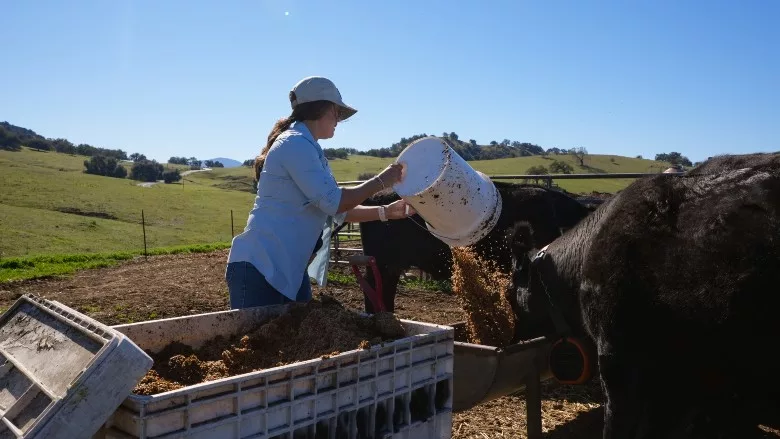
Alli Fender of Flying F Ranch feeds her cattle spent grains that would otherwise go to a landfill
At Viewpoint Brewing Co. in Del Mar, Calif., Head Brewer Moe Katomski produces a range of house-brewed beers, using grain as a primary input. To manage the spent grains generated during brewing, San Diego-based Flying F Ranch collects the byproducts and transports them for use as supplemental cattle feed.
Alli and Bryce Fender of Flying F Ranch raise Black Angus cattle, selling beef direct to consumers online and through local farmers markets. The operation also offers ranch-to-table experiences for local customers.
Once a week, Alli Fender retrieves spent grains from the brewery for use in the ranch’s feeding program. These byproducts are incorporated into cattle diets, which largely consist of materials not suitable for human consumption, including forage and plant residuals that would otherwise go to waste.
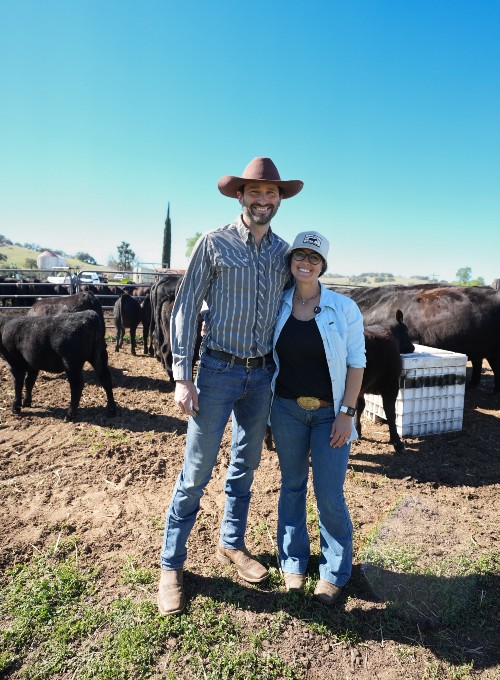 Bryce and Alli Fender, owners of Flying F Ranch in San Diego County. Courtesy of SDFoodies
Cattle are ruminants with a four-compartment digestive system that allows them to extract nutrients from feed sources indigestible to humans. These include grass, almond hulls, citrus peels and brewery grains. Through this process, cattle convert low-value inputs into beef.
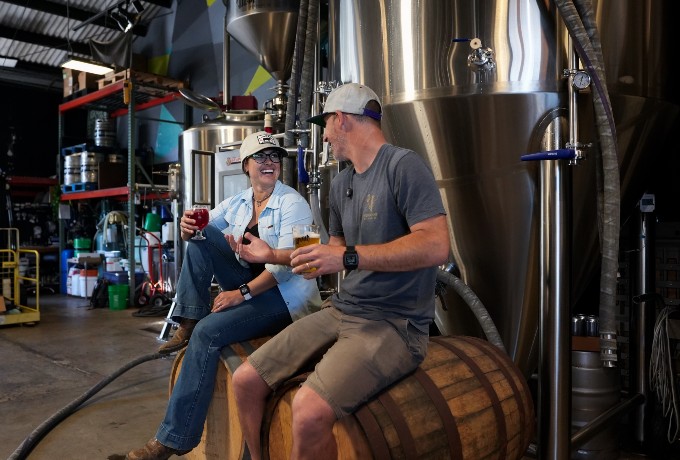 Photo courtesy of SDFoodies
“Cattle are ruminant animals, so they’re able to upcycle wasted byproducts that humans can’t eat, for example, beer grain is a great resource that we’re able to utilize for them,” Fender said. She noted that helps helps breweries reduce landfill use while providing a supplemental feed source.
Keeping spent grains out of the landfill provides operational benefits for both Viewpoint Brewing Co. and Flying F Ranch.
Source: California Beef Council
Looking for a reprint of this article?
From high-res PDFs to custom plaques, order your copy today!