Category Report: Merchandising Strategies for small processors
Carefully curated merchandising helps small processors stay competitive in the meat case
From strategic labeling to local partnerships and limited-time offerings, small processors leverage agility and storytelling to stand out at retail.
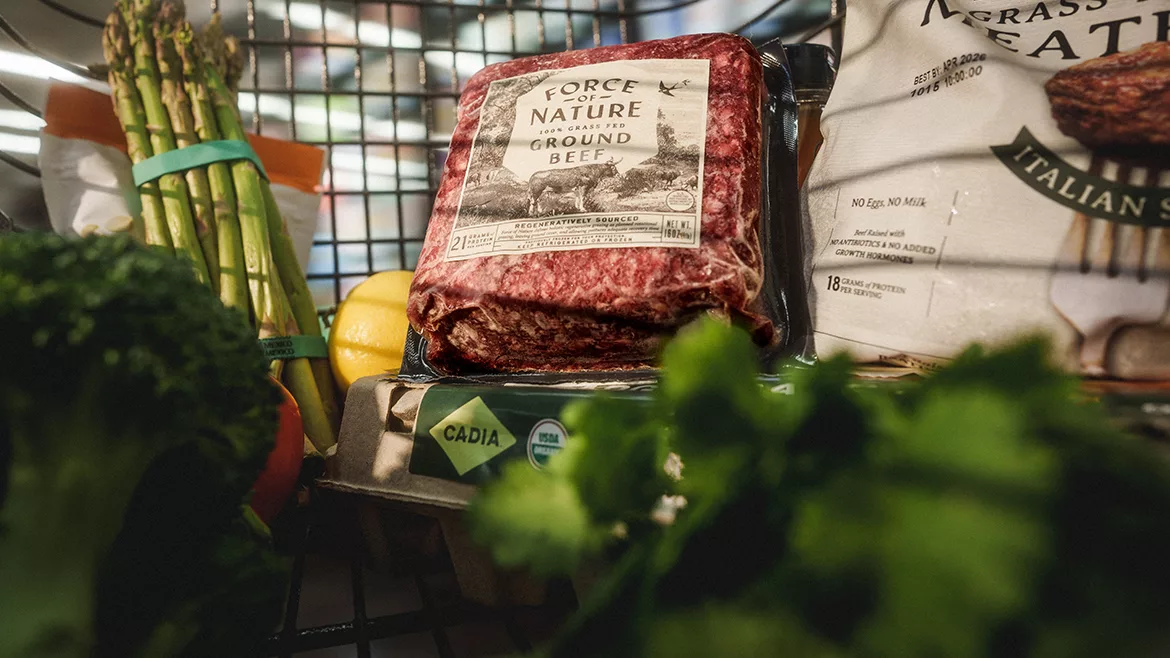
Force of Nature Meats Grocery
As competition intensifies across the meat retail case, merchandising strategies are evolving beyond traditional pricing and placement, creating new opportunities for small and regional processors to differentiate their products and connect deeper with consumers.
Retailers are placing greater emphasis on clear, consumer-facing communication, particularly around production methods, nutrients and product claims, said Anne-Marie Roerink, principal for 210 Analytics. This shift is helping shoppers more easily navigate the meat case and identify products that align with their preferences.
"Meat merchandising is getting better and better," said Anne-Marie Roerink, principal at 210 Analytics. "Label communications are reinforced with on-shelf messaging on things like nutrients and production methods. This makes it easier for consumers to find grass-fed, organic or other claims-based products that sometimes get lost in large conventional sets."
Beyond labeling, retailers are expanding how and where meat is presented throughout the store. Roerink pointed to increased use of secondary placements, meal solution stations and cross-merchandising strategies to drive engagement and basket size. These approaches position meat as part of a broader meal solution rather than a standalone purchase. Examples include pairing bacon with breakfast items and incorporating dinner sausage into meal kits.
"Meat is also increasingly popping up in other parts of the store, whether meal solution stations at the entrance, secondary displays for commonly purchased items, or meat in ovenable packaging in the deli department," she said.
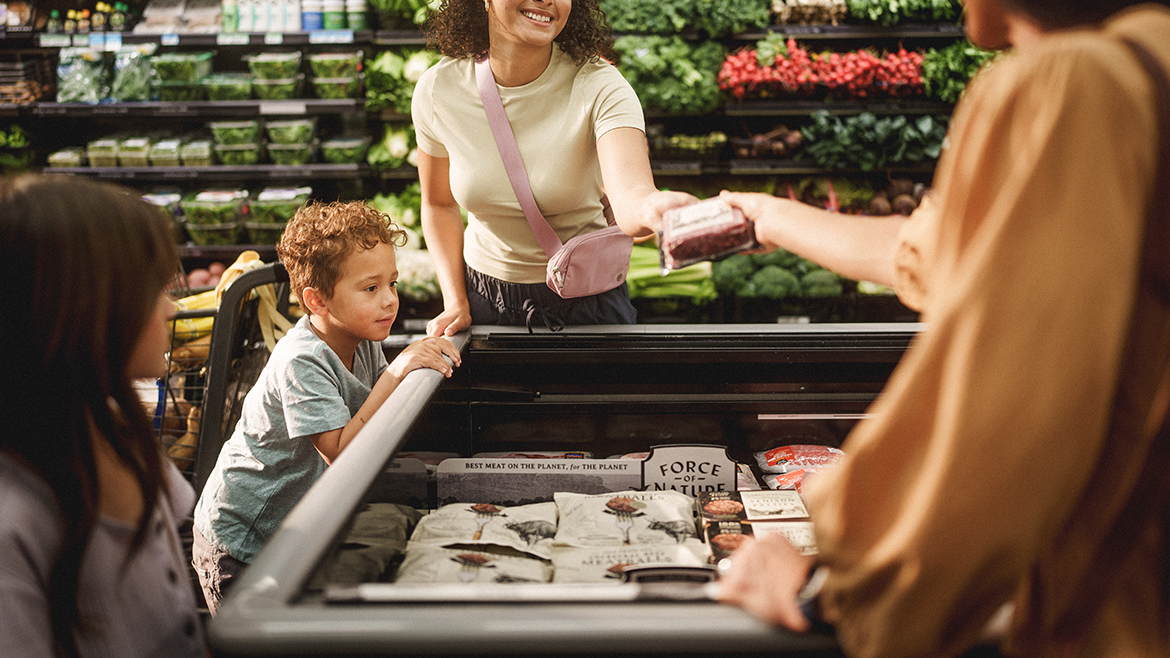
Force of Nature Meats - Retail Image courtesy of Force of Nature Meats
Standing out through differentiation and storytelling
For smaller processors, success at retail depends on clearly communicating what makes their products unique. The meat department remains highly price-driven, which makes differentiation essential, especially for emerging brands competing against larger players, said Emily Wylie, director of marketing for Force of Nature Meats.
"The meat department is traditionally highly commoditized, and most shoppers have been trained to make decisions based on price per pound," said Emily Wylie, director of marketing for Force of Nature Meats. "Smaller brands need to quickly communicate what makes their product different through packaging, messaging and assortment."
Wylie noted that increasing consumer interest in sourcing and production practices is creating new opportunities for brands that prioritize transparency. "Consumers are asking more questions about where their food comes from and how it was produced," she said.
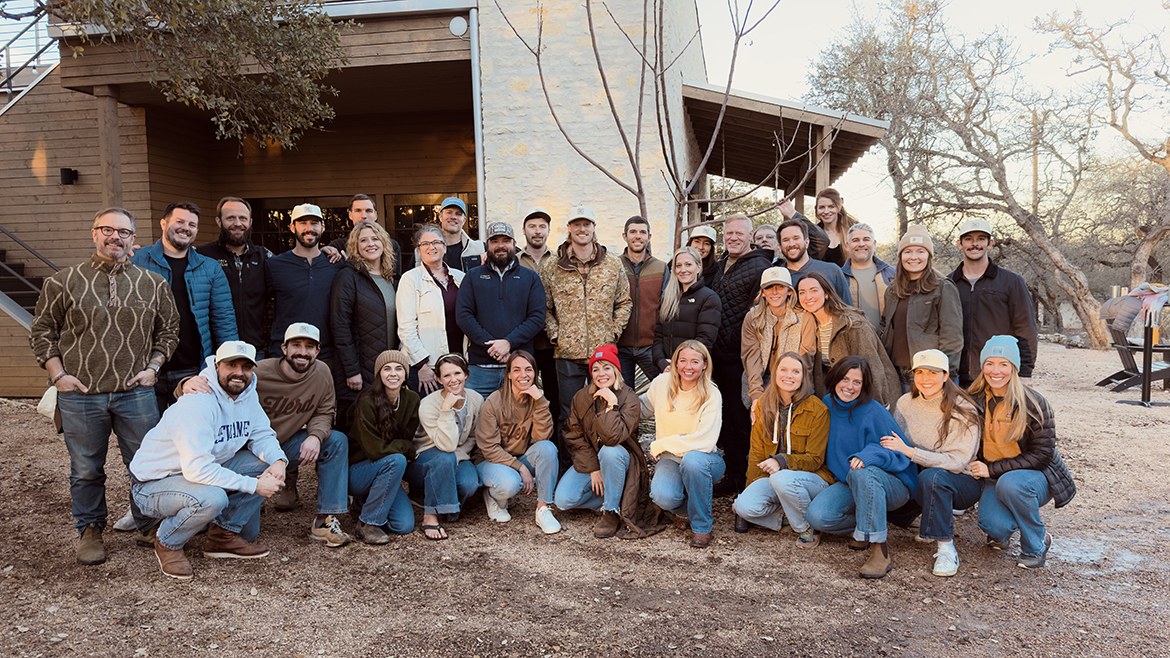
Force of Nature Meats Team Image courtesy of Force of Nature Meats
Opportunities to stand out on the shelf often come through product innovation and brand storytelling. Roerink noted that younger consumers are particularly open to experimentation, especially with globally inspired flavors and new product formats.
"Younger consumers love trying new items, especially globally and digitally inspired items," she said. "That gives smaller and regional processors a lot of leeway to experiment with different flavors as well as different inclusions, especially for burgers and dinner sausage."
Roerink added that localized branding, like highlighting regional sourcing, ranchers or farmer stories, can help products stand out in the meat case and create a stronger connection with shoppers. She noted that smaller and regional processors have also been teaming up with local breweries and other local businesses to drive consumer engagement.
Wylie emphasized that while packaging and messaging are critical, these efforts must be backed by product integrity to drive repeat purchases and build long-term trust. "Packaging has to quickly explain what the brand stands for and why the product is different," she said. "But the story only works if the product actually delivers on it."
Balancing price pressures with value
Economic pressures continue to shape merchandising strategies across the industry. According to Roerink, grocery prices are around 40% higher now than in 2019, creating increased pressure on household budgets and driving increased price sensitivity among consumers.
Still, price alone is not enough to sustain long-term success. Roerink noted that while price will secure the first purchase, taste is what ensures repeat purchases.
To address price sensitivity, retailers are expanding pack sizes and price points, helping meet the needs of different household sizes and budgets while still maintaining product differentiation.
Still, premium products continue to perform well, driven by higher-income consumers and shifting generational preferences. "In this economy, the top 10% of household incomes are responsible for 49% of total consumer spending," Roerink said. "Consumers who are financially comfortable are driving premium purchases across the store, including in meat."
Younger consumers are also playing a growing role in premium segment growth, with increased interest in organic, grass-fed and claims-based products.
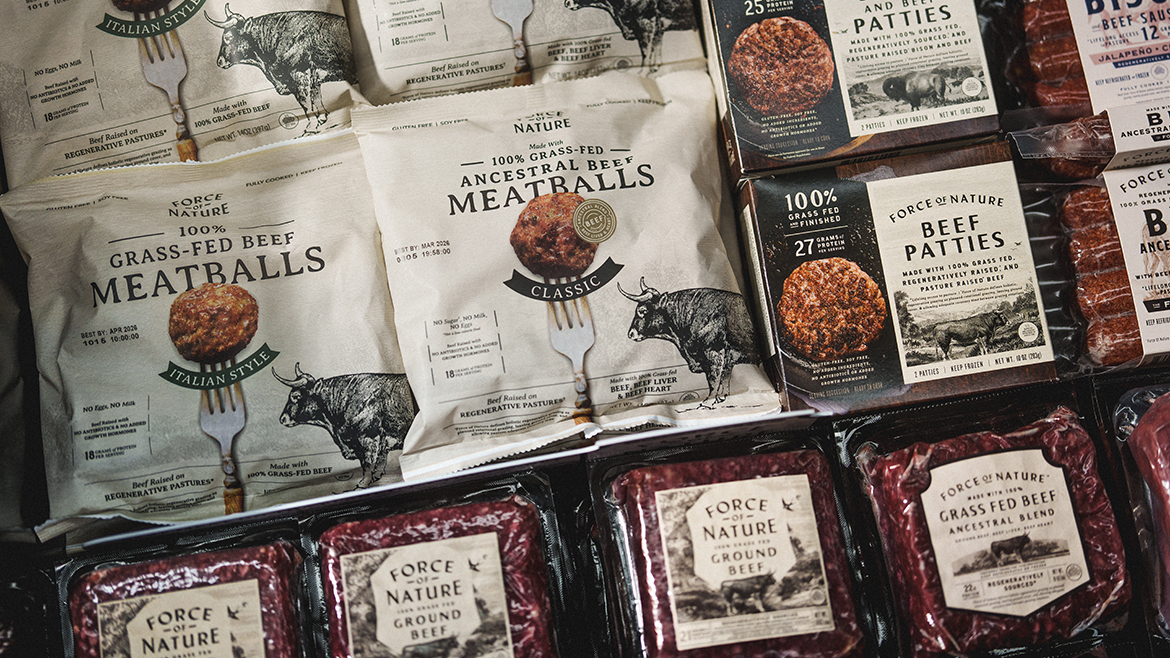
Force of Nature Meats products Image courtesy of Force of Nature Meats
Retail partnership and long-term growth
Strong collaboration between processors and retailers is another key driver for visibility and sales.
Wylie said brands that align with retailers on education, transparency and category growth are better positioned to stand out on the shelf; this alignment allows for more effective storytelling and stronger consumer engagement. "The best partnerships are with retailers who see the meat department as an opportunity to educate and build the category," she said.
In addition to in-store efforts, Wylie noted brands are increasingly supporting retailer partners through digital channels, events and direct-to-consumer engagement strategies to help drive traffic to stores.
Looking ahead, flexibility and speed to market will remain key advantages for smaller processors.
Roerink emphasized that smaller companies are often better positioned than large national brands to respond quickly to emerging trends, especially through limited-time offerings and seasonal innovation.
These limited-time offerings are increasingly being used to capture consumer interest and bring variety to the meat case, particularly as retailers respond to social media-driven trends, Roerink added.
With consumers placing greater emphasis on transparency, production claims and brand storytelling, merchandising strategies are becoming a strong lever for growth. Smaller and regional processors that can align consistent quality with clear messaging and strategic retail merchandising are better positioned to help their products stand out on the shelf and capture consumer interest.
Looking for a reprint of this article?
From high-res PDFs to custom plaques, order your copy today!