Tech Topics: Ingredients
A smarter approach to sodium reduction in meat and poultry
Sodium reduction is rarely a simple matter of removing salt from the formula.
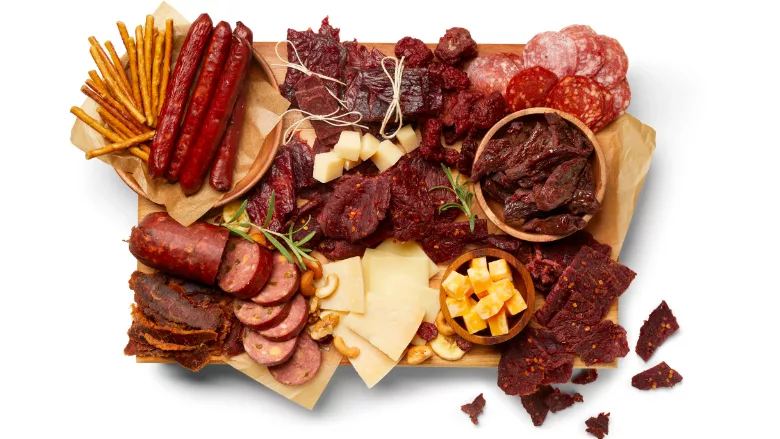
Meat sticks, deli meats, hot dogs, sausages, and other processed meat and poultry products continue to resonate with consumers for good reason. They offer convenience, portability, high protein, and familiar flavor in formats that fit busy lifestyles. Yet these same categories are often associated with high sodium levels, putting manufacturers in a challenging position. Consumers still want the products they know and enjoy, but many are also looking for options that better align with health and nutrition goals.
That tension is creating a meaningful opportunity for innovation.
For years, sodium reduction in meat and poultry has often been viewed as a compromise. Reducing salt may mean something else suffers. Flavor can flatten. Product stability can shift. Shelf life and safety considerations may become more complex. But that framing is starting to change. Today, sodium reduction is less about what must be given up and more about how manufacturers can rebuild the functions salt provides in smarter, more strategic ways.
Why sodium reduction matters now more than ever
The scale of the issue is hard to ignore. According to the FDA, Americans currently consume, on average, almost 50% more sodium than the recommended limit, and 90% of Americans are eating more than the recommended amount. While almost half of American adults currently have high blood pressure.
At the same time, interest in sodium reduction is not limited to public health agencies. According to recent Innova surveys, 34% of consumers globally report actively limiting or avoiding salt or sodium. The data also shows a clear generational divide, with sodium avoidance rising from 26% among Gen Z consumers to 49% among Boomers. For meat and poultry manufacturers, that signals a meaningful shift in expectations across the marketplace.
Salt does more than deliver taste
Most consumers think of salt primarily as a flavor ingredient. In meat and poultry systems, it does much more than that. Salt helps enhance savory taste, reduces water activity, contributes to formulation stability, and supports broader food safety goals.
That is why sodium reduction is rarely a simple matter of removing salt from the formula. In categories such as deli meats, meat sticks, hot dogs, and sausages, reducing sodium can affect multiple aspects of product performance simultaneously. Flavor may become less rounded. Stability may change. Safety margins may need to be reevaluated depending on the application.
For manufacturers, this is where the conversation has to become more advanced. Salt is not one function. It is several. And successful sodium reduction depends on understanding which of those functions need to be rebuilt in the finished product.
The real opportunity is differentiation
That complexity is exactly why sodium reduction should be viewed as more than a technical challenge. It can also be a strategic opportunity.
As outlined earlier, many of the meat and poultry products consumers value most for convenience and protein are also the ones they often assume are high in sodium. That creates white space. If manufacturers can reduce sodium in these categories while preserving the expected eating experience, they have the chance to offer something meaningfully different.
This matters because today’s consumer is not necessarily looking to give up these products. They are looking for options that better align with health and nutrition goals. A product that still delivers convenience, protein, and a familiar flavor while also supporting a reduced-sodium claim can stand out more clearly in a crowded market.
Claims can turn formulation work into market value
One of the reasons sodium reduction is such an interesting opportunity in meat and poultry is that its benefits can be clearly communicated.
Under CFR section 101.61, claims such as "reduced sodium," "less sodium," and "lower sodium" may be used when a food contains at least 25% less sodium per reference amount customarily consumed than an appropriate reference food. The regulation also requires that the reference food and the percentage reduction appear in close proximity to the claim, along with quantitative information comparing the new product's sodium level to that of the reference product.
That gives manufacturers a concrete target rather than an abstract ambition. In categories where sodium is often assumed to be high, achieving a reduced sodium claim can create real visibility and differentiation. It gives brands the opportunity to meet consumers where they are without asking them to abandon the products they already enjoy.
Rebuilding savory impact in a smarter way
Of course, sodium reduction only works if flavor still delivers.
One of the biggest challenges in reducing sodium is preserving the satisfying savory profile consumers expect from processed meat and poultry products. Salt does not just create saltiness. It helps build the overall flavor impression that makes products taste full, satisfying, and craveable.
This is where fermentation-based ingredients such as Corbion’s PuraQ® Arome portfolio can play an important role. They can help support the savory and umami notes that salt often provides and, in some applications, allow for label-friendly declarations such as "natural flavors." Rather than relying on sodium alone to carry flavor, manufacturers can use these solutions to help maintain depth and complexity when removing salt from the product formulation.
Lactates such as those found in Corbion’s Opti.Form® portfolio also brings value to this discussion. In addition to their functional benefits, they can help return some of the savory character that may be lost when sodium is reduced. Sometimes, allowing manufacturers to reduce salt by 10-20% without much loss of savory flavor. They can also support freshness, shelf life, and, in some cases, yield goals. That makes them especially relevant in meat and poultry applications, where flavor and functionality must work together.
The broader takeaway is that sodium reduction is more effective when approached through flavor design rather than just reduction.
Why a multi-hurdle safety strategy still matters
Even with the right sensory tools in place, sodium reduction has to be approached carefully. Because salt contributes to product stability and safety, lowering it can introduce new formulation challenges depending on the product and process.
That is why a multi-hurdle strategy remains so important. In addition to helping restore flavor, manufacturers also need ways to replace the technical functions that salt provides. For example, 2.5% of Corbion’s Purasal® HiPure P, a sodium-free shelf-life extender, can replace the water activity effect of 1% salt while also delivering added preservation value. That gives manufacturers a practical way to restore functionality as sodium levels decline.
By pairing savory-support solutions with naturally derived antimicrobial solutions, manufacturers can work toward sodium reduction while also supporting food safety and shelf-life goals. This kind of system-based thinking is essential for products that must maintain microbial stability, freshness, and eating quality.
Consumers may notice a sodium claim, but they will ultimately judge the product on the full experience. If flavor, freshness, or consistency falls short, the claim alone will not carry the product.
The path forward
For meat and poultry manufacturers, sodium reduction is no longer just about removing salt from the formula. It is about understanding what salt is doing in the system and rebuilding those functions in a more strategic way.
Fermentation-based ingredients can help support savory depth. Lactates can help deliver both flavor and functional benefits. Naturally derived antimicrobials can strengthen a broader multi-hurdle approach. Together, these tools can help manufacturers reduce sodium while still protecting product quality, shelf life, and consumer appeal.
That is what makes sodium reduction such an important topic for the category right now. It is not just a taste or safety issue. It is an opportunity to innovate in products consumers already value while creating room for a stronger nutrition story. In a market where high sodium is often taken for granted, that can be a powerful way to stand apart.
Sources:
U.S. Food and Drug Administration (FDA). “Sodium Reduction in the Food Supply.”
Electronic Code of Federal Regulations (eCFR). 21 CFR § 101.61, “Nutrient content claims for the sodium.”
Innova Market Insights. Innova Flavor Survey 2025
Innova Market Insights. Innova Health & Nutrition Survey 2025
Looking for a reprint of this article?
From high-res PDFs to custom plaques, order your copy today!