The hidden yield gap: What beef processors actually lose between the carcass and the box
The most underappreciated factor in beef yield is also the hardest to quantify: experienced human judgment.
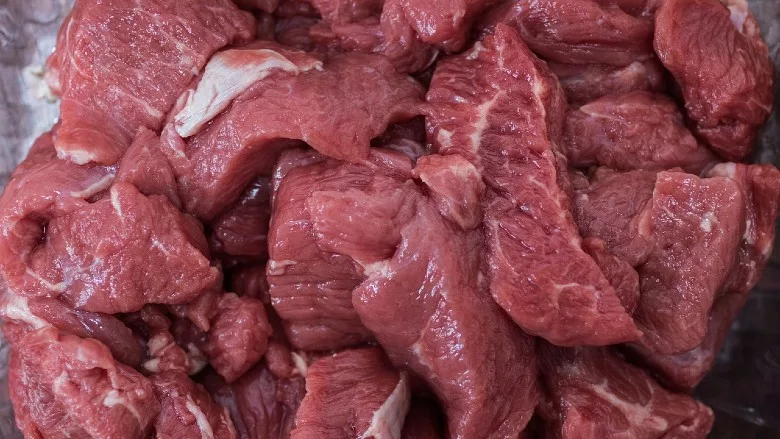
Every beef processor has a yield target. Most have a general sense of whether they are hitting it. Very few know, in real time, exactly where they are losing product and why. That gap between what a carcass should yield and what actually ends up in the box is not a mystery. It is a measurement problem, and for a 1,000-head-per-day operation, it is also a multimillion-dollar one.
Where yield loss actually hides
Beef processors typically track yield at the lot or carcass level. What rarely gets captured is what happens at each individual stage of the breakdown process. There are three primary zones where yield quietly erodes.
Primal cutting: The separation of a carcass into its primals sets the baseline for everything downstream. Knife angle, seam depth, and fat cover removal decisions at this stage create variability that compounds through every step that follows. Two operators working the same carcass grade can produce meaningfully different outputs before the boning table ever sees the product.
Boning: This is the highest skill-dependency stage in the entire processing chain. How cleanly a boner follows a seam, how much fat cover remains on the bone, how silverskin is addressed, these decisions happen thousands of times per shift. A fraction of an ounce per cut, multiplied across a full kill floor, produces real and traceable loss.
Trimming and fatting: Fat-to-lean ratio targets are set at specification. Execution on the floor varies. Over-trimming lean to hit a fat target destroys margin. Under-trimming generates spec failures at the customer level. Both directions carry a cost. Both tend to go unexamined.
What makes this difficult is not that the loss is invisible. Supervisors see the floor. Weight tickets exist. The problem is that by the time the data is reviewed, the loss has already been absorbed, and it can no longer be traced to a specific stage, operator, or decision.
Why the data gap persists
Most beef processing operations capture yield at the end of a shift. Total boxed weight gets reconciled against carcass input. If the number is close enough to the target, the shift is signed off.
That aggregated figure hides enormous variation. A plant running 1,000 head per day across two shifts could see a measurable yield difference between those shifts without ever identifying the cause. One boning team with a higher concentration of experienced workers. A floor-level change in how trim is being called. These variables go unexamined because no mechanism exists to capture them at the cut level in real time.
Processors who have begun building cut-level yield tracking, capturing weight at individual workstations rather than at end-of-day consolidation, are surfacing variance patterns that traditional lot-level reporting never revealed. Structured production variance reporting at the cut level transforms what was once anecdotal floor knowledge into a measurable, actionable data set.
The math that changes the conversation
Consider a straightforward example. A plant processing 1,000 head per day at an average hot carcass weight of 850 pounds, consistent with a 62 percent dressing percentage on a 1,370-pound live-weight steer, is working with approximately 850,000 pounds of carcass input per day.
A 0.5 percentage point improvement in yield recovery represents 4.25 additional pounds per carcass. Across 1,000 head, that is 4,250 pounds of recoverable product per day. Over 250 operating days, which approaches 1,060,000 pounds per year.
At conservative 90CL trim market values, which have ranged from $1.75 to over $3.00 per pound in recent years, depending on market conditions, that represents between $1.8 million and $3.2 million in potential annual recovered value.
For a half-percent improvement. Most of which is already sitting on the floor, untracked.
The yield variable nobody has digitized
The most underappreciated factor in beef yield is also the hardest to quantify: experienced human judgment.
A skilled boner working a round or a chuck brings adaptive intelligence to every carcass that has no current digital equivalent. They adjust for fat cover variation, muscle condition, chilling temperature, and dozens of subtle physical signals that influence how each cut should be made. This judgment is not written in any SOP. It lives in the hands and eyes of workers who have spent years on the floor.
That knowledge is at risk. Workforce turnover in meat processing has remained persistently high. As experienced workers leave, the yield intelligence they carry does not automatically transfer to the next operator.
Building systems that pair experienced worker judgment with real-time data capture, tracking yield by operator, by shift, and by carcass grade, is how plants begin to make that institutional knowledge visible and measurable. Operations designed around operator-level yield tracking within meat processing are beginning to treat human performance as a quantifiable production variable, not just a background assumption.
Vision systems and robotics continue to advance. But no automated system today consistently matches the accuracy and adaptability of an experienced knife hand working a variable carcass. For the foreseeable future, the yield gap will remain, in part, a human problem.
What forward-thinking processors are doing
The operations closing the yield gap are not necessarily spending more on capital equipment. Most of what they are doing involves better data discipline at the floor level: in-line weigh capture at key workstations; operator-level benchmarks that allow supervisors to coach rather than just track aggregate output; and cut-level traceability that creates accountability at the precise point where value is created or lost.
Variance data, tracked consistently, becomes a training instrument. It identifies where knowledge gaps exist, which shift structures underperform, and where small process adjustments generate measurable returns.
The yield gap in beef processing is not a mystery. It is a measurement problem in a business where every pound matters. The processors who close it will not necessarily have newer equipment or larger floors. They will simply know, in more detail than their competitors, exactly what is happening between the carcass and the box.
Looking for a reprint of this article?
From high-res PDFs to custom plaques, order your copy today!