Provisioner logo
Provisioner logo
search
cart
facebook twitter linkedin youtube
  • Sign In
  • Create Account
  • Sign Out
  • My Account
Provisioner logo
Provisioner logo
  • NEWS
    • Industry News
    • Supplier News
    • Case Studies
    • Recalls
    • Regulations
    • New Consumer Products
  • EXCLUSIVES
    • Newsletters
    • Source Book
    • Sponsored Insights
    • Events
    • Webinars
    • Classifieds
    • White Papers
    • Provisioner Store
    • Market Research
  • MEAT PROCESSING
    • SUSTAINABILITY
    • Processing
    • Packaging
    • Ingredients
    • Formulation
    • Food Safety
    • Special Reports
    • Commentary
  • PROFILES
    • Processor Profiles
    • Processor of the Year
    • Top 100 Processors
  • MEDIA
    • Videos
    • Podcasts
  • DIRECTORY
  • MIHOF
  • INDEPENDENT PROCESSOR
  • EMAG
    • eMagazine
    • ARCHIVE ISSUES
    • Contact
    • Advertise
  • JOIN!
Food Safety

Antimicrobial agents help keep facilities clean

By Jessica Evans
December 11, 2011
According to the Centers for Disease Control and Prevention (CDC) 2011 Estimates of Foodborne Illness in the U.S., the top five pathogens that contribute to domestically acquired foodborne illness are Norovirus, Salmonella (nontyphoidal), Clostridium perfringens, Campylobacter spp. and Staphylococcus aureus.  Exposure to these pathogens can be the result of food that was contaminated during the processing, packaging or transporting of food products.
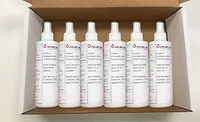
Spray Bottle
 

In 2010, the U.S. Food and Drug Administration (FDA) reported the recall of more than 500 million shell eggs due to a multistate outbreak of Salmonella Enteritidis, in which over 1,000 people were sick.  In September 2011, there was a multistate outbreak of foodborne illness due to Salmonella contamination of ground turkey. This outbreak resulted in the recall of 36 million pounds of turkey, according to the CDC.

The risk of such contamination can be greatly reduced with the proper use of cleaners and antimicrobial agents by both the consumer and the food processor.  Antimicrobial agents are essential in maintaining a clean environment in food-processing facilities as they help to mitigate and eliminate the growth of microorganisms such as bacteria, viruses or fungi.  With the passing of the Food Safety Modernization Act, and the forecasted increase in FDA inspections, it is important for food processors to understand what products are acceptable for use in their facilities. 

Cleaning is the process by which food soils are removed from a surface.  There are various types of cleaners that can be used for this purpose.  Because of the multitude of soil types within a food facility, multiple types are needed to address the cleaning needs of the facility.  General cleaners can be used on all surfaces within the food facility when followed by a potable water rinse.  These products are sold as concentrates or ready-to-use.  Acid or alkaline cleaners can be used to remove mineral deposits or food soils respectively.  Degreasers are used to remove tough greases.

All antimicrobial agents used on surfaces in a food facility must be registered with the U.S. Environmental Protection Agency (EPA) as well as the state in which it will be used.  The EPA reviews efficacy and safety data in addition to product labeling to ensure that the product is safe for the intended end use.  States further review the products to ensure the labels meet the federal labeling regulations and any additional state requirements.  These registrations must be in place before the product can be sold.

Within the antimicrobial class of pesticides there are four primary uses: sanitizers, disinfectants, sterilizers and antiseptics/germicides.  When used properly, they can significantly decrease the risk of product contamination within a food facility.  To determine their proper use, the instructions on the product labeling should be followed.

Sanitizers are used to decrease the presence of microbes.  Sanitizers do not kill all microbes present; instead they reduce the microorganisms to a safe level.  Sanitization is the last step in an acceptable food-processing cleaning procedure.  Disinfectants are used to kill all microorganisms on a surface with the exception of bacterial spores.  Sterilizers(or sporicides) are used to destroy all forms of microbial life including fungi, viruses and all forms of bacteria and their spores. Sterilization is the most powerful process for eliminating microorganisms and is very important for environments where the chance of cross-contamination is high, such as meat and dairy facilities. Antiseptics/germicides are antimicrobial agents used on the skin.  Because they are used on humans, these products are regulated by the FDA as over-the-counter drugs.

Cleaning products in use

Cleaning and sanitizing are important steps in food safety.  Clean facilities reduce the possibility of contamination during production.  Cleaners also fall under the definition of a nonfood compound and include a wide range of product types from hand soaps, to clean-in-place (CIP) cleaners to metal polishes.  It is important that the appropriate product be used in any given application to ensure that cross-contamination does not occur.

There are several types of products that should not be used within the production area.  These products (e.g. glue removers and solvent cleaners) typically consist of hydrocarbons, chlorinated hydrocarbons or other water-immiscible solvents.  There are also cleaners that can be used within a food-processing facility; however, they should not be used on food contact surfaces (e.g., metal polishes). 

Cleaners are not allowed to come into direct contact with food.  By using cleaning products reviewed by a third party, and food-grade safe, a food facility can eliminate the need for trying to determine which type of cleaners are safe to use in their processing facility.

Product registration

In the United States, food-grade lubricants, water-treatment products and other nonfood products were reviewed previously by the United States Department of Agriculture (USDA).  In 1999, NSF International, an independent global public health and safety organization, assumed responsibility for these evaluations and continues to expand that program today.  Working in collaboration with the USDA, NSF captured all previous review requirements.  Today, NSF’s Registration and Listing Program is a resource recognized worldwide for nonfood compounds. The program is designed to complement the Hazard Analysis and Critical Control Points (HACCP) programs developed by food facilities.

By providing an easy-to-use online list of products registered under the NSF Nonfood Compounds Registration Program, companies can quickly determine if a product is acceptable for use in their processing facility.  The registration number assigned to each product allows for straightforward searching and traceability.

The product list, also known as the NSF White Book™, is searchable by various factors such as trade name, company name, NSF Registration number and/or NSF category code.   The NSF White Book™ can be reached from the website (www.nsfwhitebook.org).  Once a product is found, a copy of the registration letter can be downloaded.  The registration letter details what end use the product has been registered for and any limitations associated with its use.

KEYWORDS: CDC foodborne illnesses Salmonella

Share This Story

Looking for a reprint of this article?
From high-res PDFs to custom plaques, order your copy today!


Jessica Evans is the business unit manager for the NSF Nonfood Compounds Registration Program, leading the Nonfood Compounds team in developing new service offerings, improving existing processes and accommodating customer needs.  For more information, contact her at (734) 913-5774 or jevans@nsf.org.

Recommended Content

JOIN TODAY
to unlock your recommendations.

Already have an account? Sign In

  • Double Charburger

    Premiumization drives burger category

    Shoppers seek out premium meat offerings to fulfill...
    Special Reports
    By: Sammy Bredar
  • JJS Adult Pekin duck

    Poultry Report 2025: Convenience propels poultry at retail

    Despite continued economic pressures, the poultry...
    Turkey
    By: Sammy Bredar
You must login or register in order to post a comment.

Report Abusive Comment

Manage My Account
  • eMagazine Subscriptions
  • Manage My Preferences
  • Newsletters
  • Online Registration
  • Subscription Customer Service
  • Connect with The National Provisioner

More Videos

Sponsored Content

Sponsored Content is a special paid section where industry companies provide high quality, objective, non-commercial content around topics of interest to the The National Provisioner audience. All Sponsored Content is supplied by the advertising company and any opinions expressed in this article are those of the author and not necessarily reflect the views of The National Provisioner or its parent company, BNP Media. Interested in participating in our Sponsored Content section? Contact your local rep!

close
  • A smiling man carrying a grocery basket is reaching down to pick up a package of meat in a grocery store.
    Sponsored byPIC

    The Green Light: New Data Shows 12-to-1 Support for Pork from PRRS-Resistant Pigs

  • Close up of a grocery cart full of groceries, a cropped image of a couple pushing the cart and a blurred background of the vegetable aisle.
    Sponsored byPIC

    New Market Research Finds Consumers in Eight Key Pork Markets Are Likely to Purchase Pork from Gene-Edited Pigs

  • Close up of a young pig with a blurred background.
    Sponsored byPIC

    New Research Forecasts Significant Economic and Market Impacts with PRRS-Resistant Pig Adoption

Popular Stories

Spam Dog

Hormel rolls out Spam hot dog for foodservice applications

Colorado Premium logo

Colorado Premium acquires Old Hickory Smokehouse

Niman Ranch Uncured Grass-Fed Beef Bacon

Niman Ranch introduces beef bacon

2026 Top 100 Meat & Poultry Processors Report

Events

June 11, 2026

From Fresh to Frozen in 3 Minutes Flat: Unlocking the Secrets to Temperature Control

Join Tony Vacaro, Foods Industry Manager, and Emile Klein, Foods Market Strategy Manager at Air Products and Chemicals, Inc. , as they tackle key questions surrounding heat removal in food processing. 

January 1, 2030

Webinar Sponsorship Information

For webinar sponsorship information, visit www.bnpevents.com/webinars or email webinars@bnpmedia.com.

View All Submit An Event

Products

Food Crime: An Introduction to Deviance in the Food Industry

Food Crime: An Introduction to Deviance in the Food Industry

See More Products
From Fresh to Frozen in 3 Minutes Flat: Unlocking the Secrets to Temperature Control Webinar Sponsored by Air Products

Related Articles

  • Mantrose-Haeuser offers new low-dosage antimicrobial agents

    See More
  • Inkhet sanitizer

    InkJet Inc. is producing and offering liquid hand sanitizer to help keep the U.S. supply chain up and running

    See More
  • Use internal audits to help keep on track

    See More

Related Products

See More Products
  • seafood.jpg

    Seafood Safety and Quality

  • Food Plant Sanitation: Design, Maintenance, and Good Manufacturing Practices, Second Edition

  • Handbook of Poultry Science and Technology, Volume 2, Secondary Processing

See More Products

Events

View AllSubmit An Event
  • April 25, 2013

    Food Plant of the Future: Global Food Safety Impact on Facilities

    On demand SQF 2000, FSMA, ISO 22000/PAS220 and other standards continue to gain traction in an attempt to create safer foods and beverages.
View AllSubmit An Event

Related Directories

  • Clean Water Technology

    Clean Water Technology (CWT) offers industrial wastewater treatment solutions built on decades of R&D. Its proprietary GEM® System outperforms traditional DAF technology, delivering up to 98% removal of TSS, FOG, and undissolved BOD/COD with a smaller footprint, sustainability, and operational savings.
  • Vibrant Ingredients

    At Vibrant Ingredients™, we deliver Purely Better™ natural solutions that help brands create exceptional food and beverage experiences. Our portfolio combines clean label ingredients with industry-leading capabilities, and our team works closely with partners to craft solutions that balance taste, functionality, and performance. Your vision drives us, and we bring it to life.
×

Stay ahead of the curve. Unlock a dose of cutting-edge insights.

Receive our premium content directly to your inbox.

SIGN-UP TODAY
  • RESOURCES
    • Advertise
    • Contact Us
    • Directories
    • Store
    • Want More
  • SIGN UP TODAY
    • Create Account
    • eMagazine
    • Newsletter
    • Customer Service
    • Manage Preferences
  • SERVICES
    • Marketing Services
    • Reprints
    • Market Research
    • List Rental
    • Survey/Respondent Access
  • STAY CONNECTED
    • LinkedIn
    • Facebook
    • YouTube
    • X (Twitter)
  • PRIVACY
    • PRIVACY POLICY
    • TERMS & CONDITIONS
    • DO NOT SELL MY PERSONAL INFORMATION
    • PRIVACY REQUEST
    • ACCESSIBILITY

Copyright ©2026. All Rights Reserved BNP Media, Inc. and BNP Media II, LLC.

Design, CMS, Hosting & Web Development :: ePublishing