Provisioner logo
Provisioner logo
search
cart
facebook twitter linkedin youtube
  • Sign In
  • Create Account
  • Sign Out
  • My Account
Provisioner logo
Provisioner logo
  • NEWS
    • Industry News
    • Supplier News
    • Case Studies
    • Recalls
    • Regulations
    • New Consumer Products
  • EXCLUSIVES
    • Newsletters
    • Source Book
    • Sponsored Insights
    • Events
    • Webinars
    • Classifieds
    • White Papers
    • Provisioner Store
    • Market Research
  • MEAT PROCESSING
    • SUSTAINABILITY
    • Processing
    • Packaging
    • Ingredients
    • Formulation
    • Food Safety
    • Special Reports
    • Commentary
  • PROFILES
    • Processor Profiles
    • Processor of the Year
    • Top 100 Processors
  • MEDIA
    • Videos
    • Podcasts
  • DIRECTORY
  • MIHOF
  • INDEPENDENT PROCESSOR
  • EMAG
    • eMagazine
    • ARCHIVE ISSUES
    • Contact
    • Advertise
  • JOIN!
Food SafetyIngredients

Can garlic help fight ‘campy’?
July 16, 2012
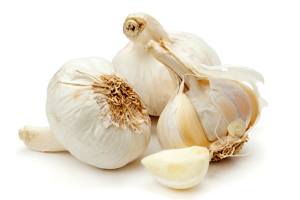
Researchers at Washington State University have found that a compound in garlic is 100 times more effective than two popular antibiotics at fighting the Campylobacter bacterium, one of the most common causes of intestinal illness. Their work was published recently in the Journal of Antimicrobial Chemotherapy.  
garlic

The discovery opens the door to new treatments for raw and processed meats and food preparation surfaces.

“This work is very exciting to me because it shows that this compound has the potential to reduce disease-causing bacteria in the environment and in our food supply,” said Xiaonan Lu, a postdoctoral researcher and lead author of the paper. Michael Konkel, a co-author who has been researching Campylobacter jejuni for 25 years, added that this research was the first step in developing or thinking about new intervention strategies.

“Campylobacter is simply the most common bacterial cause of foodborne illness in the United States and probably the world,” Konkel said. Some 2.4 million Americans are affected every year, according to the U.S. Centers for Disease Control and Prevention, with symptoms including diarrhea, cramping, abdominal pain and fever.

The bacteria also are responsible for triggering nearly one-third of the cases of a rare paralyzing disorder known as Guillain-Barré syndrome. Most infections stem from eating raw or undercooked poultry or foods that have been cross-contaminated via surfaces or utensils used to prepare poultry.

Lu and his colleagues looked at the ability of the garlic-derived compound, diallyl sulfide, to kill the bacterium when it is protected by a slimy biofilm that makes it 1,000 times more resistant to antibiotics than the free-floating bacterial cell. They found the compound can easily penetrate the protective biofilm and kill bacterial cells by combining with a sulfur-containing enzyme, subsequently changing the enzyme’s function and effectively shutting down cell metabolism.

The researchers found the diallyl sulfide was as effective as 100 times the amount of the antibiotics erythromycin and ciprofloxacin, and often would work in a fraction of the time.

Two previous works published last year by Lu and WSU colleagues in Applied and Environmental Microbiology and Analytical Chemistry found diallyl sulfide and other organosulfur compounds effectively kill important foodborne pathogens, such as Listeria monocytogenes and Escherichia coli O157:H7.

Konkel cautioned that the recent work is still at the basic stage, well-removed from an actual application. Although eating garlic is a generally healthy practice, it is unlikely to prevent Campylobacter-related food poisoning.

However, “diallyl sulfide may be useful in reducing the levels of the Campylobacter in the environment and to clean industrial food-processing equipment, as the bacterium is found in a biofilm in both settings,” he said.

“Diallyl sulfide could make many foods safer to eat,” said Barbara Rasco, a co-author on all three recent papers and Lu’s advisor for his doctorate in food science. “It can be used to clean food-preparation surfaces and as a preservative in packaged foods [such as] potato and pasta salads, coleslaw and deli meats.

“This would not only extend shelf life, but it would also reduce the growth of potentially bad bacteria,” she added.

For more information, contact Xiaonan Lu, post-doctoral researcher, WSU School of Molecular Biosciences, at (509) 335-3522 or Xiaonan_lu@wsu.edu, or Michael Konkel, professor, WSU School of Molecular Biosciences, at (509) 335-5039 or konkel@vetmed.wsu.edu. A news release on this topic appeared on PreparedFoods.com, a sister publication of The National Provisioner.

KEYWORDS: Campylobacter

Share This Story

Looking for a reprint of this article?
From high-res PDFs to custom plaques, order your copy today!

Recommended Content

JOIN TODAY
to unlock your recommendations.

Already have an account? Sign In

  • Double Charburger

    Premiumization drives burger category

    Shoppers seek out premium meat offerings to fulfill...
    Burgers
    By: Sammy Bredar
  • JJS Adult Pekin duck

    Poultry Report 2025: Convenience propels poultry at retail

    Despite continued economic pressures, the poultry...
    Chicken
    By: Sammy Bredar
You must login or register in order to post a comment.

Report Abusive Comment

Manage My Account
  • eMagazine Subscriptions
  • Manage My Preferences
  • Newsletters
  • Online Registration
  • Subscription Customer Service
  • Connect with The National Provisioner

More Videos

Sponsored Content

Sponsored Content is a special paid section where industry companies provide high quality, objective, non-commercial content around topics of interest to the The National Provisioner audience. All Sponsored Content is supplied by the advertising company and any opinions expressed in this article are those of the author and not necessarily reflect the views of The National Provisioner or its parent company, BNP Media. Interested in participating in our Sponsored Content section? Contact your local rep!

close
  • A smiling man carrying a grocery basket is reaching down to pick up a package of meat in a grocery store.
    Sponsored byPIC

    The Green Light: New Data Shows 12-to-1 Support for Pork from PRRS-Resistant Pigs

  • Close up of a grocery cart full of groceries, a cropped image of a couple pushing the cart and a blurred background of the vegetable aisle.
    Sponsored byPIC

    New Market Research Finds Consumers in Eight Key Pork Markets Are Likely to Purchase Pork from Gene-Edited Pigs

  • Close up of a young pig with a blurred background.
    Sponsored byPIC

    New Research Forecasts Significant Economic and Market Impacts with PRRS-Resistant Pig Adoption

Popular Stories

Spam Dog

Hormel rolls out Spam hot dog for foodservice applications

Various new Primal snack sticks on a table amongst pencils, apples, a pair of glasses, lunch bags and a water bottle.

Protein demand drives snacking occasions

Several cuts of beef, pork and chicken on a wooden board, cast iron pan and salt.

Validated thermal lethality data and a new tool for ensuring safety of RTE meats

2026 Top 100 Meat & Poultry Processors Report

Events

June 11, 2026

From Fresh to Frozen in 3 Minutes Flat: Unlocking the Secrets to Temperature Control

Join Tony Vacaro, Foods Industry Manager, and Emile Klein, Foods Market Strategy Manager at Air Products and Chemicals, Inc. , as they tackle key questions surrounding heat removal in food processing. 

January 1, 2030

Webinar Sponsorship Information

For webinar sponsorship information, visit www.bnpevents.com/webinars or email webinars@bnpmedia.com.

View All Submit An Event

Products

Food Crime: An Introduction to Deviance in the Food Industry

Food Crime: An Introduction to Deviance in the Food Industry

See More Products
From Fresh to Frozen in 3 Minutes Flat: Unlocking the Secrets to Temperature Control Webinar Sponsored by Air Products

Related Articles

  • The National Provisioner News Briefs

    Meyer Natural Foods announces partnership with Feeding America to help fight hunger

    See More
  • A Clock Under Barrier Film Packaging

    Could barrier film help fight food waste?

    See More
  • Hillshire Brands Foundation Awards $700,000 in grants to help fight hunger, improve healthy weight & nutrition education

    See More

Related Products

See More Products
  • The 10 Principles of Food Industry Sustainability

  • Food Plant Sanitation: Design, Maintenance, and Good Manufacturing Practices, Second Edition

  • food-crime.jpg

    Food Crime: An Introduction to Deviance in the Food Industry

See More Products
×

Stay ahead of the curve. Unlock a dose of cutting-edge insights.

Receive our premium content directly to your inbox.

SIGN-UP TODAY
  • RESOURCES
    • Advertise
    • Contact Us
    • Directories
    • Store
    • Want More
  • SIGN UP TODAY
    • Create Account
    • eMagazine
    • Newsletter
    • Customer Service
    • Manage Preferences
  • SERVICES
    • Marketing Services
    • Reprints
    • Market Research
    • List Rental
    • Survey/Respondent Access
  • STAY CONNECTED
    • LinkedIn
    • Facebook
    • YouTube
    • X (Twitter)
  • PRIVACY
    • PRIVACY POLICY
    • TERMS & CONDITIONS
    • DO NOT SELL MY PERSONAL INFORMATION
    • PRIVACY REQUEST
    • ACCESSIBILITY

Copyright ©2026. All Rights Reserved BNP Media, Inc. and BNP Media II, LLC.

Design, CMS, Hosting & Web Development :: ePublishing