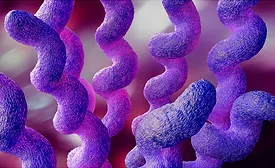
Despite notable advances in pathogen control during poultry processing, Campylobacter can still contaminate poultry carcasses at the end of processing.
University of Georgia professor works to identify Campylobacter jejuni that are tolerant to antimicrobials commonly used during poultry processing and to demonstrate an approach to control them.
True quantitative methods developed by Hygiena provide an easy-to-use sample prep with wide enumerable ranges for all difficult matrix types from farm to final product in the poultry industry.
On Jan. 25, 2021, a coalition of food safety activist groups and individuals led by Center for Science in the Public Interest (CSPI) petitioned the U.S. Department of Agriculture’s Food Safety and Inspection Service (FSIS) to significantly change course on its approach to regulating Salmonella and Campylobacter.
Bacterial pathogens, such as Salmonella spp. and Campylobacter, continue to be the leading suspected causes of foodborne illnesses from poultry products today.
On August 6, the U.S. Department of Agriculture’s Food Safety and Inspection Service (FSIS) published a notice in the Federal Register announcing proposed revised Campylobacter performance standards for not-ready-to-eat (NRTE) comminuted chicken and turkey.
Later this week, FSIS will publish a Federal Register notice announcing and requesting comments on revised categorization relative to pathogen reduction performance standards.