Provisioner logo
Provisioner logo
search
cart
facebook twitter linkedin youtube
  • Sign In
  • Create Account
  • Sign Out
  • My Account
Provisioner logo
Provisioner logo
  • NEWS
    • Industry News
    • Supplier News
    • Case Studies
    • Recalls
    • Regulations
    • New Consumer Products
  • EXCLUSIVES
    • Newsletters
    • Source Book
    • Sponsored Insights
    • Events
    • Webinars
    • Classifieds
    • White Papers
    • Provisioner Store
    • Market Research
  • MEAT PROCESSING
    • SUSTAINABILITY
    • Processing
    • Packaging
    • Ingredients
    • Formulation
    • Food Safety
    • Special Reports
    • Commentary
  • PROFILES
    • Processor Profiles
    • Processor of the Year
    • Top 100 Processors
  • MEDIA
    • Videos
    • Podcasts
  • DIRECTORY
  • MIHOF
  • INDEPENDENT PROCESSOR
  • EMAG
    • eMagazine
    • ARCHIVE ISSUES
    • Contact
    • Advertise
  • JOIN!

Farm to Plate

Look, but don’t touch: indicators of unconsciousness in stunned livestock

When it comes to electrically stunned animals, processors can observe a variety of indicators to determine unconsciousness but should avoid using the corneal reflex.
By Kurt D. Vogel PhD
April 8, 2014

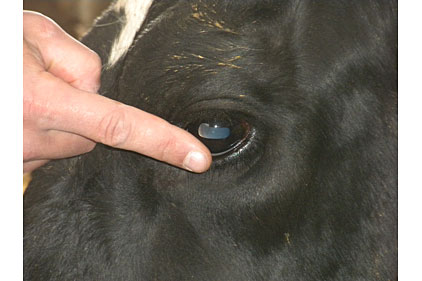
cow, stunned livestock, corneal testThe corneal reflex has been one of the go-to indicators of unconsciousness in stunned livestock for decades. The ease of the procedure (a quick touch of the eye) and the seemingly discrete outcome (a blink) make it an ideal assessment tool, at least on the surface.

For animals that are mechanically stunned or euthanized with a captive bolt gun or firearm of appropriate caliber, corneal reflex appears to be a reliable assessment tool. However, the use of the corneal reflex is no longer recommended for electrically stunned animals because close observation has revealed that corneal reflexes may occur in animals with no other signs of life. Other indicators of unconsciousness should be used for electrically stunned animals as researchers work to understand why the corneal reflex occurs in electrically stunned animals.

Starting in the early 1980s, European researchers began to consistently document the occurrence of corneal reflexes from electrically stunned hogs, calves and sheep. In one of the earliest studies, a head-to-back stun was applied with a current of 2.0 amperes for five seconds to 35 calves.

Sixty percent of the calves displayed a corneal reflex for an average of 59 seconds after they were stunned. None of the calves had a heart beat that was detectable with a stethoscope. In a later study  from the same research group, sheep and calves that lacked a detectable heart beat by stethoscope and by electrocardiogram never returned to consciousness. In the end, the authors concluded that corneal reflex may not be a good stand-alone indicator of consciousness for electrically stunned animals, and that detection of heart beat by stethoscope was a good indicator to include in the assessment of stunning efficacy. However, this idea may present some challenges.

Although it is not difficult to learn how to place a stethoscope on a stunned and shackled animal and listen for heart sounds, an understanding of how heart sounds are made reveals a flaw in the idea of monitoring for heart sounds. The characteristic thumping noise of the heart is made by sudden stoppage of blood flow as the heart valves open and close. The heart valves are opened and closed by changes in blood flow direction — in a similar way to the action of water in opening and closing check valves in some plumbing applications.

In a very simplistic sense, the heart sounds are sort of like the sounds of banging water pipes when a valve is shut off quickly. Only pipes that have water pressure will make noise when a valve is closed. If there is no water pressure or no water at all, the sudden change in pressure and associated noises cannot occur. The same goes for heart sounds. If the animal is bleeding out or has nearly completed the bleed out process, the intensity of the heart sounds may be difficult to detect with a stethoscope.

The second challenge with stethoscope use for cardiac-activity detection has to do with the practicality of following a moving carcass during bleed out while wearing a stethoscope and holding the stethoscope end against the appropriate place on the carcass.

To work around this challenge, some researchers have used handheld veterinary electrocardiograms that can record the electrical activity of the heart. With some modification, these devices can be hung on the carcass and retrieved at a later point in the exsanguination process. Although this procedure is impractical to perform on every animal, facilities that use electrical-stunning methods that are intended to induce cardiac arrest may find these devices to be very useful in verification of stunning efficacy for their Systematic Approach to Animal Welfare.

Starting in 2010, the American Meat Institute’s Animal Care and Handling Guidelines no longer recommended the use of corneal reflex for assessing unconsciousness of electrically-stunned animals. Instead, observation for natural blinking is encouraged between five and 60 seconds after the animal has been stunned. Any occurrence of natural blinking is considered an indication of return to consciousness.

The appropriate corrective action if natural blinking is observed is the application of an immediate secondary stun. The secondary stun does not have to be performed with the same method as the original stun. In many cases, application of a secondary electrical stun while the carcass is bleeding out could be very dangerous. Many large pork plants keep handheld captive bolt guns near their bleed out area for this reason.

The AMI Animal Care and Handling Guidelines also include rhythmic breathing, response to a painful stimulus, and righting reflex as acceptable indicators of return to consciousness. A simple way to test response to painful stimulus is to pinch the nose of the stunned animal with a small pair of needle-nose pliers. A pair of needle-nose pliers is a safer tool to use than a sharp object such as a needle or knife.

In practice, corneal reflex appears to be a dependable indicator of unconsciousness for animals that are stunned with a mechanical method, such as captive bolt or firearm. However, when it comes to electrically stunned animals, it does not appear to be the most trustworthy indicator.

If you need to assess the consciousness on electrically stunned animals, remember that it is better to just look at the eyes — but don’t touch them!

KEYWORDS: animal handling farm to plate slaughter process advancements stunning

Share This Story

Looking for a reprint of this article?
From high-res PDFs to custom plaques, order your copy today!

Kurt vogel 20191209

Dr. Kurt D. Vogel is the director of the Humane Handling Institute and a professor of animal welfare and behavior at the University of Wisconsin-River Falls. If you have any questions or comments, you can reach out to Dr. Vogel by email: kurt.vogel@uwrf.edu or phone: (715) 425-4704.

Recommended Content

JOIN TODAY
to unlock your recommendations.

Already have an account? Sign In

  • Double Charburger

    Premiumization drives burger category

    Shoppers seek out premium meat offerings to fulfill...
    Beef
    By: Sammy Bredar
  • JJS Adult Pekin duck

    Poultry Report 2025: Convenience propels poultry at retail

    Despite continued economic pressures, the poultry...
    Chicken
    By: Sammy Bredar
You must login or register in order to post a comment.

Report Abusive Comment

Manage My Account
  • eMagazine Subscriptions
  • Manage My Preferences
  • Newsletters
  • Online Registration
  • Subscription Customer Service
  • Connect with The National Provisioner

More Videos

Sponsored Content

Sponsored Content is a special paid section where industry companies provide high quality, objective, non-commercial content around topics of interest to the The National Provisioner audience. All Sponsored Content is supplied by the advertising company and any opinions expressed in this article are those of the author and not necessarily reflect the views of The National Provisioner or its parent company, BNP Media. Interested in participating in our Sponsored Content section? Contact your local rep!

close
  • A smiling man carrying a grocery basket is reaching down to pick up a package of meat in a grocery store.
    Sponsored byPIC

    The Green Light: New Data Shows 12-to-1 Support for Pork from PRRS-Resistant Pigs

  • Close up of a grocery cart full of groceries, a cropped image of a couple pushing the cart and a blurred background of the vegetable aisle.
    Sponsored byPIC

    New Market Research Finds Consumers in Eight Key Pork Markets Are Likely to Purchase Pork from Gene-Edited Pigs

  • Close up of a young pig with a blurred background.
    Sponsored byPIC

    New Research Forecasts Significant Economic and Market Impacts with PRRS-Resistant Pig Adoption

Popular Stories

Spam Dog

Hormel rolls out Spam hot dog for foodservice applications

Various new Primal snack sticks on a table amongst pencils, apples, a pair of glasses, lunch bags and a water bottle.

Protein demand drives snacking occasions

Several cuts of beef, pork and chicken on a wooden board, cast iron pan and salt.

Validated thermal lethality data and a new tool for ensuring safety of RTE meats

2026 Top 100 Meat & Poultry Processors Report

Events

June 11, 2026

From Fresh to Frozen in 3 Minutes Flat: Unlocking the Secrets to Temperature Control

Join Tony Vacaro, Foods Industry Manager, and Emile Klein, Foods Market Strategy Manager at Air Products and Chemicals, Inc. , as they tackle key questions surrounding heat removal in food processing. 

January 1, 2030

Webinar Sponsorship Information

For webinar sponsorship information, visit www.bnpevents.com/webinars or email webinars@bnpmedia.com.

View All Submit An Event

Products

Food Crime: An Introduction to Deviance in the Food Industry

Food Crime: An Introduction to Deviance in the Food Industry

See More Products
From Fresh to Frozen in 3 Minutes Flat: Unlocking the Secrets to Temperature Control Webinar Sponsored by Air Products

Related Articles

  • Chicken nuggets and French fries

    National Chicken Council to New York City officials: Don’t touch kids’ nuggets

    See More
  • Meat Substitute Burgers

    Meat alternatives flatter but don't replace real meat…yet

    See More
  • Farm to Plate: Ensuring insensibility in stunned pigs

    See More

Related Products

See More Products
  • GlobalData_logo_blue_header.png

    Chilled Raw Packaged Meat - Processed (Meat) Market in the United States of America - Outlook to 2023...

  • GlobalData_logo_blue_header.png

    Cooked Meats - Packaged (Meat) Market in the United States of America - Outlook to 2023

See More Products

Related Directories

  • Kansas Livestock Assn.

    The Kansas Livestock Association is a trade association representing 5,600 members on legislative and regulatory issues. KLA was formed in 1894 when a group of more than 100 Flint Hills ranchers met in Emporia to discuss cattle theft problems and unreasonable railroad freight rates.
  • Meat & Livestock Australia

    Meat & Livestock Australia is the marketing and research body for the Australian red meat industry. MLA's purpose is to deliver world-leading outcomes that fuel global competitiveness, sustainability and producer profitability.
×

Stay ahead of the curve. Unlock a dose of cutting-edge insights.

Receive our premium content directly to your inbox.

SIGN-UP TODAY
  • RESOURCES
    • Advertise
    • Contact Us
    • Directories
    • Store
    • Want More
  • SIGN UP TODAY
    • Create Account
    • eMagazine
    • Newsletter
    • Customer Service
    • Manage Preferences
  • SERVICES
    • Marketing Services
    • Reprints
    • Market Research
    • List Rental
    • Survey/Respondent Access
  • STAY CONNECTED
    • LinkedIn
    • Facebook
    • YouTube
    • X (Twitter)
  • PRIVACY
    • PRIVACY POLICY
    • TERMS & CONDITIONS
    • DO NOT SELL MY PERSONAL INFORMATION
    • PRIVACY REQUEST
    • ACCESSIBILITY

Copyright ©2026. All Rights Reserved BNP Media, Inc. and BNP Media II, LLC.

Design, CMS, Hosting & Web Development :: ePublishing