Provisioner logo
Provisioner logo
search
cart
facebook twitter linkedin youtube
  • Sign In
  • Create Account
  • Sign Out
  • My Account
Provisioner logo
Provisioner logo
  • NEWS
    • Industry News
    • Supplier News
    • Case Studies
    • Recalls
    • Regulations
    • New Consumer Products
  • EXCLUSIVES
    • Newsletters
    • Source Book
    • Sponsored Insights
    • Events
    • Webinars
    • Classifieds
    • White Papers
    • Provisioner Store
    • Market Research
  • MEAT PROCESSING
    • SUSTAINABILITY
    • Processing
    • Packaging
    • Ingredients
    • Formulation
    • Food Safety
    • Special Reports
    • Commentary
  • PROFILES
    • Processor Profiles
    • Processor of the Year
    • Top 100 Processors
  • MEDIA
    • Videos
    • Podcasts
  • DIRECTORY
  • MIHOF
  • INDEPENDENT PROCESSOR
  • EMAG
    • eMagazine
    • ARCHIVE ISSUES
    • Contact
    • Advertise
  • JOIN!
Plant Design/ManagementChickenProcessor Profiles

Cover Story

Sanderson Farms: True to form

With its new St. Pauls, N.C., processing plant, Sanderson Farms continues to build upon a successful playbook for expansion that has produced nearly a half-dozen new facilities in just more than a decade’s time.
By Andy Hanacek
Sanderson Farms
PHOTO BY SCOTT CLEVENGER
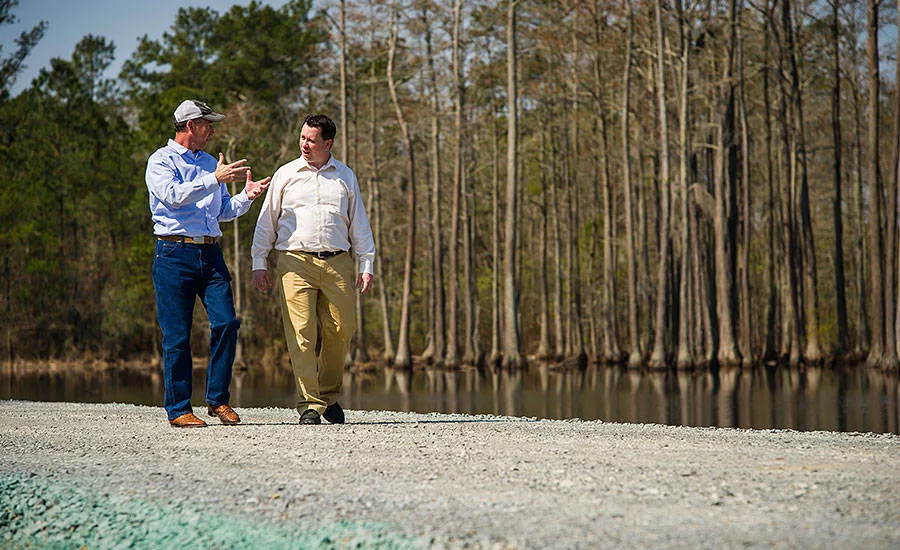
Pic Billingsley and Andy Hanacek walk along an earthen dam at Sanderson Farms’ St. Pauls, N.C., plant
Pic Billingsley (left) and Andy Hanacek walk along an earthen dam holding back a naturalized lake and cypress stand at Sanderson Farms’ St. Pauls, N.C., plant.
PHOTO BY SCOTT CLEVENGER
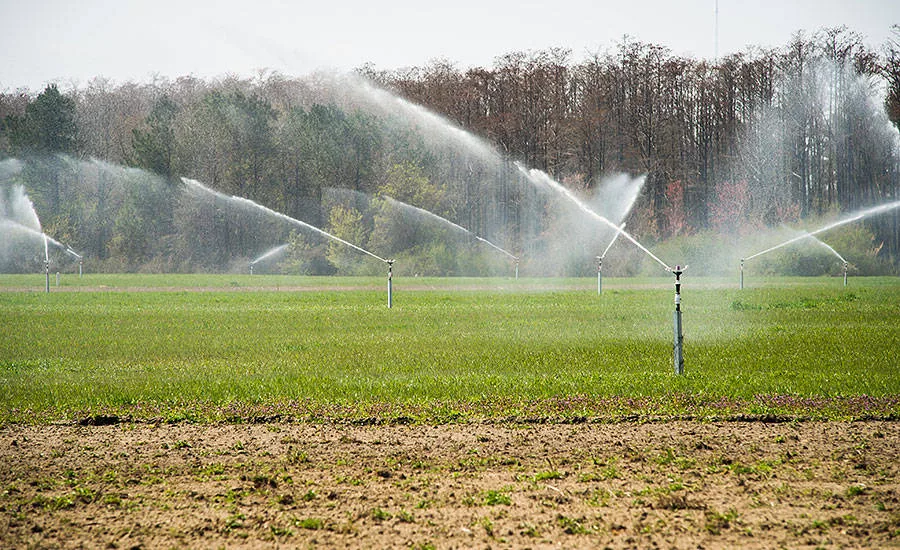
Wastewater from the Sanderson Farms facility is treated, then sprayed onto fields surrounding the plant
Wastewater from the facility is treated, then sprayed onto fields surrounding the plant, where the remaining nutrients are used by the plant life that grows in those fields — minimizing any environmental impacts on the ecosystem surrounding the plant.
PHOTO BY SCOTT CLEVENGER
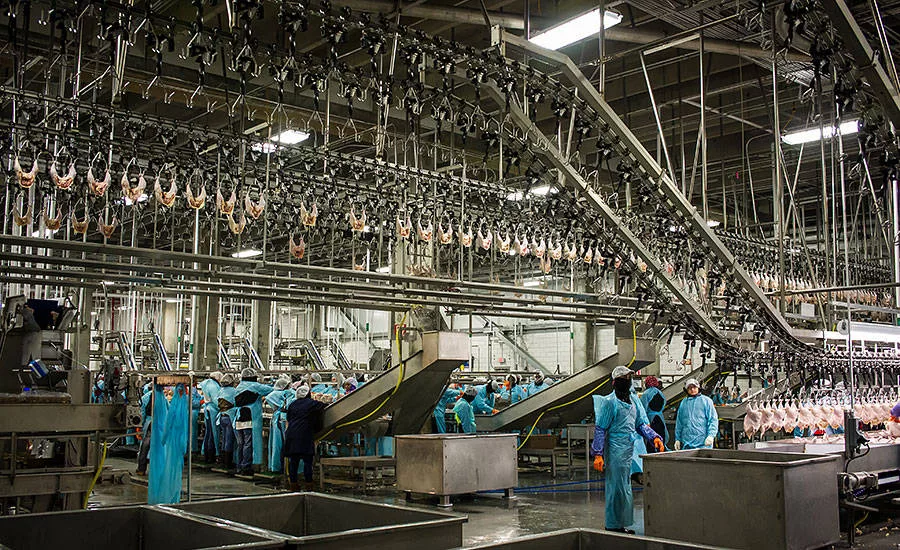
The Sanderson Farms St. Pauls facility features ergonomic advancements to keep its employees healthy and safe
The St. Pauls facility features ergonomic advancements to keep its employees healthy and safe, as well as automation for improved efficiency — nevertheless, the basic layout and structure of the plant follows a successful template employed by Sanderson Farms in prior plant expansion projects.
PHOTO BY SCOTT CLEVENGER
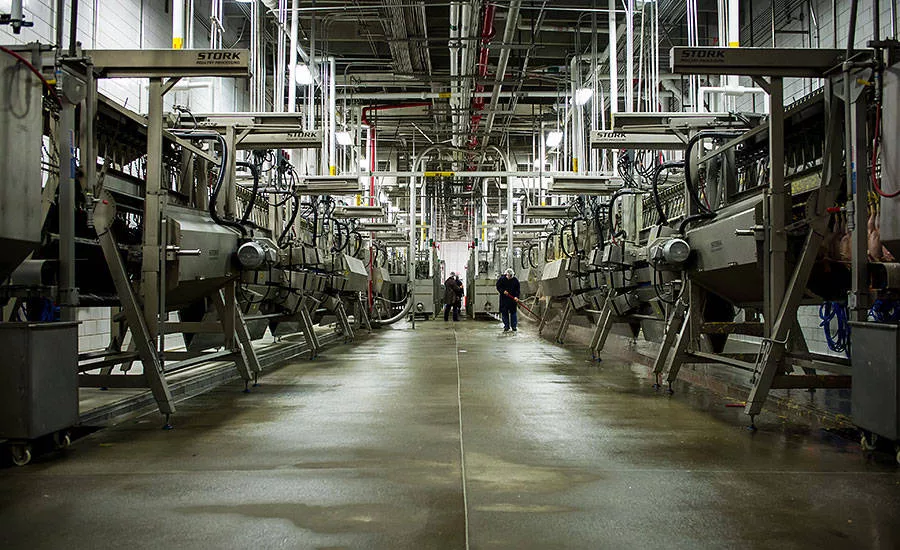
The Sanderson Farms St. Pauls facility features automation for improved efficiency
The St. Pauls facility features ergonomic advancements to keep its employees healthy and safe, as well as automation for improved efficiency — nevertheless, the basic layout and structure of the plant follows a successful template employed by Sanderson Farms in prior plant expansion projects.
PHOTO BY SCOTT CLEVENGER
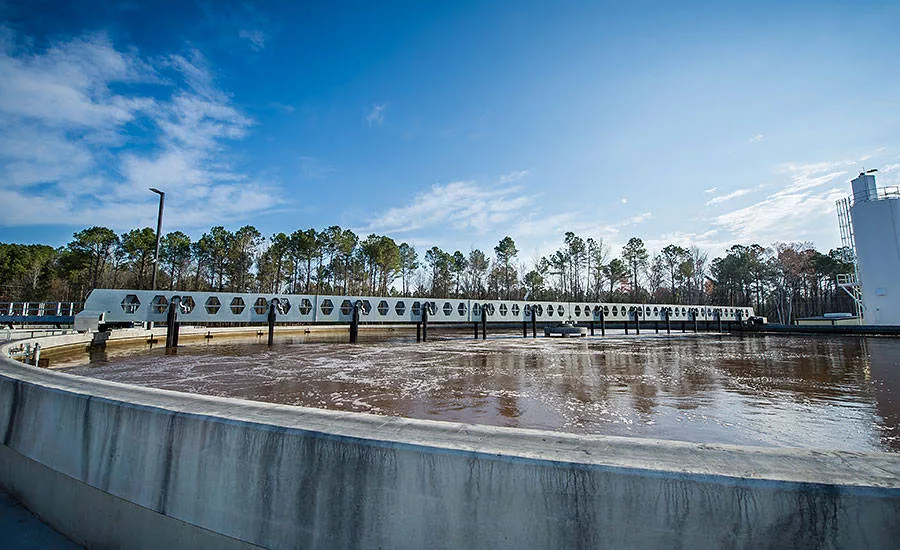
Sanderson Farms wastewater treatment facility
PHOTO BY SCOTT CLEVENGER
Sanderson Farms
Pic Billingsley and Andy Hanacek walk along an earthen dam at Sanderson Farms’ St. Pauls, N.C., plant
Wastewater from the Sanderson Farms facility is treated, then sprayed onto fields surrounding the plant
The Sanderson Farms St. Pauls facility features ergonomic advancements to keep its employees healthy and safe
The Sanderson Farms St. Pauls facility features automation for improved efficiency
Sanderson Farms wastewater treatment facility
May 16, 2017

Since 2005, Laurel, Miss.-based chicken processor Sanderson Farms has been on an expansion tear, building and opening five processing plants (with a sixth brand new plant planned to open in 2019), as well as hatcheries and feed mills to supply those facilities. It’s an unmatched record of expansion in the industry.

In January 2017, Sanderson Farms opened its St. Pauls, N.C., processing plant, the most recent addition to its roster, and Andy Hanacek, editor-in-chief of The National Provisioner, was invited to tour the facility in March. At that time he sat down with Bob “Pic” Billingsley, director of Development and Engineering, to get the details on the new plant and how it fits into the playbook of expansion and successful growth the company has followed during this decade-long run. What follows is a portion of their conversation:


Hanacek: Let’s start out by talking about this facility, here in St. Pauls. What led to Sanderson Farms building its newest plant here, rather than elsewhere?

Billingsley: We started the Kinston [N.C.] plant up in 2011, to serve the tray-pack part of our business, as we needed more presence up through the Northeast. We’ve got a very loyal customer base up there, and we needed to get closer to them. So when it came time to grow our company on the big bird side, we made the decision the same way, as a marketing decision. And so St. Pauls was a perfect fit, because it gave us an opportunity to do a better job of servicing our customers located in the Northeast. So, we knew from Day One, when we started site selection, that this facility would be a big bird plant designed to be able to service the foodservice industry, and it’s turned out just like we envisioned and expected.

We have 1,500 acres, and because of our need and desire to build land application [wastewater] systems, we are on much more land than we’d have needed just for a plant. Further, the soil conditions were good up here to be successful with the land application system.


Hanacek: Were there any unanticipated roadblocks in construction or startup that Sanderson Farms had to overcome?

Billingsley: You always go into a project understanding there’ll be issues you’d have to deal with. The issue here was the influence the weather had on the project. Of course, we had no control over the weather — all we can do is manage our responsibilities. But 24 months ago, we set a schedule to start up in January of 2017, and we hit that date.


Hanacek: What advancements and innovations stand out about the St. Pauls facility versus some of your previous expansions?

Billingsley: As you saw going through first processing, we’ve made it more automated, less dependent on labor and more efficient. In de-boning, we’ve got more automation, which is ergonomically good for our workforce. We’ve got vacuum systems to handle products going to offal, as well as different screening processes there. We also have no odors, no issues environmentally — all those things we’re supposed to do every day as a public company and a good neighbor. From a food safety standpoint, because this plant was a green-field facility, we were able to incorporate our interventions on the frontend and not force an intervention into an area.


Hanacek: The company has wasted little time in getting the plant started up — when will the facility be running full speed?

Billingsley: We started the second week of January, and we have a very aggressive ramp-up schedule here. We’re planning on being up to full capacity within 12 months. All of our new plants run 250,000 birds a day, 1,250,000 a week. So that is our model of excellence that we can see for this plant as well. You’ve seen Kinston, and now you’ve seen this one, and in them, you see a familiarity in the architecture that we use in our plants. It’s not cookie-cutter, but we try to create consistency between plants, so that a manager who is familiar with one location will be able to acclimate and assimilate into another plant more quickly. It helps us cross-train people. So if there’s a problem in the engine room or there’s a problem at offal load-out, the manager doesn’t have to stop and think, where is that? Being consistent helps people be successful.


Hanacek: Sanderson Farms has developed a good reputation as a leader in wastewater handling in the industry, and the St. Pauls facility builds on that with its treatment plant and spray fields. How has Sanderson Farms been able to use its experience in wastewater treatment to lower its environmental impact with these new plants?

Billingsley: When you look at our environmental record of our company and our history, it doesn’t take long to understand that [being a good environmental steward] is something that’s really important to this company. We have a wastewater system design that we’re comfortable with, and each time we build a new plant, we try to incorporate more up-to-date technology into the design.

The fun part of the site selection and new plant process for me is when our neighbors and those people who have watched us build our plants see that environmental is important, and that we do what we said we would do when the plants start up. We have a responsibility to be good neighbors wherever we operate. That’s paramount to us being successful. Your balance sheet can be good, your profits can be good, your earnings per share can be good, but if you’re not a good neighbor, none of that will matter.


Hanacek: You mentioned as we were touring the facility that Sanderson Farms plans to capture the biogas off the lagoon on site as well. What is the timing on finishing that portion of the project?

Billingsley: The anaerobic process takes about three years to fully mature in our wastewater treatment facility, so that system will be installed in another two to three years. As soon as it is generating enough biogas to justify the expenditure, we’ll put it in. It takes time. We’re putting a system in now, in our Palestine, Texas, plant, which opened in [February] 2015.


Hanacek: Let’s shift gears to the bigger picture at Sanderson Farms. This plant is your fifth new plant since 2005, correct?

Billingsley: Well, with the announcement [in March] of a potential next plant site in Tyler, Texas, that will be six we’ve built since 2005, which means we’re averaging a new plant a little more than every two years — all green-field sites, all similar to what you’ve seen here — one in Georgia, two in North Carolina and three in Texas.


Hanacek: That’s quite an accomplishment, especially compared to new construction in the industry overall during that period. I’m not sure many processors could claim a similar record. So what, frankly, is Sanderson Farms doing that’s different to make all this green-field expansion possible?

Billingsley: As a public company, we have an obligation to every shareholder to make a return for that individual. We run a conservative company from a balance sheet standpoint. We’ve got a very healthy balance sheet, and because of that, we’re required to grow. It’s who we are and the way we operate, and it’s been good for us. There are other ways to grow a company, but this is the way that we found to be successful. We can maintain the best assets in the industry by doing what we do.


Hanacek: How does this growth mentality trickle down to all the employees throughout the company? To be adding a new facility full of new people every few years could be a shock to many systems in an average company.

Billingsley: Our company culture of growth is non-negotiable. When you sign on to come here, you sign on to that culture. One of the reasons it’s easier to transition our culture to our new employees when we build a green-field facility is we’re not buying an asset that is entrenched in a different culture, where different things are important to those people. We’re able to say, ‘Look, this is new and nice, this is the way we do things, and now here’s your opportunity.’ The standards in our company are not average, and an average company could not do what we do.


So the standards are higher. A lot of people accept that and get on and do well, but it’s a process that never stops. When I came to work here 32 years ago, we had 1,500 employees, and today, we’re approaching 14,000 employees. You never stop training or mentoring people. If you’re going to be successful, you have to make that part of your everyday process of running a business. NP

KEYWORDS: chicken processing plant new construction plant construction Sanderson Farms

Share This Story

Looking for a reprint of this article?
From high-res PDFs to custom plaques, order your copy today!


Editor-in-Chief Andy Hanacek manages the editorial strategy and production of The National Provisioner and several of its associated brands and products. He consistently visits many of the most successful and innovative processors across the country, reporting on protein-processing challenges in exclusive, one-on-one tours of processing facilities and interviews with some of the most respected and esteemed executives in the business. Hanacek contributes more than a decade of journalism experience in a variety of formats.

Recommended Content

JOIN TODAY
to unlock your recommendations.

Already have an account? Sign In

  • Double Charburger

    Premiumization drives burger category

    Shoppers seek out premium meat offerings to fulfill...
    Beef
    By: Sammy Bredar
  • JJS Adult Pekin duck

    Poultry Report 2025: Convenience propels poultry at retail

    Despite continued economic pressures, the poultry...
    Meat and Poultry Industry News
    By: Sammy Bredar
You must login or register in order to post a comment.

Report Abusive Comment

Manage My Account
  • eMagazine Subscriptions
  • Manage My Preferences
  • Newsletters
  • Online Registration
  • Subscription Customer Service
  • Connect with The National Provisioner

More Videos

Sponsored Content

Sponsored Content is a special paid section where industry companies provide high quality, objective, non-commercial content around topics of interest to the The National Provisioner audience. All Sponsored Content is supplied by the advertising company and any opinions expressed in this article are those of the author and not necessarily reflect the views of The National Provisioner or its parent company, BNP Media. Interested in participating in our Sponsored Content section? Contact your local rep!

close
  • A smiling man carrying a grocery basket is reaching down to pick up a package of meat in a grocery store.
    Sponsored byPIC

    The Green Light: New Data Shows 12-to-1 Support for Pork from PRRS-Resistant Pigs

  • Close up of a grocery cart full of groceries, a cropped image of a couple pushing the cart and a blurred background of the vegetable aisle.
    Sponsored byPIC

    New Market Research Finds Consumers in Eight Key Pork Markets Are Likely to Purchase Pork from Gene-Edited Pigs

  • Close up of a young pig with a blurred background.
    Sponsored byPIC

    New Research Forecasts Significant Economic and Market Impacts with PRRS-Resistant Pig Adoption

Popular Stories

JBS USA logo

JBS USA closing pair of processing facilities

Several cuts of beef, pork and chicken on a wooden board, cast iron pan and salt.

Validated thermal lethality data and a new tool for ensuring safety of RTE meats

New products include ready-to-heat proteins, flavor-forward lunchmeats and additions to the brand’s bacon portfolio.

Applegate Farms expands portfolio across deli, refrigerated and breakfast categories

2026 Top 100 Meat & Poultry Processors Report

Events

July 16, 2026

Strengthening Food Safety Plans for Modern Processing Operations

The live webinar will explore the latest technologies, emerging risks, and practical strategies shaping food safety programs across meat and poultry processing operations. Attendees will hear from industry experts on key challenges impacting processors today, along with approaches for strengthening and updating food safety plans across their facilities.

January 1, 2030

Webinar Sponsorship Information

For webinar sponsorship information, visit www.bnpevents.com/webinars or email webinars@bnpmedia.com.

View All Submit An Event

Products

Food Crime: An Introduction to Deviance in the Food Industry

Food Crime: An Introduction to Deviance in the Food Industry

See More Products
From Fresh to Frozen in 3 Minutes Flat: Unlocking the Secrets to Temperature Control Webinar Sponsored by Air Products

Related Articles

  • True to Form (Fill and Seal)

    See More
  • Production Technology: True to form

    See More
  • Case Farms corporate management and Ohio Division

    Case Farms' time to shine

    See More

Related Products

See More Products
  • GlobalData_logo_blue_header.png

    Frozen Meat (Meat) Market in the United States of America - Outlook to 2023...

  • GlobalData_logo_blue_header.png

    Cooked Meats - Packaged (Meat) Market in the United States of America - Outlook to 2023

  • food-crime.jpg

    Food Crime: An Introduction to Deviance in the Food Industry

See More Products

Events

View AllSubmit An Event
  • May 7, 2026

    Stop Plant-Floor Margin Leakage: How to Quantify and Eliminate Hidden Costs

    On-Demand WorkForge Advisor and veteran food production executive Tim Cook (Marlen International, LINXIS Group, Shick Esteve, AMF Bakery Systems) will share findings from The Hidden Costs of Inconsistent Employee Development in Food Manufacturing - research that outlines ten common, measurable, and fixable cost drivers that quietly hit your P&L.
  • June 11, 2026

    From Fresh to Frozen in 3 Minutes Flat: Unlocking the Secrets to Temperature Control

    On Demand Join Tony Vacaro, Foods Industry Manager, and Emile Klein, Foods Market Strategy Manager at Air Products and Chemicals, Inc. , as they tackle key questions surrounding heat removal in food processing. 
View AllSubmit An Event
×

Stay ahead of the curve. Unlock a dose of cutting-edge insights.

Receive our premium content directly to your inbox.

SIGN-UP TODAY
  • RESOURCES
    • Advertise
    • Contact Us
    • Directories
    • Store
    • Want More
  • SIGN UP TODAY
    • Create Account
    • eMagazine
    • Newsletter
    • Customer Service
    • Manage Preferences
  • SERVICES
    • Marketing Services
    • Reprints
    • Market Research
    • List Rental
    • Survey/Respondent Access
  • STAY CONNECTED
    • LinkedIn
    • Facebook
    • YouTube
    • X (Twitter)
  • PRIVACY
    • PRIVACY POLICY
    • TERMS & CONDITIONS
    • DO NOT SELL MY PERSONAL INFORMATION
    • PRIVACY REQUEST
    • ACCESSIBILITY

Copyright ©2026. All Rights Reserved BNP Media, Inc. and BNP Media II, LLC.

Design, CMS, Hosting & Web Development :: ePublishing