Provisioner logo
Provisioner logo
search
cart
facebook twitter linkedin youtube
  • Sign In
  • Create Account
  • Sign Out
  • My Account
Provisioner logo
Provisioner logo
  • NEWS
    • Industry News
    • Supplier News
    • Case Studies
    • Recalls
    • Regulations
    • New Consumer Products
  • EXCLUSIVES
    • Newsletters
    • Source Book
    • Sponsored Insights
    • Events
    • Webinars
    • Classifieds
    • White Papers
    • Provisioner Store
    • Market Research
  • MEAT PROCESSING
    • SUSTAINABILITY
    • Processing
    • Packaging
    • Ingredients
    • Formulation
    • Food Safety
    • Special Reports
    • Commentary
  • PROFILES
    • Processor Profiles
    • Processor of the Year
    • Top 100 Processors
  • MEDIA
    • Videos
    • Podcasts
  • DIRECTORY
  • MIHOF
  • INDEPENDENT PROCESSOR
  • EMAG
    • eMagazine
    • ARCHIVE ISSUES
    • Contact
    • Advertise
  • JOIN!
Meat and Poultry Processing

Processing Tech

The form of things to come: Optimal forming technologies

Meat, poultry and seafood processors can bolster operations by leveraging optimal forming technologies, but there are limits to what the equipment can provide.
By Richard Mitchell
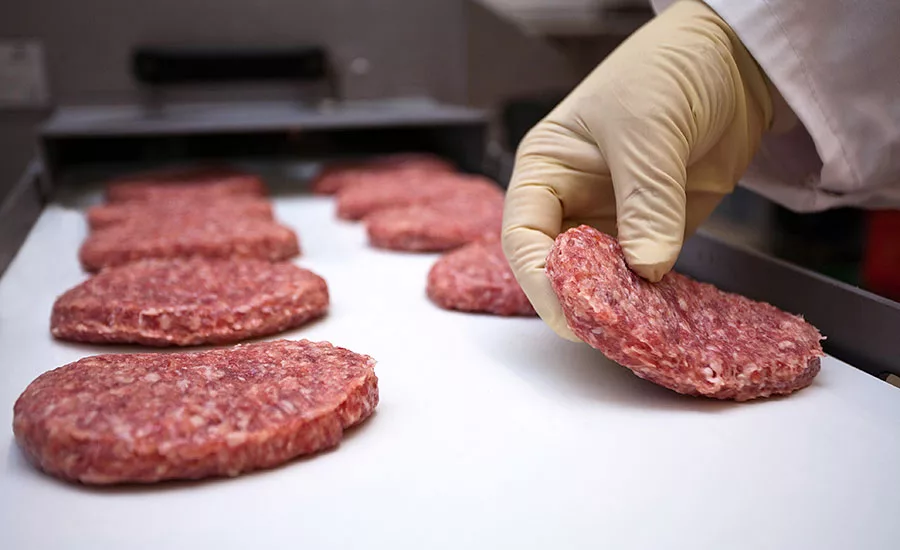
Round meat patties developed with precise forming technology
Precise forming technologies allow processors to develop a wide range of proteins in different sizes and shapes, including round, square, oval and rectangular.
July 7, 2017

The use of precise forming technologies can enable processors to more easily create high-quality meat, poultry and seafood selections while garnering greater operating efficiencies.

Elements include the ability to efficiently develop a wide range of proteins in different sizes and shapes, including round, square, oval and rectangular.

Achieving such results is not simple, particularly because of functional limitations in many devices and a lack of recent product upgrades, says Jamie Schweid, president and CEO of Schweid & Sons, a Carlstadt, N.J.-based ground beef purveyor.

“Except for the technological evolution to create rolled patties, there hasn’t been much change in the performance of machines in recent years,” he says. “The main vendor focus has been on processing speed and not necessarily on how there can be improvements to product quality.”

Among the developments has been the launch of servo-driven equipment in which there is continuous running of forming equipment rather than a constant stopping and starting during production, Schweid says.

“The faster speeds primarily benefit large processors with high volumes who are producing single ingredient and single size patties,” he says. Of greater benefit will be the launch of forming technologies that enable processors to produce multiple high-quality rolled burgers simultaneously, Schweid says.

Time is of the essence

During the creation of rolled burgers, thick, puck-like patties move from a machine mold onto a conveyor that rolls the items to the proper level or height. Such operations have become increasingly prevalent over the last decade as processors seek alternatives to the pressure-formed patties, which can be of sub-standard quality because of excessive wear on the meat, he says. Yet, producing rolled patties, which resemble handmade burgers, is more time-consuming.

“The rolling method often produces one patty or burger per stroke, as opposed to the machines that create standard patties and may produce three to five patties per stroke,” Schweid says.

While next-generation technologies are likely to increase product quality and operating efficiencies, it may take years for such devices to become prevalent because of the long life expectancy of current equipment, which often ranges from 15 to 20 years, he says. Efforts to achieve payback on their current investments will preclude the operators from immediately upgrading their technologies unless they are adding production lines, Schweid says.

“However, I haven’t seen anything that indicates there are technical evolutions in the pipeline,” he says.

While the sophistication of forming technologies can affect product quality, the state of the meat prior to processing is perhaps the major variable in determining the taste, texture and appearance of the final product, he says. Meats that are warmer than 33° F, for instance, won’t fill the forming plate properly during production, resulting in the creation of proteins that fall below the stated weight, Schweid notes. Excess grinding of proteins prior to forming can result in misshaped items that do not cook properly.

“Operators have to be very conscious of the meat temperature and treatment as the forming technology itself can only do so much,” Schweid says.

Over-mixing, elevated temperatures and high pressure can all cause variations in protein texture, adds Mark Gwin, product integration manager with the Wooster, Ohio-based Certified Angus Beef brand.

“Each step of the process is critical from grinding to packaging,” he says.

The devil is in the details

To enhance quality control, many processors, particularly those producing specialty products, are working with smaller meat batches to better enable workers to make adjustments to procedures during forming operations, Gwin says.

“Attention to detail makes all the difference,” he says. “It’s essential to control every step of production to protect the investment.”

Most operators, he notes, typically have distinct forming equipment setups and production methodologies that they devise in accordance with their specific operating circumstances.

“There has been much progress in patty formation since the time when high-pressure, form-fill was the norm,” he says. “From forming top-to-bottom into patties or intertwining strands of ground beef, processors have developed individual approaches to making unique patties.”

Despite the prospect of newer technical enhancements, which Gwin says will likely focus on hand-patty forms and texture as consumer demand for higher quality burgers continues to grow, processors will still face operational challenges. Operators, for instance, must determine the most effective production procedures and how to afford the necessary equipment. Forming machinery can cost tens of thousands of dollars.

“Especially with older equipment, you have to go beyond the nuts and bolts to control mixing, temperature and formation,” Gwin says. “It’s also extremely critical to be as gentle as possible when making ground meats. That includes monitoring the time to avoid over-mixing.”

It is important that processors continually scrutinize their technologies, including the knife, plate assembly and grinder augers, as well as operating methodologies, to help ensure product quality remains consistent, he says. NP

KEYWORDS: formed products formed protein products forming

Share This Story

Looking for a reprint of this article?
From high-res PDFs to custom plaques, order your copy today!


Rich mitchell 200x200
Rich Mitchell is a contributing writer.

Recommended Content

JOIN TODAY
to unlock your recommendations.

Already have an account? Sign In

  • Double Charburger

    Premiumization drives burger category

    Shoppers seek out premium meat offerings to fulfill...
    Ingredients
    By: Sammy Bredar
  • JJS Adult Pekin duck

    Poultry Report 2025: Convenience propels poultry at retail

    Despite continued economic pressures, the poultry...
    Turkey
    By: Sammy Bredar
You must login or register in order to post a comment.

Report Abusive Comment

Manage My Account
  • eMagazine Subscriptions
  • Manage My Preferences
  • Newsletters
  • Online Registration
  • Subscription Customer Service
  • Connect with The National Provisioner

More Videos

Sponsored Content

Sponsored Content is a special paid section where industry companies provide high quality, objective, non-commercial content around topics of interest to the The National Provisioner audience. All Sponsored Content is supplied by the advertising company and any opinions expressed in this article are those of the author and not necessarily reflect the views of The National Provisioner or its parent company, BNP Media. Interested in participating in our Sponsored Content section? Contact your local rep!

close
  • A smiling man carrying a grocery basket is reaching down to pick up a package of meat in a grocery store.
    Sponsored byPIC

    The Green Light: New Data Shows 12-to-1 Support for Pork from PRRS-Resistant Pigs

  • Close up of a grocery cart full of groceries, a cropped image of a couple pushing the cart and a blurred background of the vegetable aisle.
    Sponsored byPIC

    New Market Research Finds Consumers in Eight Key Pork Markets Are Likely to Purchase Pork from Gene-Edited Pigs

  • Close up of a young pig with a blurred background.
    Sponsored byPIC

    New Research Forecasts Significant Economic and Market Impacts with PRRS-Resistant Pig Adoption

Popular Stories

Spam Dog

Hormel rolls out Spam hot dog for foodservice applications

Various new Primal snack sticks on a table amongst pencils, apples, a pair of glasses, lunch bags and a water bottle.

Protein demand drives snacking occasions

Several cuts of beef, pork and chicken on a wooden board, cast iron pan and salt.

Validated thermal lethality data and a new tool for ensuring safety of RTE meats

2026 Top 100 Meat & Poultry Processors Report

Events

June 11, 2026

From Fresh to Frozen in 3 Minutes Flat: Unlocking the Secrets to Temperature Control

Join Tony Vacaro, Foods Industry Manager, and Emile Klein, Foods Market Strategy Manager at Air Products and Chemicals, Inc. , as they tackle key questions surrounding heat removal in food processing. 

January 1, 2030

Webinar Sponsorship Information

For webinar sponsorship information, visit www.bnpevents.com/webinars or email webinars@bnpmedia.com.

View All Submit An Event

Products

Food Crime: An Introduction to Deviance in the Food Industry

Food Crime: An Introduction to Deviance in the Food Industry

See More Products
From Fresh to Frozen in 3 Minutes Flat: Unlocking the Secrets to Temperature Control Webinar Sponsored by Air Products

Related Articles

  • Formax offers the most versatile range of poultry forming technologies

    See More
  • Internet of Things revolution comes to pest control with Pestconnect from Rentokil Steritech

    See More
  • traceability and quality standards

    The Industrial Internet of Things fights collectively for food safety

    See More

Related Products

See More Products
  • meat.jpg

    Non-Thermal Processing Technologies for the Meat, Fish, and Poultry Industries

See More Products

Events

View AllSubmit An Event
  • June 1, 2009

    Food Plant of the Future: Using Design to Increase Productivity and Drive Down Unit Costs

    On demand The need for food and beverage processors to drive down unit costs never ends. How can new/retrofitted plants be designed to optimize productivity?
View AllSubmit An Event
×

Stay ahead of the curve. Unlock a dose of cutting-edge insights.

Receive our premium content directly to your inbox.

SIGN-UP TODAY
  • RESOURCES
    • Advertise
    • Contact Us
    • Directories
    • Store
    • Want More
  • SIGN UP TODAY
    • Create Account
    • eMagazine
    • Newsletter
    • Customer Service
    • Manage Preferences
  • SERVICES
    • Marketing Services
    • Reprints
    • Market Research
    • List Rental
    • Survey/Respondent Access
  • STAY CONNECTED
    • LinkedIn
    • Facebook
    • YouTube
    • X (Twitter)
  • PRIVACY
    • PRIVACY POLICY
    • TERMS & CONDITIONS
    • DO NOT SELL MY PERSONAL INFORMATION
    • PRIVACY REQUEST
    • ACCESSIBILITY

Copyright ©2026. All Rights Reserved BNP Media, Inc. and BNP Media II, LLC.

Design, CMS, Hosting & Web Development :: ePublishing