Provisioner logo
Provisioner logo
search
cart
facebook twitter linkedin youtube
  • Sign In
  • Create Account
  • Sign Out
  • My Account
Provisioner logo
Provisioner logo
  • NEWS
    • Industry News
    • Supplier News
    • Case Studies
    • Recalls
    • Regulations
    • New Consumer Products
  • EXCLUSIVES
    • Newsletters
    • Source Book
    • Sponsored Insights
    • Events
    • Webinars
    • Classifieds
    • White Papers
    • Provisioner Store
    • Market Research
  • MEAT PROCESSING
    • SUSTAINABILITY
    • Processing
    • Packaging
    • Ingredients
    • Formulation
    • Food Safety
    • Special Reports
    • Commentary
  • PROFILES
    • Processor Profiles
    • Processor of the Year
    • Top 100 Processors
  • MEDIA
    • Videos
    • Podcasts
  • DIRECTORY
  • MIHOF
  • INDEPENDENT PROCESSOR
  • EMAG
    • eMagazine
    • ARCHIVE ISSUES
    • Contact
    • Advertise
  • JOIN!
Meat and Poultry ProcessingSustainabilitySpecial Reports

Joining forces for greater impact
By Candace Bergesch
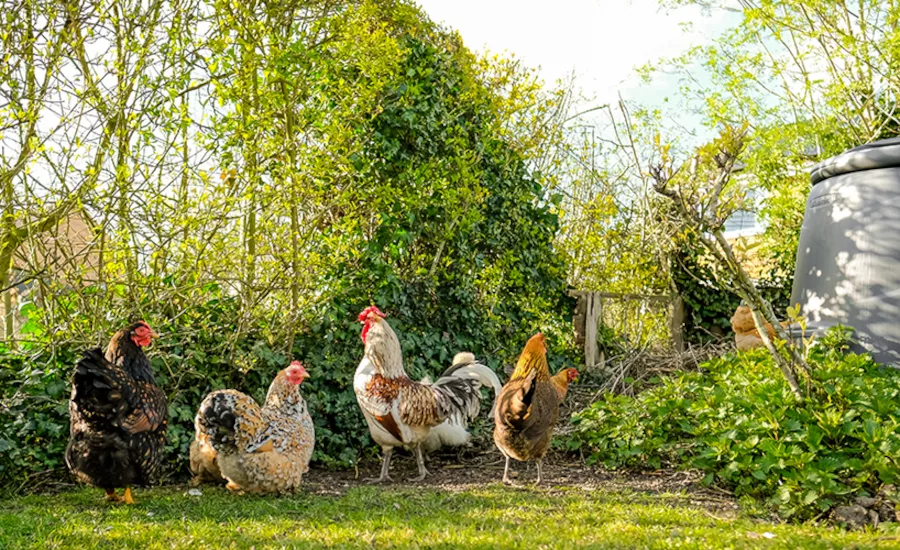
chickens
Getty Images/iStockphoto
The small flock are kept for there free range eggs and are allowed to run free in a large garden.
October 22, 2021

In today’s climate, sustainability is no longer considered a solo endeavor. It requires new levels of collaboration for fast, measurable impact. Driven by consumer demand and a global need for improvement, the meat supply chains have carried momentum in sustainable efforts over the last decade. Sustainability is no longer synonymous with just environmental issues – these efforts must also focus on our people and our animals. As we enter a new era, companies need to take note on how to stay relevant to consumers. 

Where to start

Customers are seeking transparency from brands throughout the supply chains to make informed purchase decisions and evaluate the full impact of a product. There are several ways to gather the information needed and find efficiencies, but customers aren’t aware of how big of an ask this is to the meat industry. They just want it done. 

The structure of the livestock and poultry sector makes full supply chain coordination challenging. Proactive efforts must be precompetitive, antitrust actions should be implemented and new relationships have to be built. Companies can forge these paths to see the benefits or plug into existing efforts. With this shift in consumer demand predicted, several opportunities are available, such as with the U.S. Roundtable for Sustainable Poultry & Eggs

Leaders and experts across dozens of chicken, turkey, and egg companies saw the need for pre-competitive, independent leadership and support to manage rapidly changing scope of sustainability work and founded US-RSPE. The objective of this organization is to reveal and fulfill opportunities for collaboration and support companies to be able to work together toward shared goals. It specifically forges paths between producers, allied industries, NGOs, and other stakeholders directly or indirectly connected to poultry sustainability to include more diverse viewpoints. Building or joining these types of important partnerships result in positive outcomes for the planet, its people, and the livestock and poultry as well. 

Efficiency boosts results 

This effort complements other collaborative investments such as the SMART Broiler project that includes collaboration with Foundation for Food and Agriculture Research, McDonald’s Corporation, and others to innovate to improve poultry welfare. Grants are being offered to provide better tools and understanding that can be applied to the full supply chain. 

Results can also be captured collaboratively as demonstrated by the recent update of the chicken LCA by the National Chicken Council and ongoing work to update the egg LCA by the American Egg Board. There are also training programs resources that all poultry companies can use such as those developed by the U.S. Poultry & Egg Association

Simply put: By collaborating where possible and keeping open communication, more work can get done. That has been demonstrated regardless of whether it involves associations, companies, or other entities.

NCC found that the U.S. chicken industry has produced 21% more chicken by weight in the last 10 years all while using 13% less land, emitting 18% less GHGs, and consuming 13% less water.

This level of progress wasn’t made by one farm or even one facet of the chicken supply chain. Refinements have been made holistically to facilities, diets, genetics, transportation, and a multitude of areas that make produced chicken sandwiches more sustainable than ever. 

While this is a case study in poultry, these same principles can be applied to any sustainability collaboration in other product segments, species, and across species. The meat industry can continue to find success in its evolution and growth in sustainability with more commitment to collaboration. 

Takeaways for success in collaboration 

For successful opportunities in sustainability collaboration: 

• Collaboration from end to end of the supply chain can remove barriers and unlock opportunity for faster, higher-impact work. Individual organization or company investments in sustainability are essential and amplified by connecting that work with their entire supply chain. 

• Precompetitive collaboration on innovation and projects provides the biggest return. Collaboration in a competitive sector like meat can be challenging, but it yields the best results for the planet, its people, and, in this case, the livestock and poultry. 

• Explore current active collaborative projects and initiatives to plug in right away. US-RSPE provides the roadmap for where and how the most effective continuous improvements can be made, which might originate at any step of the supply chain. Several other species efforts have emerged and continue to support improvements in those supply chains as well. 

KEYWORDS: U.S. Roundtable for Sustainable Poultry

Share This Story

Looking for a reprint of this article?
From high-res PDFs to custom plaques, order your copy today!


Candace Bergesch, Director of Communications, U.S. Roundtable for Sustainable Poultry & Eggs (US-RSPE)

Recommended Content

JOIN TODAY
to unlock your recommendations.

Already have an account? Sign In

  • Double Charburger

    Premiumization drives burger category

    Shoppers seek out premium meat offerings to fulfill...
    Beef
    By: Sammy Bredar
  • JJS Adult Pekin duck

    Poultry Report 2025: Convenience propels poultry at retail

    Despite continued economic pressures, the poultry...
    Meat and Poultry Industry News
    By: Sammy Bredar
You must login or register in order to post a comment.

Report Abusive Comment

Manage My Account
  • eMagazine Subscriptions
  • Manage My Preferences
  • Newsletters
  • Online Registration
  • Subscription Customer Service
  • Connect with The National Provisioner

More Videos

Sponsored Content

Sponsored Content is a special paid section where industry companies provide high quality, objective, non-commercial content around topics of interest to the The National Provisioner audience. All Sponsored Content is supplied by the advertising company and any opinions expressed in this article are those of the author and not necessarily reflect the views of The National Provisioner or its parent company, BNP Media. Interested in participating in our Sponsored Content section? Contact your local rep!

close
  • A smiling man carrying a grocery basket is reaching down to pick up a package of meat in a grocery store.
    Sponsored byPIC

    The Green Light: New Data Shows 12-to-1 Support for Pork from PRRS-Resistant Pigs

  • Close up of a grocery cart full of groceries, a cropped image of a couple pushing the cart and a blurred background of the vegetable aisle.
    Sponsored byPIC

    New Market Research Finds Consumers in Eight Key Pork Markets Are Likely to Purchase Pork from Gene-Edited Pigs

  • Close up of a young pig with a blurred background.
    Sponsored byPIC

    New Research Forecasts Significant Economic and Market Impacts with PRRS-Resistant Pig Adoption

Popular Stories

JBS USA logo

JBS USA closing pair of processing facilities

Various new Primal snack sticks on a table amongst pencils, apples, a pair of glasses, lunch bags and a water bottle.

Protein demand drives snacking occasions

Several cuts of beef, pork and chicken on a wooden board, cast iron pan and salt.

Validated thermal lethality data and a new tool for ensuring safety of RTE meats

2026 Top 100 Meat & Poultry Processors Report

Events

January 1, 2030

Webinar Sponsorship Information

For webinar sponsorship information, visit www.bnpevents.com/webinars or email webinars@bnpmedia.com.

View All Submit An Event

Products

Food Crime: An Introduction to Deviance in the Food Industry

Food Crime: An Introduction to Deviance in the Food Industry

See More Products
From Fresh to Frozen in 3 Minutes Flat: Unlocking the Secrets to Temperature Control Webinar Sponsored by Air Products

Related Articles

  • Joining Forces

    See More
  • Deli Chicken

    Convenience and sustainability remain driving forces for consumers

    See More
  • Pavan and GEA join forces for the first time at Anuga FoodTec

    See More

Related Products

See More Products
  • advanced tech.jpg

    Advanced Technologies for Meat Processing

  • meat.jpg

    Non-Thermal Processing Technologies for the Meat, Fish, and Poultry Industries

  • food safety.jpg

    Food Safety in the Seafood Industry: A Practical Guide for ISO 22000 and FSSC 22000 Implementation

See More Products

Events

View AllSubmit An Event
  • April 25, 2013

    Food Plant of the Future: Global Food Safety Impact on Facilities

    On demand SQF 2000, FSMA, ISO 22000/PAS220 and other standards continue to gain traction in an attempt to create safer foods and beverages.
View AllSubmit An Event

Related Directories

  • International Assn. for Food Protection

    The International Association for Food Protection (IAFP) represents a broad range of members with a singular focus — protecting the global food supply. Within the association, you will find educators, government officials, microbiologists, food industry executives and quality control professionals who are involved in all aspects of growing, storing, transporting, processing and preparing all types of foods.
×

Stay ahead of the curve. Unlock a dose of cutting-edge insights.

Receive our premium content directly to your inbox.

SIGN-UP TODAY
  • RESOURCES
    • Advertise
    • Contact Us
    • Directories
    • Store
    • Want More
  • SIGN UP TODAY
    • Create Account
    • eMagazine
    • Newsletter
    • Customer Service
    • Manage Preferences
  • SERVICES
    • Marketing Services
    • Reprints
    • Market Research
    • List Rental
    • Survey/Respondent Access
  • STAY CONNECTED
    • LinkedIn
    • Facebook
    • YouTube
    • X (Twitter)
  • PRIVACY
    • PRIVACY POLICY
    • TERMS & CONDITIONS
    • DO NOT SELL MY PERSONAL INFORMATION
    • PRIVACY REQUEST
    • ACCESSIBILITY

Copyright ©2026. All Rights Reserved BNP Media, Inc. and BNP Media II, LLC.

Design, CMS, Hosting & Web Development :: ePublishing