Provisioner logo
Provisioner logo
search
cart
facebook twitter linkedin youtube
  • Sign In
  • Create Account
  • Sign Out
  • My Account
Provisioner logo
Provisioner logo
  • NEWS
    • Industry News
    • Supplier News
    • Case Studies
    • Recalls
    • Regulations
    • New Consumer Products
  • EXCLUSIVES
    • Newsletters
    • Source Book
    • Sponsored Insights
    • Events
    • Webinars
    • Classifieds
    • White Papers
    • Provisioner Store
    • Market Research
  • MEAT PROCESSING
    • SUSTAINABILITY
    • Processing
    • Packaging
    • Ingredients
    • Formulation
    • Food Safety
    • Special Reports
    • Commentary
  • PROFILES
    • Processor Profiles
    • Processor of the Year
    • Top 100 Processors
  • MEDIA
    • Videos
    • Podcasts
  • DIRECTORY
  • MIHOF
  • INDEPENDENT PROCESSOR
  • EMAG
    • eMagazine
    • ARCHIVE ISSUES
    • Contact
    • Advertise
  • JOIN!
Meat and Poultry Industry NewsRegulationsBeef

Recent study findings can help to protect U.S. cattle against pinkeye

Scientists reveal there are two variants of Moraxella bovis, a bacterium known to cause pinkeye in cattle.
By Industry News
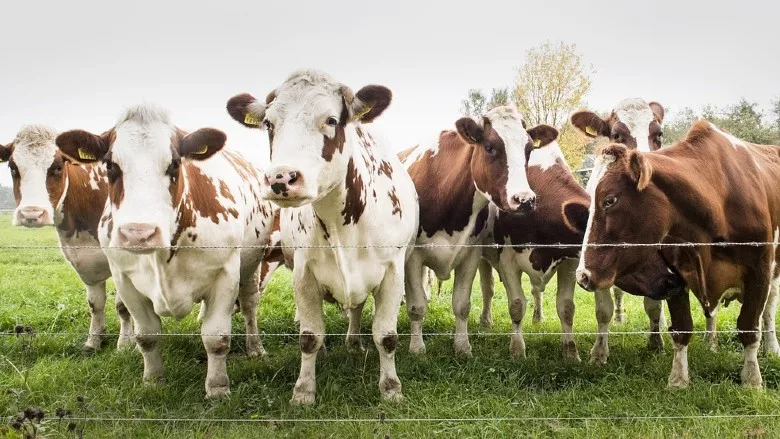
Seven brown and white cows
November 1, 2022

Scientists have revealed that there are two different variants, or genotypes of Moraxella bovis (M. bovis), a bacterium known to cause pinkeye in cattle. This finding helps scientists understand how different types of M. bovis cause infection in livestock and can help develop preventative measures to protect U.S. cattle against this disease.

Cattle pinkeye, or bovine infectious keratoconjunctivitis, is a very contagious eye infection that causes redness, itchiness, pain, and discomfort in the eyes of affected animals. Severe cases can result in blindness and impair weight gain in calves, and thus are a concern for animal well-being and have negative economic impacts on the beef industry.

USDA Agricultural Research Service (ARS) and University of Nebraska-Lincoln (UNL) scientists sequenced and compared the genomes of a collection of M. bovis variants and found that they consisted of two major genotypes. They identified DNA differences between the genotypes. In addition, they found substances that can potentially be used as targets to control the disease.

"We found major differences in virulence factors between the two genotypes," said Emily Wynn, ARS research microbiologist. "For example, M. bovis has a toxin, called hemolysin toxin, which it uses to penetrate the eye. We found that the two genotypes have different versions of the toxin. This difference and others among the collection of M. bovis variants could mean that there are variations in their ability to cause disease."  

In addition, the scientists identified proteins (substances) located on the outer membrane of the bacteria cell. 

"The specific location of these proteins makes them available to the host immune system because they are located on the outer membrane. Proteins that are unique to one or both genotypes can be used as a target to develop specific preventative actions against any of the genotypes, if necessary," added Wynn.

This is important because for years scientists have been closely looking at another substance in this bacterium to develop interventions against the disease, called pilin proteins. Pilins facilitate the attachment of M. bovis to the eye. However, using pilins to develop interventions could be tricky.

"The pilin gene of M. bovis can undergo an inversion," said Mike Clawson, ARS research molecular biologist at the U.S. Meat Animal Research Center in Clay Center, NE. "This is where parts of the gene flip and are rearranged on the bacterial chromosome.  As a result, a newly formed pilin gene is created that encodes a new protein version of itself, which helps M. bovis avoid recognition by the immune system. Pilin gene inversions have been thought to be a relatively rare process. However, we saw evidence that multiple M. bovis strains were undergoing the inversions during our study. This makes the pilin gene a challenge to use as a target and emphasizes why the outer membrane proteins identified in this study are an important discovery." 

The team sequenced M. bovis strains isolated from cattle from seventeen U.S. states and one Canadian province that were assembled by Dustin Loy, UNL professor and veterinary diagnostic microbiologist.

"The first finished genome of M. bovis was produced by this collaboration on an experimental strain in 2018," said Loy. "Since then, we haven't seen much progress in comprehensive sequencing of this bacterium until this study between ARS and UNL."

Loy has dedicated years of research to understanding this infectious disease, collecting samples directly from veterinarians working with cattle—for testing and identifying variabilities between the strains.

"This disease is often overlooked. Still, it is the most frequently reported disease in beef breeding cows and second in calves. Our work recognizes the economic impact this causes to beef producers," added Loy.

The team commemorates collaborative research on pinkeye that goes back approximately 58 years with the groundbreaking work of ARS researcher George Washington Pugh Jr., who was the first black scientist in the agency, and made major advances in understanding the role of M. bovis in pinkeye. More recently, UNL published a collaborative study with ARS assessing immunological responses and the effectiveness of vaccines to protect cattle against diseases associated with these bacteria.

The recent study was published in BMC Microbiology by Emily L. Wynn (ARS), Matthew M Hille (UNL), John Dustin Loy (UNL), Gennie Schuller (ARS), Kristen L Kuhn (ARS), Aaron M Dickey (ARS), James L Bono (ARS), and Michael L Clawson (ARS).

The Agricultural Research Service is the U.S. Department of Agriculture's chief scientific in-house research agency. Daily, ARS focuses on solutions to agricultural problems affecting America. Each dollar invested in U.S. agricultural research results in $20 of economic impact.

Source: USDA's ARS

KEYWORDS: animal health USDA

Share This Story

Looking for a reprint of this article?
From high-res PDFs to custom plaques, order your copy today!

Recommended Content

JOIN TODAY
to unlock your recommendations.

Already have an account? Sign In

  • Double Charburger

    Premiumization drives burger category

    Shoppers seek out premium meat offerings to fulfill...
    Beef
    By: Sammy Bredar
  • JJS Adult Pekin duck

    Poultry Report 2025: Convenience propels poultry at retail

    Despite continued economic pressures, the poultry...
    Meat and Poultry Industry News
    By: Sammy Bredar
You must login or register in order to post a comment.

Report Abusive Comment

Manage My Account
  • eMagazine Subscriptions
  • Manage My Preferences
  • Newsletters
  • Online Registration
  • Subscription Customer Service
  • Connect with The National Provisioner

More Videos

Sponsored Content

Sponsored Content is a special paid section where industry companies provide high quality, objective, non-commercial content around topics of interest to the The National Provisioner audience. All Sponsored Content is supplied by the advertising company and any opinions expressed in this article are those of the author and not necessarily reflect the views of The National Provisioner or its parent company, BNP Media. Interested in participating in our Sponsored Content section? Contact your local rep!

close
  • A smiling man carrying a grocery basket is reaching down to pick up a package of meat in a grocery store.
    Sponsored byPIC

    The Green Light: New Data Shows 12-to-1 Support for Pork from PRRS-Resistant Pigs

  • Close up of a grocery cart full of groceries, a cropped image of a couple pushing the cart and a blurred background of the vegetable aisle.
    Sponsored byPIC

    New Market Research Finds Consumers in Eight Key Pork Markets Are Likely to Purchase Pork from Gene-Edited Pigs

  • Close up of a young pig with a blurred background.
    Sponsored byPIC

    New Research Forecasts Significant Economic and Market Impacts with PRRS-Resistant Pig Adoption

Popular Stories

Spam Dog

Hormel rolls out Spam hot dog for foodservice applications

Various new Primal snack sticks on a table amongst pencils, apples, a pair of glasses, lunch bags and a water bottle.

Protein demand drives snacking occasions

Several cuts of beef, pork and chicken on a wooden board, cast iron pan and salt.

Validated thermal lethality data and a new tool for ensuring safety of RTE meats

2026 Top 100 Meat & Poultry Processors Report

Events

June 11, 2026

From Fresh to Frozen in 3 Minutes Flat: Unlocking the Secrets to Temperature Control

Join Tony Vacaro, Foods Industry Manager, and Emile Klein, Foods Market Strategy Manager at Air Products and Chemicals, Inc. , as they tackle key questions surrounding heat removal in food processing. 

January 1, 2030

Webinar Sponsorship Information

For webinar sponsorship information, visit www.bnpevents.com/webinars or email webinars@bnpmedia.com.

View All Submit An Event

Products

Food Crime: An Introduction to Deviance in the Food Industry

Food Crime: An Introduction to Deviance in the Food Industry

See More Products
From Fresh to Frozen in 3 Minutes Flat: Unlocking the Secrets to Temperature Control Webinar Sponsored by Air Products

Related Articles

  • Grilled chicken breast, fillet, steak on wooden board

    Intensity Ultrasonication can help to mitigate excessive hardness of Woody Breast meat in broilers

    See More
  • Sealed Air logo

    Case Study: 2022 National Meat Case Study findings unveiled

    See More
  • Marx Foods

    How meatpackers can help restaurants increase yield

    See More

Related Products

See More Products
  • food-crime.jpg

    Food Crime: An Introduction to Deviance in the Food Industry

  • GlobalData_logo_blue_header.png

    Frozen Meat (Meat) Market in the United States of America - Outlook to 2023...

  • GlobalData_logo_blue_header.png

    Cooked Meats - Packaged (Meat) Market in the United States of America - Outlook to 2023

See More Products

Related Directories

  • U.S. Meat Export Federation

    The mission of USMEF is to “increase the value and profit opportunities for the U.S. beef, pork, and lamb industries by enhancing demand in export markets through a coordinated and collaborative partnership of all stakeholders.” Simply put, USMEF is “Putting U.S. Meat on the World’s Table.” USMEF has the most diverse membership of any trade association in the meat and livestock industry. USMEF represents beef/veal producers and feeders, pork producers and feeders, lamb producers and feeders, packers and processors, purveyors and traders, oilseeds producers, feedgrains producers, farm organizations, and supply and service organizations.
  • U.S. Poultry & Egg Assn.

    U.S. Poultry & Egg Association is the world’s largest poultry association, representing the entire industry as an “All Feather” Association. Membership includes producers and processors of broilers, turkeys, ducks, eggs, breeding stock, and allied companies. USPOULTRY is also the managing partner for the International Production & Processing Expo (IPPE).
×

Stay ahead of the curve. Unlock a dose of cutting-edge insights.

Receive our premium content directly to your inbox.

SIGN-UP TODAY
  • RESOURCES
    • Advertise
    • Contact Us
    • Directories
    • Store
    • Want More
  • SIGN UP TODAY
    • Create Account
    • eMagazine
    • Newsletter
    • Customer Service
    • Manage Preferences
  • SERVICES
    • Marketing Services
    • Reprints
    • Market Research
    • List Rental
    • Survey/Respondent Access
  • STAY CONNECTED
    • LinkedIn
    • Facebook
    • YouTube
    • X (Twitter)
  • PRIVACY
    • PRIVACY POLICY
    • TERMS & CONDITIONS
    • DO NOT SELL MY PERSONAL INFORMATION
    • PRIVACY REQUEST
    • ACCESSIBILITY

Copyright ©2026. All Rights Reserved BNP Media, Inc. and BNP Media II, LLC.

Design, CMS, Hosting & Web Development :: ePublishing