Provisioner logo
Provisioner logo
search
cart
facebook twitter linkedin youtube
  • Sign In
  • Create Account
  • Sign Out
  • My Account
Provisioner logo
Provisioner logo
  • NEWS
    • Industry News
    • Supplier News
    • Case Studies
    • Recalls
    • Regulations
    • New Consumer Products
  • EXCLUSIVES
    • Newsletters
    • Source Book
    • Sponsored Insights
    • Events
    • Webinars
    • Classifieds
    • White Papers
    • Provisioner Store
    • Market Research
  • MEAT PROCESSING
    • SUSTAINABILITY
    • Processing
    • Packaging
    • Ingredients
    • Formulation
    • Food Safety
    • Special Reports
    • Commentary
  • PROFILES
    • Processor Profiles
    • Processor of the Year
    • Top 100 Processors
  • MEDIA
    • Videos
    • Podcasts
  • DIRECTORY
  • MIHOF
  • INDEPENDENT PROCESSOR
  • EMAG
    • eMagazine
    • ARCHIVE ISSUES
    • Contact
    • Advertise
  • JOIN!
Meat and Poultry Industry NewsSeafood

Optimizing in-flight meal sustainability with wild Alaska pollock

Wild Alaska pollock as a protein source has been proven to leave a much smaller and sustainable footprint than the farming and distribution of beef, pork, chicken and even tofu.
By Rasmus Soerensen
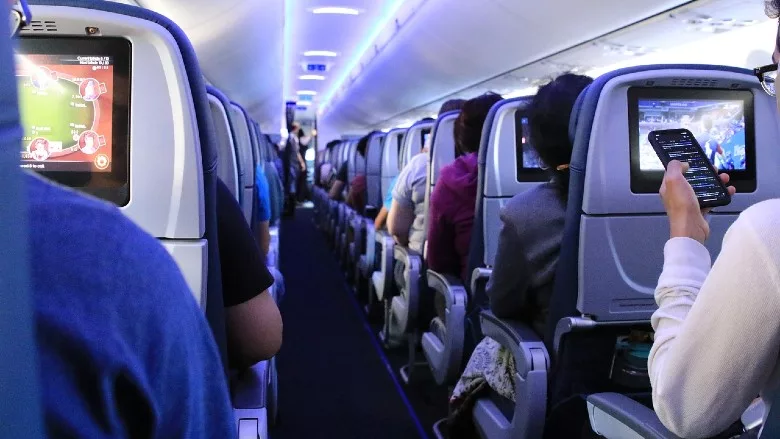
Passengers on airplane flight
Image by Orna from Pixabay

Image by Orna from Pixabay

September 17, 2024

As practically the inventors of the word “sustainability”, the commercial fishing industry has a lot of respect for the efforts taken by the airline industry on environmental sustainability. In the United States specifically, companies such as American, Delta, Southwest and United have all publicly and proudly announced plans to achieve net-zero greenhouse gas emissions by 2050.

Their initiatives to reduce emissions are significant, from buying more fuel-efficient aircraft, transitioning to battery powered vehicles for ground transportation at the tarmac and improving their overall operational efficiencies. They are even trying to do the previously unimaginable by looking at electrifying their fleets.

With all their great ideas, they overlook one important aspect of their business – optimizing the sustainability of their in-flight offerings.

Fish on a plane – it's not scary, it’s sustainable

The in-flight menu has drastically changed since I first started flying, as airlines have needed to get creative to meet consumer trends. This includes the meals that are offered on longer-haul flights or in premium cabins. Most of those meals include a fairly standard offering: vegetables or salad, a meat entree, bread and a dessert. With changes in consumer preference, some airlines have even explored adding plant-based meals to their available options.

But as we know, consumers will constantly seek proteins for their meals, and that continues to be a drag on our environment. With a third of our planet’s arable land used for livestock farming, which contributes to more than 15% of the planet's total greenhouse emissions, the airlines have an opportunity to address the in-cabin environmental impact as well.

So where to turn for more environmentally friendly protein? Innovation can also occur by looking at the options that have been available for centuries, long before the Wright brothers changed the game. To play on Samuel L Jackson’s smashing hit, ‘Snakes on a Plane,” it’s time for the airlines to get "Fish on a Plane."

Although meat products take up much of the menu space in in-flight meals, there are flights that do include fish from time to time. The type of fish can vary, with salmon as a top seller, and I even had a delicious cod dish on a recent flight to South America. However, I think the airlines can do better than salmon and cod. We need to get more of the right type of our fish on our planes – wild Alaska pollock.

Wild Alaska pollock

Wild Alaska pollock can unlock value on in-flight menus by delighting guests, helping the airlines’ wallets and importantly, helping the planet. The raw material behind McDonald’s Filet-O-Fish, wild Alaska pollock, is one of the world’s most climate-friendly proteins. Wild Alaska pollock as a protein source has been proven to leave a much smaller and sustainable footprint than the farming and distribution of beef, pork, chicken and even tofu.

Importantly, wild Alaskan pollock requires zero gallons of freshwater to produce 3.5 ounces of food. In contrast, to produce the same amount of beef, over 750 gallons of water is needed. Overall, every pound of wild Alaska pollock product accounts for roughly 2.2-2.3 pounds of carbon dioxide equivalent, while one pound of beef accounts for 130 pounds of carbon dioxide equivalent in the atmosphere. For an everyday perspective, beef burgers produce more than 200 pounds carbon dioxide equivalent, compared to 1.8 pounds of carbon dioxide equivalent for wild Alaska pollock fish sandwiches. Notably, this industry uses every part of the fish so that nothing goes to waste.

Wild Alaska pollock is a great airline food as it is easily transportable and can stay fresh longer than other proteins. Importantly, wild Alaska pollock is extremely cost effective, especially compared to higher-end species like salmon and tuna, but does not sacrifice on taste. For perspective, a pound of salmon at retail costs more than $8, compared to as low as $2 for wild Alaska pollock.

Furthermore, to further enhance the cost effectiveness and resource utilization of wild Alaska pollock, the airlines can have 100% control of the size of the portion. Traditionally, one of the challenges for airlines using fish in their in-flight menus has been a result of oddly shaped fillets, which makes it difficult to achieve the right portion and weight per serving. Wild Alaska pollock avoid these challenges, as the fish are cut from a square block.

I commend the airlines for their efforts to date, but it is essential to continue to push the boundaries both inside and outside the airplane cabin. Let’s look to add more fish on in-flight menus, and add the right, most cost-efficient and environmentally friendly options for customers who will appreciate the efforts … and respond with their wallets.

KEYWORDS: airline alaska seafood

Share This Story

Looking for a reprint of this article?
From high-res PDFs to custom plaques, order your copy today!


Rasmus soerensen

Rasmus Soerensen is the chief commercial officer of American Seafoods, overseeing production planning, worldwide sales, and all marketing activities. For more than 20 years, he has helped support American Seafoods’ business development initiatives. Soerenson also serves as chairman of the board of SeaShare.

Recommended Content

JOIN TODAY
to unlock your recommendations.

Already have an account? Sign In

  • Double Charburger

    Premiumization drives burger category

    Shoppers seek out premium meat offerings to fulfill...
    Meat and Poultry Industry News
    By: Sammy Bredar
  • JJS Adult Pekin duck

    Poultry Report 2025: Convenience propels poultry at retail

    Despite continued economic pressures, the poultry...
    Chicken
    By: Sammy Bredar
You must login or register in order to post a comment.

Report Abusive Comment

Manage My Account
  • eMagazine Subscriptions
  • Manage My Preferences
  • Newsletters
  • Online Registration
  • Subscription Customer Service
  • Connect with The National Provisioner

More Videos

Sponsored Content

Sponsored Content is a special paid section where industry companies provide high quality, objective, non-commercial content around topics of interest to the The National Provisioner audience. All Sponsored Content is supplied by the advertising company and any opinions expressed in this article are those of the author and not necessarily reflect the views of The National Provisioner or its parent company, BNP Media. Interested in participating in our Sponsored Content section? Contact your local rep!

close
  • A smiling man carrying a grocery basket is reaching down to pick up a package of meat in a grocery store.
    Sponsored byPIC

    The Green Light: New Data Shows 12-to-1 Support for Pork from PRRS-Resistant Pigs

  • Close up of a grocery cart full of groceries, a cropped image of a couple pushing the cart and a blurred background of the vegetable aisle.
    Sponsored byPIC

    New Market Research Finds Consumers in Eight Key Pork Markets Are Likely to Purchase Pork from Gene-Edited Pigs

  • Close up of a young pig with a blurred background.
    Sponsored byPIC

    New Research Forecasts Significant Economic and Market Impacts with PRRS-Resistant Pig Adoption

Popular Stories

Spam Dog

Hormel rolls out Spam hot dog for foodservice applications

Various new Primal snack sticks on a table amongst pencils, apples, a pair of glasses, lunch bags and a water bottle.

Protein demand drives snacking occasions

Several cuts of beef, pork and chicken on a wooden board, cast iron pan and salt.

Validated thermal lethality data and a new tool for ensuring safety of RTE meats

2026 Top 100 Meat & Poultry Processors Report

Events

June 11, 2026

From Fresh to Frozen in 3 Minutes Flat: Unlocking the Secrets to Temperature Control

Join Tony Vacaro, Foods Industry Manager, and Emile Klein, Foods Market Strategy Manager at Air Products and Chemicals, Inc. , as they tackle key questions surrounding heat removal in food processing. 

January 1, 2030

Webinar Sponsorship Information

For webinar sponsorship information, visit www.bnpevents.com/webinars or email webinars@bnpmedia.com.

View All Submit An Event

Products

Food Crime: An Introduction to Deviance in the Food Industry

Food Crime: An Introduction to Deviance in the Food Industry

See More Products
From Fresh to Frozen in 3 Minutes Flat: Unlocking the Secrets to Temperature Control Webinar Sponsored by Air Products

Related Articles

  • Wild-caught Alaska pollock fish receives spotlight for sustainability and health

    Wild-caught Alaska pollock fish receives spotlight for sustainability and health

    See More
  • Alaska Seafood Marketing Institute logo

    USDA purchases wild Alaska salmon and pollock

    See More
  • News Brief Feature

    Family of airline passenger files suit claiming in-flight meal was contaminated, led to his death

    See More

Related Products

See More Products
  • Optimizing Social Media from a B2B Perspective

  • The 10 Principles of Food Industry Sustainability

See More Products
×

Stay ahead of the curve. Unlock a dose of cutting-edge insights.

Receive our premium content directly to your inbox.

SIGN-UP TODAY
  • RESOURCES
    • Advertise
    • Contact Us
    • Directories
    • Store
    • Want More
  • SIGN UP TODAY
    • Create Account
    • eMagazine
    • Newsletter
    • Customer Service
    • Manage Preferences
  • SERVICES
    • Marketing Services
    • Reprints
    • Market Research
    • List Rental
    • Survey/Respondent Access
  • STAY CONNECTED
    • LinkedIn
    • Facebook
    • YouTube
    • X (Twitter)
  • PRIVACY
    • PRIVACY POLICY
    • TERMS & CONDITIONS
    • DO NOT SELL MY PERSONAL INFORMATION
    • PRIVACY REQUEST
    • ACCESSIBILITY

Copyright ©2026. All Rights Reserved BNP Media, Inc. and BNP Media II, LLC.

Design, CMS, Hosting & Web Development :: ePublishing