Provisioner logo
Provisioner logo
search
cart
facebook twitter linkedin youtube
  • Sign In
  • Create Account
  • Sign Out
  • My Account
Provisioner logo
Provisioner logo
  • NEWS
    • Industry News
    • Supplier News
    • Case Studies
    • Recalls
    • Regulations
    • New Consumer Products
  • EXCLUSIVES
    • Newsletters
    • Source Book
    • Sponsored Insights
    • Events
    • Webinars
    • Classifieds
    • White Papers
    • Provisioner Store
    • Market Research
  • MEAT PROCESSING
    • SUSTAINABILITY
    • Processing
    • Packaging
    • Ingredients
    • Formulation
    • Food Safety
    • Special Reports
    • Commentary
  • PROFILES
    • Processor Profiles
    • Processor of the Year
    • Top 100 Processors
  • MEDIA
    • Videos
    • Podcasts
  • DIRECTORY
  • MIHOF
  • INDEPENDENT PROCESSOR
  • EMAG
    • eMagazine
    • ARCHIVE ISSUES
    • Contact
    • Advertise
  • JOIN!
Meat and Poultry Industry NewsMeat and Poultry ProcessingFood SafetyRegulationsSpecial ReportsIndependent Processor

STATE OF THE INDUSTRY: FOOD SAFETY

State of the Industry: Rough year in food safety

Processors must change the perception that the industry doesn’t care about customers and is making and selling unsafe products.
By Andrew Lorenz
foodsafety.jpg
October 16, 2024

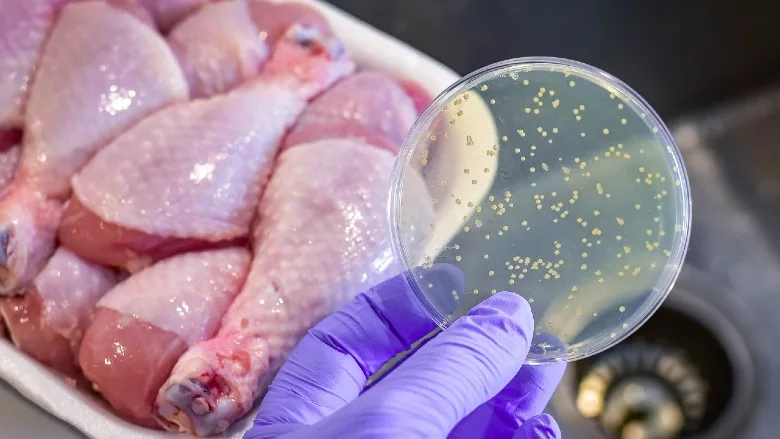
Not only have there been multiple recalls of meat and poultry products that have been linked to human illness, but there have also been multiple linked to deaths, entire plants shuttered, and per a recent Gallup poll the American people are losing confidence in the food industry.  

Do we need more regulations? No, what we need is more focus on the basics.

For livestock we need to have better controls preharvest. This is something we have very little control over. USDA FSIS is pushing very hard for preharvest sampling followed by reacting to said results. Unfortunately, short of refusing to harvest the animals, most harvest facilities have already implemented multiple interventions giving them very little additional interventions that they can implement. Add to it the public is becoming very resistant to chemical treatments.  Ultimately, we need USDA APHIS to step up and develop better controls that our farmers, ranchers and feedlots can implement to reduce pathogen load. Robust sanitary dressing procedures have been and will be our first and best line of defense.

For our raw intact processors, we need to focus on temperature control and basic sanitation. Automated temperature control, frequently taking internal product temperatures in unrefrigerated processing spaces and keeping said temperature as low as possible. If any of the trim from these processes is headed to raw not intact processing we need to apply an antimicrobial intervention prior to processing, the risk of viable non-culturable cells being present on primals, is just too high of a risk.

For raw not intact processors temperature controls and basic sanitation need to be our focus. Grinders, mixers, extruders, needlers, etc., all have the potential to increase product temperature during processing as well as the potential introduction of foreign material into product. What do you have for temperature controls?  I recommend you map your process to determine where your highest temperature is in your process and put the appropriate controls in place.  

For foreign material, and this applies to any food production category, it starts with your receiving program then moves to your pre-operational checks. When the cleaning team is disassembling your equipment are they trained to inspect the equipment for damage? Do they know how to properly report it if there is damage? Does your food safety team know how to properly investigate and find the contamination?  

Post lethality contamination prevention is critical. Does your sanitation team use multiple sanitizers that are rotated? Are all of your food contact surfaces in good condition so that those sanitizers can work? If you do have areas that are hard to reach or have liquid restrictions are you using vaporized alcohol? Remember water tension for most liquid sanitizers is approximately 72.8 dynes/cm compared to 22.3 for alcohol vapor, i.e., it is very effective at getting into those hard-to-reach areas.

Are your sampling programs truly robust, are you actively looking for Listeria? When you have a positive is your team trained on how to investigate, find, and eliminate the harborage points?

Another thing to keep in mind is that while the USDA FSIS compliance guidelines don’t require non-food contact surface testing, is it worth it to allow Listeria in your environment and not know about it? This is especially true when you are doing construction, equipment repair or introducing new equipment into your environment.

Ready to eat areas must be kept in good condition.  Reading NRs about mold, filth, etc., in ready to eat areas should immediately send a flag to senior management. If senior management isn’t being included in USDA FSIS in-plant personal communications they need to become involved immediately. When I read the CDC public notification to not eat deli meats my stomach dropped, it meant they had enough information to go after a complete segment of our industry.

For the majority of our clients we don’t stove pipe the food safety program, we analyze each process category and transfer from one food safety system to another. The reason for this is that it forces us to look at each step in our process in detail. When something goes wrong in a lethality or stabilization process we know we had controls in place earlier in our process. Making any modelling or sampling much easier to validate.

Years ago Mr. Steven Cortinez told me his basic philosophy was 1) keep it clean, 2) keep it covered, and 3) keep it cold. It was and still is great advice.

Crystal ball

We know that polling is reporting people’s perceptions. We must change the perception that we as an industry don’t care about our customers and is making and selling unsafe products. Nothing could be further from the truth, we are making billions of pounds of safe, healthy, product every year.

Our regulatory authorities will have to respond to the loss of faith by the American people in our ability to provide them with safe product. What that is going to look like, be it additional regulations, more aggressive enforcement, or a combination of the two I don’t know; what I do know is that they will be pushed to do something.

The calls for breaking up the Big 4 meat and poultry companies is getting louder; without explaining how this would make product safer.

It behooves all of us to take a hard look at our processes and make sure we have implemented the appropriate controls and communicate it to our customers.

KEYWORDS: state of the industry

Share This Story

Looking for a reprint of this article?
From high-res PDFs to custom plaques, order your copy today!


Andrew Lorenz is president of We R Food Safety! For more information, email him at andrew@werfoodsafety.com.

Recommended Content

JOIN TODAY
to unlock your recommendations.

Already have an account? Sign In

  • Double Charburger

    Premiumization drives burger category

    Shoppers seek out premium meat offerings to fulfill...
    Ingredients
    By: Sammy Bredar
  • JJS Adult Pekin duck

    Poultry Report 2025: Convenience propels poultry at retail

    Despite continued economic pressures, the poultry...
    Turkey
    By: Sammy Bredar
You must login or register in order to post a comment.

Report Abusive Comment

Manage My Account
  • eMagazine Subscriptions
  • Manage My Preferences
  • Newsletters
  • Online Registration
  • Subscription Customer Service
  • Connect with The National Provisioner

More Videos

Sponsored Content

Sponsored Content is a special paid section where industry companies provide high quality, objective, non-commercial content around topics of interest to the The National Provisioner audience. All Sponsored Content is supplied by the advertising company and any opinions expressed in this article are those of the author and not necessarily reflect the views of The National Provisioner or its parent company, BNP Media. Interested in participating in our Sponsored Content section? Contact your local rep!

close
  • A smiling man carrying a grocery basket is reaching down to pick up a package of meat in a grocery store.
    Sponsored byPIC

    The Green Light: New Data Shows 12-to-1 Support for Pork from PRRS-Resistant Pigs

  • Close up of a grocery cart full of groceries, a cropped image of a couple pushing the cart and a blurred background of the vegetable aisle.
    Sponsored byPIC

    New Market Research Finds Consumers in Eight Key Pork Markets Are Likely to Purchase Pork from Gene-Edited Pigs

  • Close up of a young pig with a blurred background.
    Sponsored byPIC

    New Research Forecasts Significant Economic and Market Impacts with PRRS-Resistant Pig Adoption

Popular Stories

JBS USA logo

JBS USA closing pair of processing facilities

Various new Primal snack sticks on a table amongst pencils, apples, a pair of glasses, lunch bags and a water bottle.

Protein demand drives snacking occasions

Several cuts of beef, pork and chicken on a wooden board, cast iron pan and salt.

Validated thermal lethality data and a new tool for ensuring safety of RTE meats

2026 Top 100 Meat & Poultry Processors Report

Events

January 1, 2030

Webinar Sponsorship Information

For webinar sponsorship information, visit www.bnpevents.com/webinars or email webinars@bnpmedia.com.

View All Submit An Event

Products

Food Crime: An Introduction to Deviance in the Food Industry

Food Crime: An Introduction to Deviance in the Food Industry

See More Products
From Fresh to Frozen in 3 Minutes Flat: Unlocking the Secrets to Temperature Control Webinar Sponsored by Air Products

Related Articles

  • Food Safety Summit virtual logo

    Food Safety Summit kicks off with state of the industry and dynamic keynote from Costco’s Craig Wilson

    See More
  • State of the Industry: The year of the recall

    See More
  • USDA: Benefits of early calving are increasing due to late winter warming

    State of the Industry: The year of H5N1, or the year that animal agriculture unites across species?

    See More

Related Products

See More Products
  • food safety.jpg

    Food Safety in the Seafood Industry: A Practical Guide for ISO 22000 and FSSC 22000 Implementation

  • food-crime.jpg

    Food Crime: An Introduction to Deviance in the Food Industry

See More Products

Events

View AllSubmit An Event
  • November 11, 2025

    The National Provisioner’s 2025 State of the Industry

    On-Demand Join Chris DuBois, Executive Vice President & Perimeter Practice Leader, as he breaks down what’s fueling — and what’s stalling — growth across the protein category. From shifting consumer priorities to evolving definitions of “value,” you’ll gain actionable takeaways.
View AllSubmit An Event
×

Stay ahead of the curve. Unlock a dose of cutting-edge insights.

Receive our premium content directly to your inbox.

SIGN-UP TODAY
  • RESOURCES
    • Advertise
    • Contact Us
    • Directories
    • Store
    • Want More
  • SIGN UP TODAY
    • Create Account
    • eMagazine
    • Newsletter
    • Customer Service
    • Manage Preferences
  • SERVICES
    • Marketing Services
    • Reprints
    • Market Research
    • List Rental
    • Survey/Respondent Access
  • STAY CONNECTED
    • LinkedIn
    • Facebook
    • YouTube
    • X (Twitter)
  • PRIVACY
    • PRIVACY POLICY
    • TERMS & CONDITIONS
    • DO NOT SELL MY PERSONAL INFORMATION
    • PRIVACY REQUEST
    • ACCESSIBILITY

Copyright ©2026. All Rights Reserved BNP Media, Inc. and BNP Media II, LLC.

Design, CMS, Hosting & Web Development :: ePublishing