Special Report: AI, Automation & Robotics
The future of AI and automation at the meat plant
Demand for greater efficiency, food safety and adaptability influence AI and automation development for meat processing.

Opening image credit: Getty Images / NiseriN / Getty Images Plus.
AI, automation, and robotics systems are rapidly growing within the meat and poultry industry. Producers are choosing to implement AI, automation and robotics solutions not only due to labor concerns, but because these systems can enable higher production efficiency, safety and precision. Within the meat and poultry sector in particular, AI and automated systems have the potential to minimize human errors, improve sustainability practices and optimize quality control.
When meat and poultry processors first consider utilizing AI, automation or robotics at the plant, they must first consider a multitude of factors prior to implementation. Burns & McDonnell Automation Consultant and Project Manager Alfredo Valadez noted that, though the initial cost of investment in many automated systems is quite high, return on investment is typically very fast, particularly through labor cost savings and improved yield results. This is not always the case, though.
“To effectively manage costs and address evolving production needs, processors should prioritize automation in areas that offer the greatest safety improvements and return on investment, rather than the entire process,” Valadez said.
Ease of integration is another essential consideration for processors. Georgie Thomas, Choco US general manager, noted that any implemented AI and automation systems should be based off of underlying data. Utilizing preexisting data ensures systems are trained properly and thoroughly, and will make system utilization easier in the future.
While AI, automated and robotic systems can greatly benefit meat and poultry processing operations, training is essential to proper implementation and successful utilization. Tom Sosnoski, director of advanced development at JLS, recommends forming a small, cross-functional team that is not only curious about evolving technology, but is open to continuous learning. “AI is evolving rapidly, and most of the practical know-how comes not from textbooks but from hands-on experience and experimentation,” he said.
Thomas recommends staff get involved early in the implementation process. “I've been involved with a lot of these different implementations for different companies, and one of the key factors for success is: How early on did we involve people who were actually going to be using the system in the process? And the more we could do that training, the more they actually were brought in, they understood the value of it,” he said.
Valadez noted that demands for greater efficiency, food safety and adaptability are strongly influencing AI and automation utilization for meat and poultry production. “One significant development is the use of multirobot systems that share data across processing lines, enabling dynamic adjustment of cutting parameters and improving overall line efficiency,” Valadez said. These systems respond to variations in product flow and quality, ultimately optimizing yield and reducing waste.
Another AI and automation trend gaining momentum within meat and poultry processing is hyperspectral imaging, which detects contaminants including plastics and pathogens. “This technology provides rapid, nondestructive inspection and can identify physical, chemical and biological contamination that might otherwise go unnoticed, supporting both quality assurance and regulatory compliance,” Valadez said.
Sosnoski noted that AI, automation and robotics systems are particularly unlocking new opportunities for meat and poultry processors by addressing weak points in human inspection or labor. “Improvements in deep learning and computer vision are enabling systems to handle highly variable, visually complex tasks that were once considered too difficult to automate,” Sosnoski.
“AI-powered vision systems can now perform in-line product inspection with greater consistency and speed than manual labor,” Sosnoski said. He noted that current applications for AI-powered vision systems include:
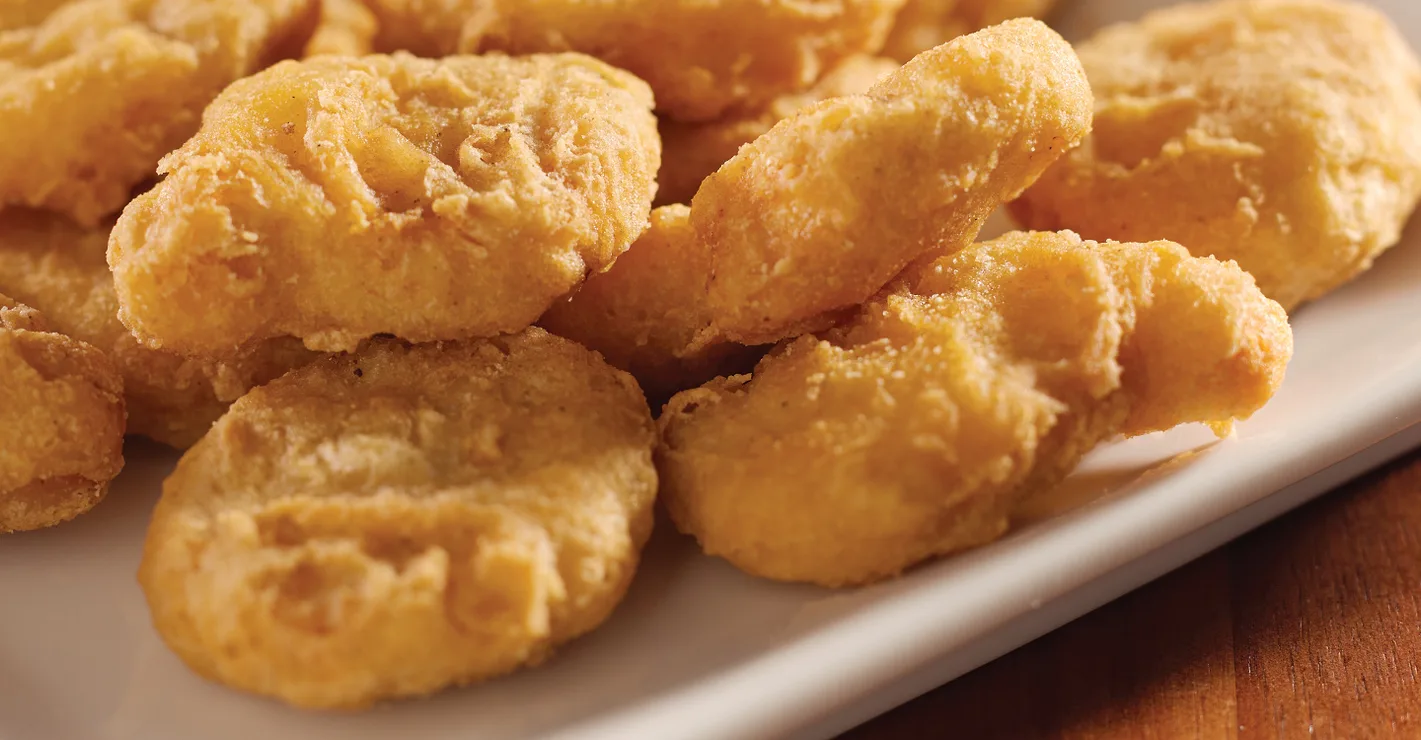
- Chicken nuggets: Detecting broken pieces, incomplete breading, conjoined twins, misformed product, and out-of-spec sizing
- Chicken feet: Identifying scabs, bruises, lesions, and swelling
- Hot dogs: Detecting dark black specs (e.g., burnt grease), broken links, split tips, and visible surface grease
- Natural-cased sausages: Identifying torn or incomplete casing at the tips
- Pork butts: Detecting abscesses and evaluating cut quality
- Thermoformed packaged products: Inspecting seal integrity by identifying product contamination in the seal, broken seals, or trapped air
As labor shortages continue to impact every segment of the food industry, meat and poultry processing operations in particular are having to get creative to adjust to labor complications. Luckily, robotic systems offer a solution to processors, eliminating tasks that are physically strenuous or very repetitive. Such tasks include cutting, pick-and-place operations, packaging and case packing, Sosnoski said.
Automation is helping meat distributors with forecast demanding, Thomas said. Demand forecasting allows distributors to see exactly how much product they need, ultimately minimizing food waste. Thomas noted that visibility into product demand also benefits purchasing processes.
“Additionally, automation is being used to precisely portion both products and the incorporation of biodegradable materials into packaging, which helps reduce plastic waste and supports broader sustainability goals,” said Valadez. Food and materials waste reduction is a critical priority in the meat and poultry processing industry, particularly as sustainability initiatives and regulations gain traction.
AI research is booming; Sosnoski said that this influx of investment and innovation from large tech companies is making new and cutting-edge tools more accessible and approachable for meat and poultry processors. He emphasized two specific trends reshaping AI development, which ultimately benefit meat processors: synthetic data generation, and open-source tools like Meta’s Segment Anything Mode. Synthetic data generation lowers the time and cost needed to train AI models, while Meta’s SAM reducing manual data annotation time. “This unlocks faster training cycles and allows processors and integrators to fine-tune AI models for niche applications with much less effort,” Sosnoski said.
Thomas noted that as AI and automation continue to gain footing in the meat and poultry industry, producers are becoming more interested in human and robot collaboration, exploring how agents or copilot systems can assist workers and streamline tasks.
“Looking ahead, the industry is investing heavily in the development of humanoid robots capable of performing manual tasks in environments where traditional robotic systems are impractical due to size or cost constraints,” Valadez said. “While this technology is still in its early stages, significant investment signals a strong belief in its potential to reshape the industry in the coming years.”
Thomas emphasized that AI and automation capabilities have grown and advanced to the point where smaller businesses can more easily automate systems. “This is a chance where the playing field has been leveled," he said. “It's not just the biggest companies, the most tech enabled companies, it's really anyone can have a voice in doing this.” Thomas recommends producers get started with automation implementation, even on a small basis.
Looking for a reprint of this article?
From high-res PDFs to custom plaques, order your copy today!