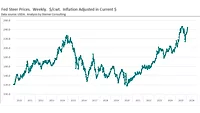
Cattle supply pipeline continues to shrink
There are fewer cattle, and supply will need to get smaller if we have any shot at recovery down the road.
The cattle supply pipeline continues to shrink, with feedlot inventories reflecting broader systemwide declines. This week’s US Department of Agriculture reports, both the monthly Cattle on Feed survey and the semi-annual Cattle inventory report, will be closely watched to assess availability for the remainder of the year and in 2026.
While the monthly feedlot report captures only operations with 1,000+ head capacity, the semi-annual survey includes all feedlots. Historically, large feedlots have made up about 85% of total on-feed inventory. But that share has grown in recent years, largely because reduced cattle availability has squeezed smaller farmer-feeders out of the system.
Current indications suggest that the total number of cattle on feed is down from a year ago, but even more telling is the composition of those inventories. Marketings have slowed significantly in the past two months, leaving feedlots with more long-fed cattle. The number of cattle on feed for 150 days or more is expected to be some 370,000 head (+14%) higher than a year ago. Combined with the fact that placements are skewing heavier, this should underpin fed cattle weights in the second half of the year.
Placement activity remains constrained. One key factor has been the drop in feeder cattle imports from Mexico. Since the suspension of live cattle trade began in late 2024, imports have declined by roughly 700,000 head. Southern feedlots, particularly in Texas, have been heavily affected. Placements in Texas in June may be down as much as 15% to 20% year over year, and the supply on feed could be down by 8% or more.
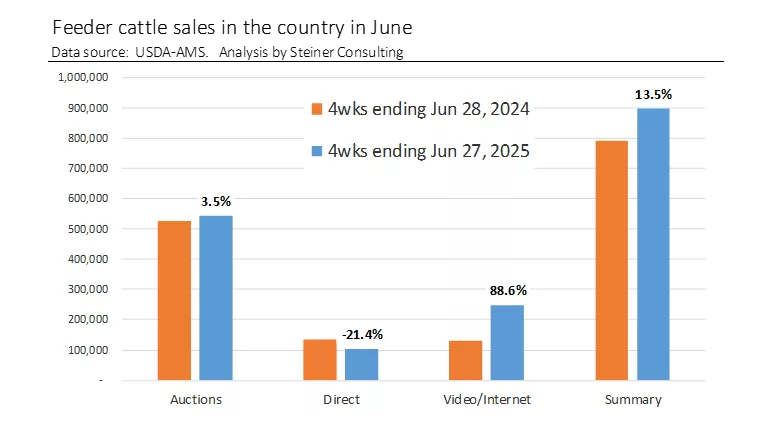
Nationally, however, the flow of cattle into feedlots has yet to slow down significantly. In the four weeks ending June 27, 2025, sales of feeders over 600 pounds were nearly 22% higher than last year. Some of these cattle may have moved directly into feedlots, encouraged by favorable feeding margins, while others likely entered stocker and backgrounding programs thanks to improved pasture conditions. Are cow-calf producers retaining more heifers for breeding? No one knows although many are guessing. What we do know is that systemwide there are fewer cattle, and supply will need to get smaller (more heifers retained) if we have any shot at recovery down the road.Looking for a reprint of this article?
From high-res PDFs to custom plaques, order your copy today!