State of the Industry 2025: Packaging
Processors remain focused on key challenges in an era of uncertainty
Meat and poultry operations facing food safety and labor issues, as well as an unpredictable market, look to machinery upgrades and training assistance.
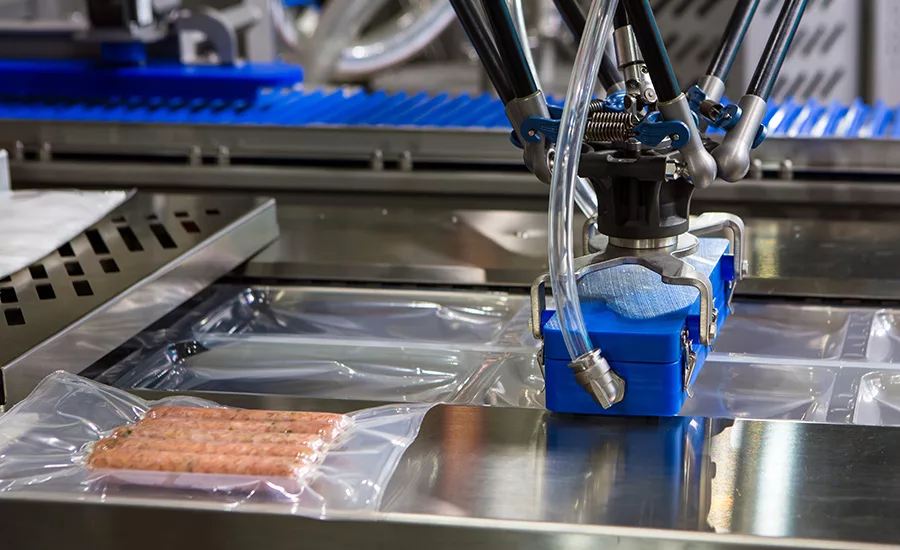
Economic headwinds and heightened governmental policy uncertainty in 2024 resulted in a slowdown of the U.S. packaging machinery market. While inflation eased a bit and interest rates began to decline late in 2024, new tariff announcements early this year introduced uncertainty, prompting many businesses to delay capital investments, according to the State of the Industry Report 2025, a new study from PMMI, The Association for Packaging and Processing Technologies.
“Packaging machinery manufacturers reported continued caution among customers, with many holding off on new equipment purchases and focusing instead on maintaining existing assets,” states Jorge Izquierdo, vice president, market development at PMMI.
In addition, labor remains one of the most influential factors shaping the market. In 2024, hiring and retention challenges began to ease slightly, with companies reporting modest gains driven by stronger onboarding and changing economic conditions.
However, long-term pressures persist, particularly the shortage of skilled tradespeople, technician burnout, and limited internal capacity to scale with customer demand. At the same time, labor dynamics are increasingly shaping machine design and buyer expectations.
Today, end users are placing more value on automation, operator-free systems, and remote service capabilities, and some original equipment manufacturers (OEMs) are incorporating labor guidance into machinery proposals to help buyers evaluate operational readiness and unlock training budgets.
Meanwhile, end users remain focused on practical considerations, favoring compact machines that fit within existing facilities, systems that reduce operator headcount, and designs capable of handling thinner, more delicate materials without damage.
Enhanced ergonomics and intuitive human-machine interfaces (HMIs) have become key purchase differentiators, as buyers seek equipment that is easy to operate and maintain, even in environments with high labor turnover and limited technical expertise.
Machine builders are moving past the hype of artificial intelligence (AI) and big data, PMMI’s report states, focusing instead on practical applications that solve real problems. Vision systems remain the most mature example, with advanced camera technology and smart software enabling defect detection and even emergency stops when products fall out of place. Developments like AI-powered HMIs that translate error codes and guide operators are gaining interest to support less-experienced staff in high-turnover environments.
Predictive maintenance is another tool that can potentially solve manufacturing challenges, but its adoption has been slow. Many end users remain skeptical of its cost and hesitate to move away from established preventive maintenance routines. However, some OEMs report progress when predictive systems are integrated into the HMI with simple, actionable alerts. Preventive maintenance still holds broader appeal, since it aligns more closely with existing maintenance workflows and often makes buyers feel more in control of timing and cost.
Food Safety, Sanitation, and Flexibility Remain Crucial
Sanitation and flexibility are key issues for meat and poultry processors. In fact, food safety and sanitation are bedrock principles of the food and beverage manufacturing industry, shaping everything from manufacturing processes to machine design, according to Food Safety and Sanitation Trends, another report from PMMI.
“Adhering to food-safety regulations and effectively executing sanitation strategies are essential mandates enforced by government regulations,” states Rebecca Marquez, director of custom research at PMMI. “These practices also serve as vital strategies for protecting customers from allergens and foodborne illnesses and guarding brands against costly and reputation-damaging recalls.”
End users employ a variety of measurements to track sanitation, such as:
- Measuring microbial counts (66%)
- Tracking adenosine triphosphate (ATP) readings (39%)
- Testing for potential contamination (32%)
Regarding sanitation, wet and/or dry cleaning approaches have advantages and risks, and some processes are better suited to one method over the other. The Food Safety and Sanitation Trends report notes that most respondents use both strategies. However, wet sanitation can pose challenges, including exposing sensitive components to moisture and accelerating machine wear.
End users, OEMs, and suppliers all agree that harsher cleaning chemicals in sanitation processes cause machine wear and corrosion. These groups also agree that the food industry could benefit from a standardized chemical resistance rating system for machinery.
Nearly all end users look for new machinery that is both easy to clean and can be cleaned effectively. They also prioritize core sanitation fundamentals — materials, design, and non-porous surfaces — over advanced technologies.
Additional considerations, such as corrosion resistance and sealed components, reflect equipment durability and cleaning efficiency expectations. While technology-centric features like automated cleaning and digital integration are currently lower priorities, they may serve as future differentiators rather than immediate decision drivers. To remove any remaining guesswork from the buying process, end users should work with OEMs and suppliers to determine which sanitation methods best suit their specific equipment and operational needs.
What’s Up Next in Sanitation?
While PMMI’s research reveals many OEMs and suppliers already offer corrosion-resistant materials, the next step is to strengthen sensitive components — such as sensors and control panels — by enhancing their water and chemical resistance.
As automated processes continue to proliferate across manufacturing, OEMs may need to consider incorporating more automated cleaning technologies or updating existing technologies in the next generation of machinery, according to PMMI’s food safety and sanitation study.
In addition, digital integration in sanitation processes is crucial to unlocking powerful tools, such as predictive and preventive cleaning routines, which 41% of end users already use.
Next-generation sanitation-ready equipment must also incorporate features like automation and digital integration capabilities to meet evolving customer expectations and regulatory demands.
The next opportunity to see packaging and processing solutions in person will be at PACK EXPO East in Philadelphia, Feb. 17–19, 2026. The show is expected to attract 8,000 attendees. It will highlight the latest packaging and processing innovations for consumer-packaged goods and life sciences companies — all at a convenient East Coast location.
Show features include:
- 500 exhibitors showcasing their latest packaging and processing solutions
- The opportunity to explore new machinery, technology, materials, and containers while gathering information for purchase recommendations
- Free educational and knowledge-sharing sessions
- Networking events to spark conversations and build connections
To register and learn more, visit https://www.packexpoeast.com.
Jorge Izquierdo is vice president, market development, for PMMI, The Association for Packaging and Processing Technologies.
Looking for a reprint of this article?
From high-res PDFs to custom plaques, order your copy today!