Beef industry coalition in Montana pushes for mandatory country-of-origin labeling
Coalition of organizations representing Montana cattle producers calls on the state’s congressional delegation to co-sponsor the legislation.
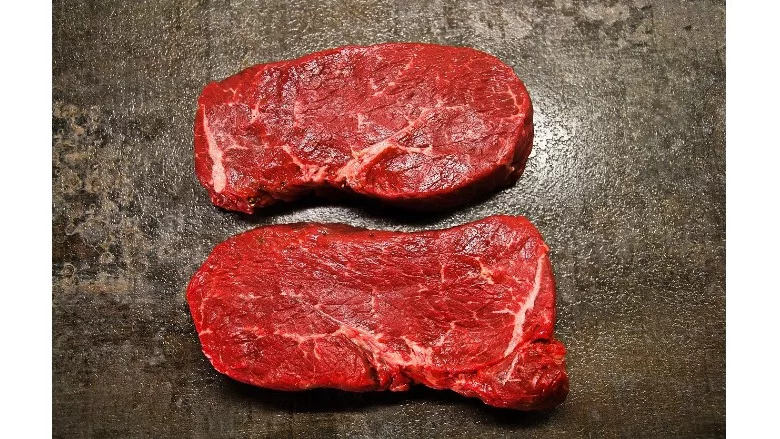
Image by Reinhard Thrainer from Pixabay
In February 2025, US Senate Majority Leader John Thune (R-SD) reintroduced the American Beef Labeling Act (S.421), legislation that would reinstate mandatory country-of-origin labeling (MCOOL) for beef processing. On Oct. 24, 2025, US Rep. Hageman published a companion bill on the House side. Both of these bills have received bipartisan support.
A coalition of organizations representing a majority of the cattle producers in Montana urged the state’s congressional delegation to co-sponsor the legislation and work for its inclusion in the Farm Bill. The coalition, which fights for fairness and transparency in the beef market, includes the Northern Plains Resource Council, the United States- and Montana Cattlemen’s Association, Montana Farmers Union, Abundant Montana, the Montana chapter of the National Farmers Organization and R-CALF.
“Mandatory country-of-origin labeling is more important now than ever because the United States has imported more beef than any other time in history,” said Montana Farmers Union President Walter Schweitzer. “If we had MCOOL, the multinational packers would have to truthfully label it and the consumer would have the choice to pay less for foreign beef. I am fine with importing beef if it’s labeled honestly and accurately. This will allow US producers to compete on a fair playing field.”
Since the repeal of COOL in 2015, Montana has lost 25% of the state’s family ranches, according to the Montana Farmers Union. Meanwhile, Montana consumers are being misled because a handful of multinational corporations are manipulating cattle markets. One of the ways these corporations are manipulating markets is by mislabeling where beef and pork is born and raised. Corporations are combining foreign meat products with US-raised beef and labelling it to consumers as “Product of the USA.” This nationwide problem was exacerbated this week by President Donald Trump, who shocked ranchers across the US by announcing a possible new deal with Argentina that would flood the market further with imported beef.
In a move that increased tensions with his base, Trump took to social media on Oct. 23, stating cattle ranchers “...don’t understand that the only reason they are doing so well, for the first time in decades, is because I put Tariffs on cattle coming into the United States…If it weren’t for me, they would be doing just as they’ve done for the past 20 years – Terrible!”
Bill Bullard, R-CALF USA CEO, encouraged Trump to “manage imports, restore mandatory country-of-origin labeling for beef, and put an end to the monopolistic control that packers and retailers have over our beef supply chain. Doing so will incentivize America’s ranchers to rebuild and expand the US herd to meet our national security needs and ensure that consumer beef prices are determined by competitive market forces.”
A new voluntary rule brought forth by the USDA, which takes effect Jan. 1, 2026, is a positive step forward in solving this problem, and mandates that no foreign meat can be mixed with US beef if the product is labeled "Product of USA" and “Made in the USA.” But this new regulation does not go far enough by mandating clear country of origin labelling, allowing meatpackers to opt out of those labels or use vague alternative labels to confuse consumers.
Restoring MCOOL, which was rescinded for beef and pork in 2015, would be a big win for ranchers and consumers alike. Consumers deserve the right to choose USA beef and pork, and ranchers deserve the right to an honest market. Montana’s state legislature holds this belief and penned a resolution urging the US Congress to implement MCOOL. Montana’s congressional delegation now has the opportunity to support ranchers and consumers in their state by making country-of-origin labeling mandatory.
“It is long past time that retail beef proudly proclaims – ‘Born, Raised, and Processed in the USA,’” said Northern Plains Resource Council Agriculture Task Force Chair Giles Stockton. “American producers are shut out of their own market by imports, which account for 70 to 80% of the sales. Without MCOOL, consumers have no way of truly knowing what they are buying. With MCOOL they will have the opportunity to demand American beef.”
Source: Western Organization of Resource Councils
Looking for a reprint of this article?
From high-res PDFs to custom plaques, order your copy today!