Annual Meat Conference: Consumer education about beef drives increased retail sales
To sustain category momentum, retailers and suppliers are focusing on consumer education, particularly around value, nutrition and preparation
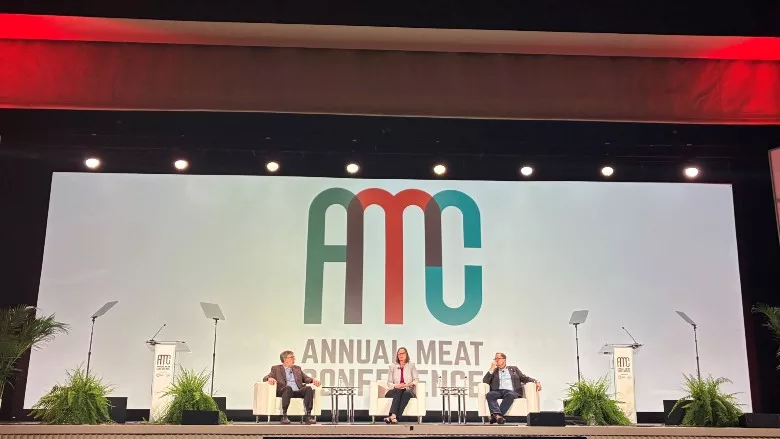
Communicating Value: Best Practices in Educating Consumers and Driving Beef Sales session
OXON HILL, Md. — The beef category continues to generate strong demand and sales, but the next phase of growth will depend on how effectively the industry educates consumers.
The 2026 Power of Meat report, presented at the 2026 Annual Meat Conference, showed that fresh meat generated $79.5 billion in annual retail sales, up 9.1% year-over-year. Beef took the lion's share of those gains, generating $45.1 billion in sales, up 12.4% in dollars and 4.3% in pounds. Even with record-low cattle supplies, demand for beef remains resilient.
To sustain momentum, retailers and suppliers are focusing on consumer education, particularly around value, nutrition and preparation. At the 2026 Annual Meat Conference, a session titled Communicating Value, Best Practices in Educating Consumers and Driving Beef Sales explored how targeted communication efforts can bolster retail growth. The session featured Mandy Carr-Johnson, senior executive director of scientific sales for the National Cattlemen’s Beef Association, and Jason Goldberg, chief commerce strategy officer for Publicis Groupe.
Despite strong demand, eating occasions are shifting, moving toward convenience-focused solutions and snackable formats over traditional meals, according to NCBA research. Carr-Johnson noted 85% of consumers say that time-saving shortcuts are somewhat or very important when preparing meat, and 50% of consumers eat snacks instead of meals at home or work. These shifts reinforce the need for education that aligns with modern consumption habits. Retailers have an opportunity to guide consumers on how beef fits into quicker meals, smaller portions and new usage occasions.
Carr-Johnson emphasized that despite shifting eating occasions, consumers are largely still purchasing beef from traditional channels like grocery stores. Younger shoppers, including millennials and Gen Z, are more likely to order beef online. These consumers value transparency at every point in the supply chain, especially at the point of sale. For retailers, this creates an opportunity to educate consumers through both physical and digital touchpoints, delivering clear information on product sourcing and quality to build trust and support purchasing decisions.
As digital shopping behavior continues to evolve, artificial intelligence (AI) tools like ChatGPT, Gemini and Claude are influencing how consumers discover and evaluate food products. Goldberg noted that retailers can leverage this shift through in-store screen advertisements and digital menu boards and grocery carts; these platforms are increasingly functioning as communication points for product attributes, sourcing claims, preparation guidance and more. For the beef industry, this creates an opportunity to ensure product information is consistently represented across both physical and digital touchpoints, which can reinforce brand trust and bolster consumer awareness.
When executed effectively, consumer education can drive both basket size and loyalty. Technomic data shows that 47% of consumers consider a product’s story very important in retail, compared with 38% in restaurants. Additionally, 61% of consumers want to know a product’s grade or quality label before purchasing, followed by interest in animal diet, protein content, and animal welfare practices. Higher-income households and younger consumers are more likely to prioritize sustainability, reinforcing the importance of clear, credible messaging.
Still, gaps remain in consumers' understanding of beef’s nutritional benefits. According to Technomic, while 52% of consumers say they feel adequately informed, an equal share say they want more information. To close this gap, consumers will rely on their trusted sources for nutrition claims. Technomic research shows that healthcare professionals are the most trusted source for information on meat and poultry health benefits at 48%, followed by government agencies at 42% and food associations at 39%. Meat and poultry companies rank lower at 32%, underscoring the need to build credibility.
Economic pressures are also shaping purchasing decisions. In a K-shaped economy, value remains a primary concern. However, value is not defined by price alone. Technomic research shows that 57% of consumers associate value with taste, followed by quality grading at 44% and brand trust at 40%.
With such strong consumer demand for brands they trust, the beef industry has an opportunity to strengthen loyalty through clear, consistent education on value, quality and sourcing. While demand remains strong, sustained growth will depend on how effectively the industry communicates the product attributes consumers care about the most.
Looking for a reprint of this article?
From high-res PDFs to custom plaques, order your copy today!