Earlier Easter wreaks havoc on meat comps
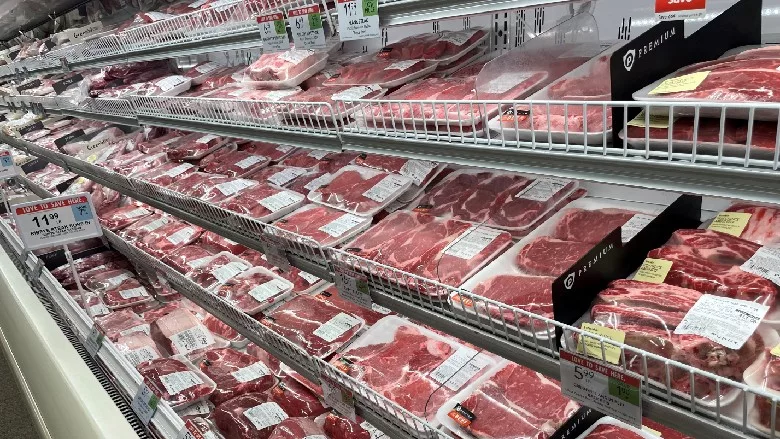
Prices continue to increase in the meat department.
Credit: Fred Wilkinson
Inflation insights
February 2026’s sales patterns were also affected by substantial shifts in Easter timing, especially meat and seafood sales. In 2024, Easter fell on March 31. In 2025, Easter shifted a full three weeks later to April 20, moving the start of Lent to Wednesday, March 5. As a result, February 2025 posted substantial increases, as “everyday” weeks were compared with Lent-impacted weeks in 2024. In 2026, Easter moves earlier again, falling on April 5. That means Lent began Feb. 18 this year, once more disrupting sales patterns for meat, seafood, and related sides and produce.
Retail total food and beverage price growth averaged 2% in February 2026 (the four weeks ending 3/1/2026). Many center-store aisles continued to show price growth acceleration in February. In contrast, the average price per unit across meat, produce, bakery, deli and seafood dropped by 0.3% in comparison to February 2025, heavily influenced by the rapid decline in egg prices. The average price per unit across all food and beverages in the Circana MULO+ universe was $4.37, up 2% year-over-year.
- Center-store prices averaged $4.10, an increase of 4.4% year-over-year.
- Perishable prices averaged $4.43 per unit, down slightly, at -0.3% compared with February 2025.
Prices continued to increase in the meat department. Fresh meat prices grew 5.7% in February, compared with 3.1% for processed meat. The February rate of inflation is in line with the price growth in the full-year view.
 Circana, Integrated Fresh, Total US, MULO+
Fresh meat inflation was predominantly driven by turkey, exotic (including bison) and lamb, followed by beef. The average price per pound for lamb rose to nearly $9.50, whereas beef averaged $7.35 across all cuts. On the processed meat side, inflation was driven by frankfurters and packaged lunchmeat.
 Circana, Integrated Fresh, Total US, MULO+
Meat sales
With all the marketplace, weather and calendar disruptions, February sales decreased year-over-year. This is a first in many, many months, with a lot of the pressure sitting on the processed meat side.
 Circana, Integrated Fresh, Total US, MULO+
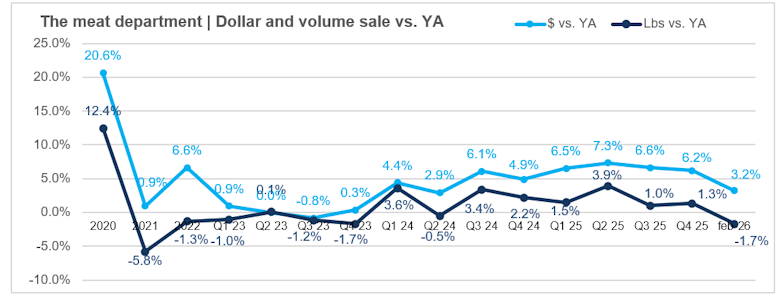
Meat department sales have been positive since the fourth quarter of 2023. In all cases, dollar gains were a combination of inflation and demand growth. In February 2026, dollars gained driven by inflation only. The second quarter of 2025 benefitted from the late Easter timing, whereas February 2026 had two Lent-impacted weeks going up against everyday demand.
 Circana, Integrated Fresh, MULO+
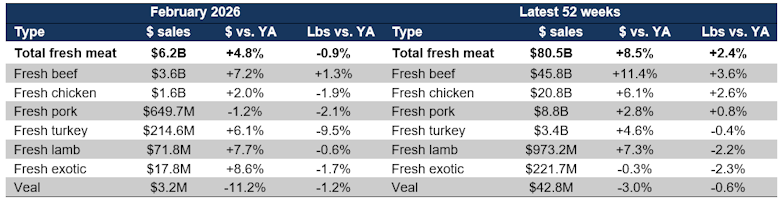
February’s soft volume performance was driven by declines in each of the four weeks. Declines averaged 1% to 2% each week while dollars gained by about 3%. Beef was a notable exception. While easily the highest price per pound among the bigger commodities, beef demand kept growing. All four February weeks delivered pound gains, ranging from +0.4% the final week to +2.1% the first week of February. Chicken’s performance was mixed, with pounds down three out of the four February weeks, despite a much lower price per pound.
Fresh meat sales by protein
Beef ended up being the only one of the fresh commodities that grew pounds in February. Turkey volume sales decreased by 9.5% amid ongoing HPAI challenges and subsequent pricing pressure. February was very much an exception, with the full-year numbers being positive for beef, chicken and pork.
Lamb sales had a strong first half of 2025, but has seen some struggles in the latter half of 2025 and the start of 2026.
 Circana, Integrated Fresh, MULO+
Processed meat
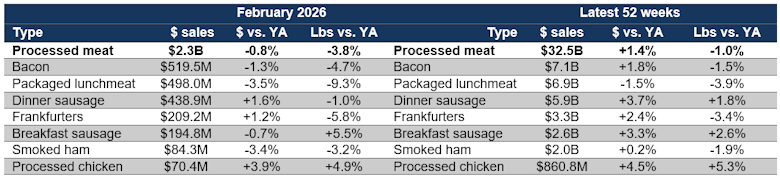
Patterns were mixed for processed meat in February. Breakfast sausage was a bright spot, with February pound sales up 5.5% over year ago levels. Processed chicken also continued to grow. Volumes sales were down for bacon, packaged lunchmeat and hotdogs as well as smoked ham. While processed meat sales have been a bit soft all year, the February performance was far below that of the latest 52 weeks.
 Circana, Integrated Fresh, Total US, MULO+
Grinds
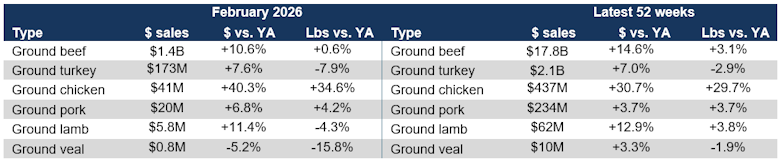
Grinds had a strong month, especially ground beef, chicken and pork. Ground turkey dollar sales increased but pounds fell by nearly 8%. Ground chicken has grown to a $437 million category annually, with around 30% growth in dollars and pounds.
 Circana, Integrated Fresh, Total US, MULO+
What’s next?
- The traditional supermarket share of total retail food and beverage sales held steady at 41.6%, while mass retailers grew their share to 15.8% in February 2026. E-commerce now represents 4.5% of all retail food and beverage sales. This share is somewhat lower for the perishable departments, as fresh products continue to under-index in online baskets.
- Concern over high food prices remained in the mid-nineties, with 95% of consumers somewhat or very concerned. The cost of groceries continues to drive a focus on deals, with 52% of consumers looking for sales specials more often. Additionally, 41% say they are cutting back on non-essentials.
- Consumers estimated that 78.6% of all February meals were sourced from home, according to the Circana survey of primary grocery shoppers. This share is lowest among Gen Z and younger Millennials (76.4%) and highest among shoppers ages 70+ (85.0%).
- March has several food-driven occasions, including St. Patrick's Day and the NCAA March Madness tournament, along with smaller opportunities such as Pi Day, when retailers often activate promotions around frozen and fresh pizza, fruit pies, but also potpies, which is where meat can shine.
Date ranges
2025: 52 weeks ending 12/28/2025
Q4 2025: 13 weeks ending 12/28/2025
February 2026: 4 weeks ending 03/01/2026
Looking for a reprint of this article?
From high-res PDFs to custom plaques, order your copy today!