Commentary: SMA
A wave of meat policy bills moves through Congress
Lawmakers take on a wide range of bills that could significantly reshape the meat industry.
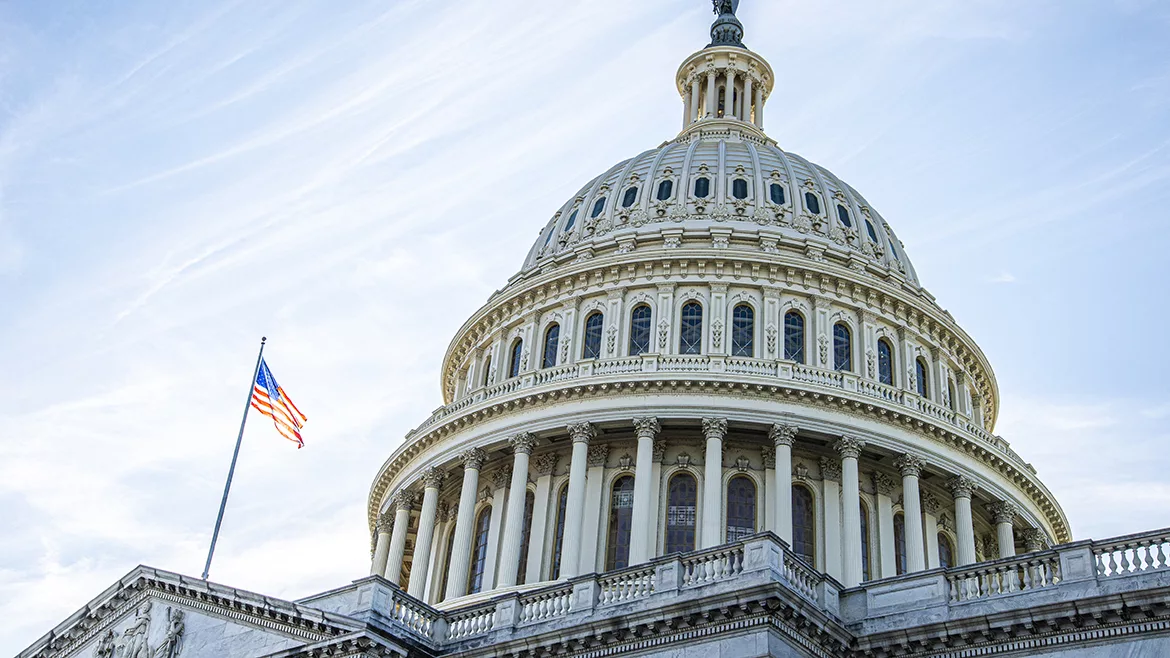
Lawmakers in the United States Congress are currently considering a wide range of bills that could significantly reshape the US meat industry. The proposals address issues such as beef labeling transparency, international trade, expansion of small meat processors, state inspection authority, and consumer information about alternative proteins.
The push to restore country-of-origin labeling
One of the most prominent policy debates centers on the return of mandatory country-of-origin labeling (COOL) for beef. Several bills seek to strengthen or reinstate these requirements, which were previously rolled back following trade disputes in 2015.
The Country-of-Origin Labeling Enforcement Act, introduced by US Rep. Harriet Hageman, R-Wyo., would require retailers to clearly label beef with its country of origin under rules enforced by the US Department of Agriculture. To qualify as US origin, the cattle must be born, raised and slaughtered in the US. The bill also dramatically increases penalties for violations, allowing fines of up to $5,000 per pound of mislabeled beef. It further states that rulings from the World Trade Organization (WTO) cannot limit the USDA’s authority to enforce these requirements.
Similarly, the American Beef Labeling Act, sponsored by Sen. John Thune, R-S.D., would reinstate mandatory COOL for beef while ensuring the program complies with international trade rules. The bill directs the Office of the US Trade Representative and USDA to develop a compliant labeling system and implement it within one year of enactment.
Another proposal, the Beef Origin Labeling Accountability Act introduced by US Rep. Dusty Johnson, R-S.D., would also direct the US Trade Representative and USDA to develop a WTO-compliant COOL system. The legislation requires progress reports to Congress and directs US officials to consult with Canada and Mexico to address existing trade disputes related to beef labeling.
Clarifying “Product of USA” labels
Another bill aims to clarify how beef products can be labeled as American.
The Beef Labeling Clarity Act, introduced by Sen. Roger Marshall, R-Kan., would eliminate the existing “Product of U.S.A.” label and replace it with more specific voluntary labels describing how cattle were produced. These would include designations such as “Processed in U.S.A.,” “Raised and Processed in U.S.A.,” and “Born, Raised, and Processed in U.S.A.”
Expanding markets for state-inspected meat
Several proposals focus on expanding opportunities for smaller processors and state-inspected meat products.
The New Markets for State-Inspected Meat & Poultry Act, also sponsored by Sen. Mike Rounds, R-S.D., would allow meat inspected under state inspection programs approved by the USDA’s Food Safety and Inspection Service (FSIS) to be sold across state lines. Currently, most state-inspected meat can only be sold within the same state unless the state participates in the Cooperative Interstate Shipping Program.
The DIRECT Act, introduced by Marshall, would expand this concept by allowing state-inspected meat products to be sold online and shipped directly to consumers across state lines in standard retail quantities.
Another measure, the Processing Revival and Intrastate Meat Exemption Act, sponsored by US Rep. Thomas Massie , R-Ky., and Sen. Angus King , I-Maine, would allow meat processed at custom slaughter facilities to be sold locally within the same state, rather than limiting its use to personal consumption.
Strengthening small and local processing
Congress is also considering legislation designed to strengthen small-scale meat processors.
The Strengthening Local Processing Act, introduced by US Rep. Chellie Pingree, D-Maine, and Thune, would increase federal funding for state inspection programs, expand participation in interstate shipment programs, and establish grants for workforce training and industry resilience.
The Local Meat Processing Act, sponsored by Sen. Ben Ray Luján, D-N.M., would allow smaller livestock packers to own or partner with livestock-selling market agencies, provided that any such relationships are fully disclosed to maintain transparency.
Similarly, the LOCAL Foods Act, introduced by US Rep. Eugene Vindman, D-Va., seeks to expand exemptions from federal meat inspection rules for community-owned livestock used by participating households and their guests.
Addressing alternative protein labeling
As plant-based and lab-grown meat products become more common, some lawmakers are seeking clearer labeling requirements.
The REAL Meats Act, sponsored by US Rep. Roger Williams, R-Texas, would require plant-based and cell-cultured products using meat terms to clearly disclose labels such as “lab-grown,” “plant-based,” “analogue,” or “imitation.” The goal is to ensure consumers can easily distinguish traditional meat from alternatives.
Tribal meat processing authority
Another proposal addresses food production in tribal communities. The PRIME Meat Processing in Indian Country Act, introduced by Sen. Markwayne Mullin, R-Okla., would allow Tribal governments to enter self-determination contracts with the USDA to carry out inspection and regulatory functions of FSIS. The bill aims to expand meat processing capacity in tribal areas while maintaining federal food safety standards.
Looking for a reprint of this article?
From high-res PDFs to custom plaques, order your copy today!