What meat and poultry processors should understand before purchasing or repurposing metal building systems
Structural evaluation needs to start early enough to inform the business decision, not after the project team has already been handed the keys.
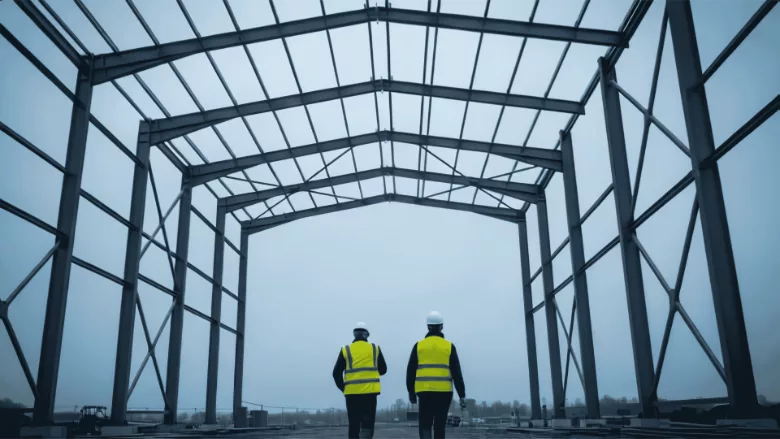
Growth often forces a real estate decision. A meat or poultry manufacturer might acquire an existing plant to add capacity, move closer to growers or shorten shipping lanes. Another might lease a vacant warehouse to stand up a new product line quickly. In both cases, metal building systems (MBS, previously known as pre-engineered metal buildings) can appear to be the obvious path forward.
The advantages are clear. MBS offer speed to market, predictable upfront costs and column-free spans that give operators flexibility. But there is a risk in assuming a building designed for storage or light industrial use will perform similarly in a refrigeration-heavy, washdown processing environment. When that assumption is made too late it can turn a straightforward acquisition into a costly retrofit.
An MBS is a highly optimized structural system. Manufacturers design tapered rigid frames, roof purlins and wall girts to meet code-required loads and specified collateral requirements at purchase. That efficiency keeps the price competitive, but it also means many MBS have limited reserve capacity for the concentrated and sustained loads common in protein facilities. Owners who discover the mismatch after closing face redesign, retrofit work and schedule disruption that can fundamentally change the economics of the deal. MBS are also designed to utilize as little steel as possible while still meeting codes. Manufacturers may use proprietary structural steel shapes making retrofit more challenging.
In a typical warehouse, the structure supports the roof, lighting, sprinklers and modest mechanical systems. In a meat or poultry plant, that same structure becomes a platform for refrigeration infrastructure, sanitation systems, dense utilities and maintenance access — a fundamentally different demand.
Refrigeration loads are substantial and concentrated. Industrial ammonia or CO₂ systems bring large diameter piping, valve stations, vessels and frequent pipe supports. Those loads often concentrate along frame lines, around roof penetrations or at equipment clusters.
Hygienic environments add ceiling and enclosure weight. Insulated metal panel ceilings, washdown-rated wall systems and dense overhead utilities add dead load and maintenance live load. Roof framing that was not designed to support continuous suspended ceiling systems across long spans may need supplemental steel or secondary support frames.
Conversions also introduce people and equipment where the original structure never anticipated them. Mezzanines, process platforms, pipe bridges and rooftop mechanical yards shift gravity loads and lateral behavior. A lateral system sized for its original use may not work the same way once mass, stiffness and load paths change.
The code trigger most owners miss
Early conversations about acquisitions typically center on square footage, utilities and zoning. Structural requirements tend to follow, and by the time they surface the project team may already be committed to making the building work rather than evaluating whether it should.
A change in use can shift occupancy classification and load assumptions under the International Building Code. Even staying within an industrial designation, a new process use may introduce higher collateral loads, altered fire protection requirements, increased insulation requirements or updated wind and seismic criteria based on risk category. Engineers evaluate existing buildings against the ASCE 7 load framework, which establishes how gravity, wind and seismic demands are determined. Those baselines dictate whether existing frames, purlins, diaphragms and foundations can support what is being proposed.
Structural evaluation needs to start early enough to inform the business decision, not after the project team has already been handed the keys.
What tends to overload MBS
Several patterns come up repeatedly in protein facility conversions:
- Rooftop mechanical yards. Condensers, evaporators, air handlers and exhaust equipment often get clustered for access or piping efficiency, creating concentrated loads. Equipment, curbs and maintenance paths add load in the same bay.
- Suspended ceilings and utility grids. Walkable ceilings and dense overhead systems can turn roof framing into a ceiling-support structure by default. If the building was ordered with a low collateral load allowance, the margin can disappear quickly. Interstitial spaces that were code-compliant and walkable become non-compliant as the facility expands production capabilities and adds load supported by the roof.
- Refrigeration pipe racks and valve stations. Long runs, heavy valve groups, anchor forces and vessel supports concentrate loads at specific points — often landing where it’s convenient for piping, not where the original building has capacity.
- Mezzanines and platforms. Process, packaging and maintenance platforms introduce new floor live loads and point loads. When they connect into existing frames, they can also affect lateral load paths.
- Penetrations and corrosion. Protein facilities rely on roof and wall penetrations for piping, ventilation and drains. If a building has a history of condensation or washdown exposure, corrosion can quietly reduce capacity.
A practical due diligence approach
Owners do not need a full design package to make informed decisions. They need structured engineering due diligence that produces answers decision-makers can use.
Start with the documents. Request original MBS drawings, foundation drawings and any available structural calculations. Focus on design criteria such as roof live load, snow load, wind speed, collateral load allowance and restrictions on suspended loads. If the building was expanded or modified, get records for those changes too.
Verify the building’s construction. Field verification should confirm member sizes, bracing layout, connection types and any undocumented alterations. A condition assessment should look for corrosion, distortion and roof leaks.
Develop a preliminary load map. Before finalizing the layout, map the proposed future-state: rooftop equipment weights and locations, ceiling and utility grid loads, point loads from vessels, valve stations and mezzanine or platform locations. For refrigeration, coordinate early so pipe rack concepts and vessel placements reflect reality.
Perform a decision-ready gap analysis. Compare proposed loads against the original design basis and check key limit states: frame and purlin strength, diaphragm and collector demand, connection forces, drift and foundation capacity. The output should be a clear list of potential reinforcements, where they occur and planning level cost and schedule impacts, findings that can be incorporated into the deal model before terms become irreversible.
When an MBS still makes sense
Metal building systems work well when the use aligns with their original intent and loads remain distributed and predictable. Dry warehousing, light packaging and distribution are natural fits. Some cold storage applications can also be successful, particularly when roof and suspended loads are controlled and the building was originally ordered with appropriate collateral load allowances.
The toughest conversions are high-capacity protein processing facilities with heavy refrigeration infrastructure, dense overhead utilities, multiple levels of platforms and introduction of accessible ceiling areas. In those cases, a purpose designed structure or conventional steel frame system may offer better flexibility during both initial buildout and future expansion.
Know the constraints while they can still shape the project
A building is not just an envelope. It is a structural asset that affects capital risk, worker safety, refrigeration reliability and long-term operations. What the structure can and cannot support shapes where equipment lands, how layout evolves and what expansions are possible down the road.
Engineering due diligence makes the structural system visible before it becomes a surprise. For acquisitions, it can support negotiating leverage, contingency planning or a decision to walk away. For conversions, it can guide layouts so heavy loads land where the building can support them, reducing retrofit scope and protecting the project schedule.
The goal is not to avoid MBSs. It is to match the building to the process and learn the constraints while they can still shape the project.Looking for a reprint of this article?
From high-res PDFs to custom plaques, order your copy today!