US Cattlemen’s Association calls for additional tariffs on Brazilian beef
USCA says Brazil’s cattle sector enjoys an unfair advantage that no US rancher can or would ever want to compete with.
Credit: United States Cattlemen's Association
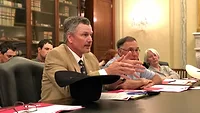
The United States Cattlemen’s Association (USCA) appeared July 6, 2026, before the Office of the US Trade Representative (USTR) to testify in support of strong, comprehensive trade action against Brazilian beef under Section 301, following USTR’s determination that Brazil’s acts, policies and practices are unreasonable and burden US commerce.
Testifying on behalf of USCA, Director of Policy and Public Affairs Jenna Stanton called for additional tariffs on all Brazilian bovine products—including carcasses, cuts, trim and edible offal—citing systemic illegal deforestation, coerced labor and corruption in Brazil’s cattle sector.
“Brazil’s cattle sector enjoys an unfair advantage that no US rancher can—or would ever want to—compete with: a virtually unlimited supply of cheap, illegally created land and labor,” Stanton told the panel. “Those are not isolated abuses; they are business models. We are simply asking for a market where everyone plays by the same basic rules.”
USCA’s testimony urged USTR to:
- Apply an additional 25% tariff to all Brazilian bovine products under the relevant Chapter 2 tariff lines,
- Reject carve–outs for lean trim or variety meats that would invite relabeling and product shifting, and
- Tie any future relaxation of measures to independently-verified sustained improvements in Brazil’s deforestation, labor, traceability, and anti–corruption enforcement.
“This is not a food security or affordability question,” Stanton said. “Imposing tariffs on Brazilian beef will not empty grocery store shelves. Right now, our members are being asked to compete in a market where one side follows strict environmental, labor, and animal–husbandry rules, and the other side gets a leg up for violating global standards.”
USCA President Justin Tupper underscored what the case means for ranching families:
"Every box of Brazilian beef produced on illegally cleared land or with coerced labor sends a message to US cattle producers that their investments in conservation, humane treatment, and compliance with our laws don’t matter," Tupper said. "This Section 301 case is a chance to send a different message—that the United States will not reward deforestation, forced labor, and corruption with premium access to the most valuable beef market in the world.
"We’re asking USTR to stand with the independent producers who are doing things the right way and adopt strong, comprehensive tariffs on all Brazilian bovine products, with no loopholes big enough to drive a container ship through."
USCA previously submitted detailed written comments in the investigation, documenting the links between Brazil’s cattle expansion and illegal deforestation, coerced labor and systemic corruption, as well as the impact of those practices on US producers. The hearing is part of USTR’s process to determine the scope and design of any Section 301 actions in response to Brazil’s unreasonable acts, policies and practices. This advocacy continues USCA’s longstanding leadership on the issue. USCA Director Emeritus Leo McDonnell’s 2023 Senate testimony spotlighted Brazil’s unfair practices, rampant deforestation and labor abuses, bringing national attention to the need for enforcement and reform.
Looking for a reprint of this article?
From high-res PDFs to custom plaques, order your copy today!