Economic study finds reinstating mCOOL would cost meat supply chain and consumers more than $1B annually
Meat Institute says 'there is simply no need for a new label that will hurt the entire value chain.'
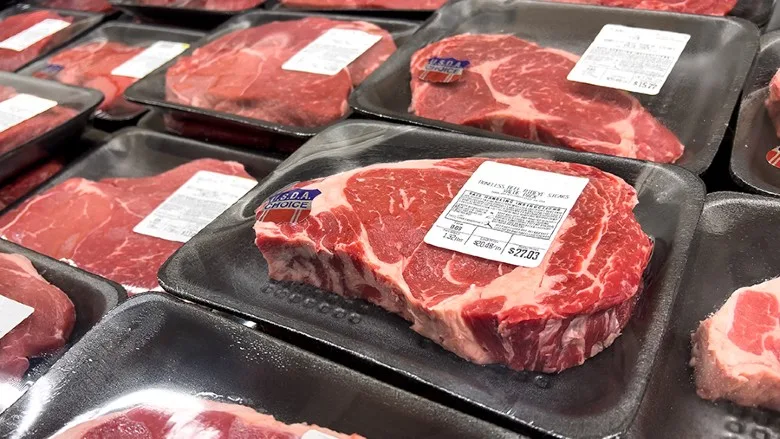
A new economic analysis by Decision Innovation Solutions finds that reinstating Mandatory Country of Origin Labeling (mCOOL) for beef and pork would impose significant costs, more than $1 billion annually, across the US meat supply chain, increasing expenses for livestock producers, meat processors, retailers and consumers while providing little evidence of increased consumer demand for labeled products.
“This study proves there are real and significant costs to mCOOL which would raise the price of meat for consumers already struggling to afford groceries,” said Meat Institute President and CEO Julie Anna Potts. “mCOOL would burden both packers and livestock producers with added costs at a time when beef packers are losing money due to the smallest herd size in 75 years causing record high prices for cattle.”
“Enacting mCOOL now would raise consumer costs and could hurt consumer demand, the one force keeping the beef industry moving through a difficult cattle cycle. And most importantly, there is a new voluntary ‘Product of USA’ label that is already helping consumers to purchase beef and pork born, raised and processed in the US. There is simply no need for a new label that will hurt the entire value chain.”
The study, The Economic Impact of mCOOL on the Beef and Pork Value Chains, updates previous US Department of Agriculture and industry research using current production, trade, consumption and market data to evaluate the potential impacts of reinstating the 2013 mCOOL requirements. The findings show that compliance costs associated with tracking, recordkeeping, product segregation, labeling and verification would substantially increase costs throughout the beef and pork value chains.
According to the study, reinstating mCOOL would cost the beef and pork industries approximately $1.02 billion in the first year alone, including $721 million for beef and $296 million for pork. Most of these expenses would be recurring operational costs rather than one-time investments.
Over time, those costs would continue to grow, reaching an estimated:
- $4.8 billion over five years
- $10.1 billion over 10 years
The study concludes that compliance costs would largely be passed through the supply chain and reflected in higher food prices for families. Researchers estimate consumers would pay approximately:
- $835 million more annually for beef purchases
- $284 million more annually for pork purchases
Together, that represents more than $1.1 billion in additional food costs for consumers every year.
Processors, packers and retailers
The report finds that meat packers, processors and retailers would shoulder the largest compliance burden because they would be responsible for tracking animal origin information, maintaining separate inventories, segregating products, modifying production schedules, updating labels and documenting compliance.
Among the study's findings:
- Retail beef experiences the highest compliance costs in the supply chain.
- Beef processors and retailers account for the majority of implementation expenses.
- Retail beef compliance costs alone could reach nearly $488 million in the first year and exceed $5 billion over ten years under one modeled scenario.
Ground beef made up nearly 48% of all beef consumed in the US in 2025.
The study notes that ground beef would be particularly difficult and expensive to label because it often combines imported lean beef with domestic beef trimmings to achieve desired lean-to-fat ratios.
As a result, mCOOL compliance costs for ground beef alone could range from $202 million to $688 million annually, depending on the specific labeling requirements adopted.
The report finds producers would face impacts from reduced market efficiency, increased documentation requirements and less flexibility throughout the supply chain. Previous USDA analyses cited in the study found that mCOOL can create market disruptions that reduce livestock value and increase overall system costs.
Source: Meat Institute
Looking for a reprint of this article?
From high-res PDFs to custom plaques, order your copy today!