Provisioner logo
Provisioner logo
search
cart
facebook twitter linkedin youtube
  • Sign In
  • Create Account
  • Sign Out
  • My Account
Provisioner logo
Provisioner logo
  • NEWS
    • Industry News
    • Supplier News
    • Case Studies
    • Recalls
    • Regulations
    • New Consumer Products
  • EXCLUSIVES
    • Newsletters
    • Source Book
    • Sponsored Insights
    • Events
    • Webinars
    • Classifieds
    • White Papers
    • Provisioner Store
    • Market Research
  • MEAT PROCESSING
    • SUSTAINABILITY
    • Processing
    • Packaging
    • Ingredients
    • Formulation
    • Food Safety
    • Special Reports
    • Commentary
  • PROFILES
    • Processor Profiles
    • Processor of the Year
    • Top 100 Processors
  • MEDIA
    • Videos
    • Podcasts
  • DIRECTORY
  • MIHOF
  • INDEPENDENT PROCESSOR
  • EMAG
    • eMagazine
    • ARCHIVE ISSUES
    • Contact
    • Advertise
  • JOIN!
Food SafetyBeef

Beef industry must take control of own food-safety destiny

By H. Russell Cross Ph.D.
August 1, 2012
The beef industry has come a long way since the early nineties in regard to food-safety programs.  Dr. H. Russell Cross, Head, Department of Animal Science at Texas A&M University, asks if it’s doing enough and suggests the next logical steps to advance the state-of-the-art.

In the past two decades, we have Implemented mandatory HACCP programs, developed a list of best practices and devoted considerable resources to research in pre- and post-harvest areas.  Add to those advances the aggressive post-harvest intervention programs we’ve implemented and we’ve made significant progress in the “War on Pathogens.”

But has it been enough?  Do we have systems in place to provide evidence on a routine basis regarding the effectiveness of our interventions?

The meat industry must ask if we have aggressively implemented the “Best Practices” we’ve developed and if we effectively are dealing with regulators and consumer groups.  Are we using the best available science and technology to produce safer beef?  From an image standpoint, are we pulling together as an industry to make certain that we are speaking with one voice?  As an industry, do we strive to implement strong food-safety programs from the ranch to the table?

Do we pull together as an industry and as a scientific community to make certain that regulatory policy is based on strong science?  Do we have the resources from state, federal and industry sources to support the development of new knowledge and science?

Unfortunately, the answer to the above questions is NO!

It’s time!

It’s time for the beef industry to aggressively take the lead on the food-safety agenda.  No more finger-pointing up and down the food chain, no more allowing USDA policies to be implemented based on flawed or no science and no more major recalls/illnesses because we did not do enough.

It’s time to demonstrate the effectiveness of the systems we currently have in place.  Does available data validate our current interventions?  Are they working as well as we think?

It’s time to speak with one voice — let the world know that the U.S. beef industry is serious about producing safe beef.  It’s time to let solid, validated science influence industry actions.  It’s time to spread the strong beef safety program message throughout the food chain.  It’s time to commit the necessary resources to get the job done.

How?

  • Step I — Industry leaders (major companies, associations, etc.) must agree that they want to make this happen.  They must be ready to take their food-safety programs to the next level.
  • Step II — We must demonstrate that current systems used by the industry are effective.  Industry should contract with third parties to collect new data and evaluate existing data to determine the effectiveness of current innovations and interventions.
  • Step III — We must develop a food-safety plan; a roadmap for the beef industry.  A small group of experts should be tasked to develop a “Strategic Plan” with specific goals and action steps that will become the beef industry’s food-safety agenda.  The plan should focus on validated, peer-reviewed science that can be used today and should determine the direction research should pursue for the future.  The plan should also address needed changes in current procedures for key issues.
  • Step IV — We must plant for implementation of the new food-safety plan. There should be strong agreement among beef industry leaders that this plan will be embraced and implemented.  This agreement and the plan should be widely communicated, and its implementation should be aggressive.
  • Step V — More food-safety science should be identified, validated, commercially developed and used.   Industry should make significant resources available to support the development of new science and processes. A group, selected by the industry, should continually research new science.  Rigorous peer-review and validation should be performed to ensure scientific effectiveness.  If it works and impacts the safety of the product, it should be exposed to the beef industry as quickly as possible.
  • Step VI — Industry leadership should devise effective mechanisms to interface with FSIS, other USDA regulators, and Congress regarding their plan and what the science says. The beef industry must present a strong and consistent message. The beef industry is weakest when the government and the consumer groups are able to divide and conquer.

Much of what is outlined here is not new, but it is time to implement and move to the next level!  It is time to speak with one strong voice.  It is time to win the debate with strong science.  We do not know what this Administration or this Congress will bring, but if we sit and wait, it will be too late to influence the agenda with strong science.

If there has ever been a time when the beef industry needs to put their differences aside and pull together, it is now!  It does not matter who gets the credit.  What matters is producing the safest beef in the world.  It’s time!

KEYWORDS: beef industry food safety practices food safety strategies

Share This Story

Looking for a reprint of this article?
From high-res PDFs to custom plaques, order your copy today!
Dr. H. Russell Cross has more than 35 years of management experience, holding numerous positions in government, academia and the private sector. He currently holds the position of professor in the Department of Animal Science in the College of Agriculture and Life Sciences at Texas A&M University, and is a member of The National Provisioner’s Editorial Board.

Recommended Content

JOIN TODAY
to unlock your recommendations.

Already have an account? Sign In

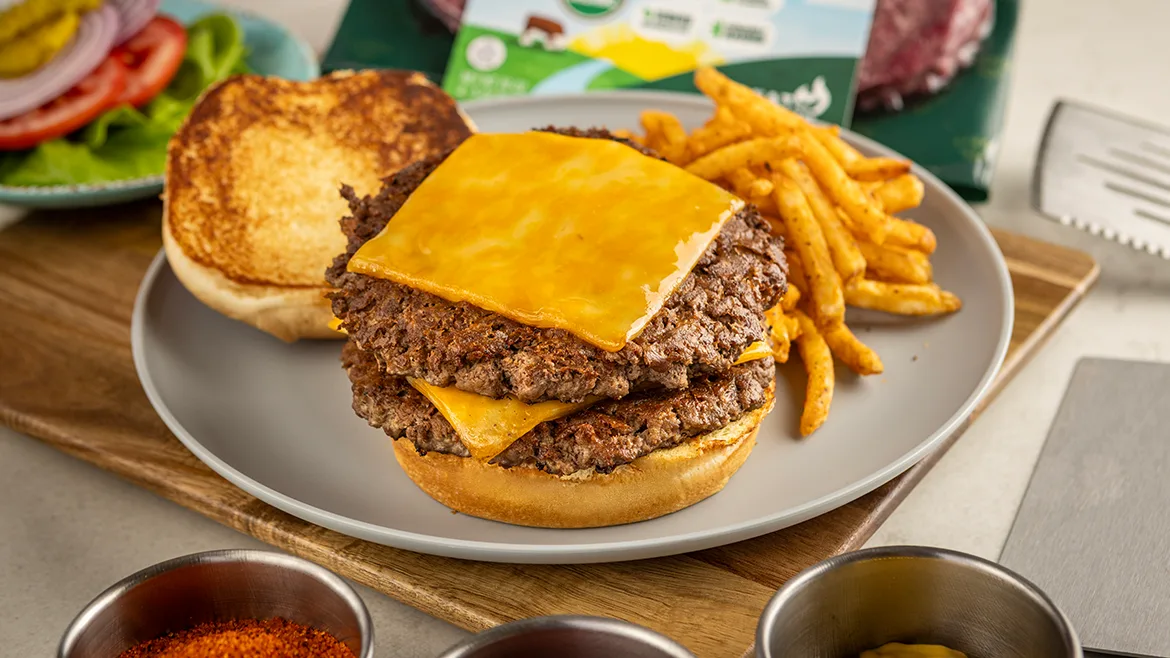
  • Double Charburger

    Premiumization drives burger category

    Shoppers seek out premium meat offerings to fulfill...
    Ingredients
    By: Sammy Bredar
  • JJS Adult Pekin duck

    Poultry Report 2025: Convenience propels poultry at retail

    Despite continued economic pressures, the poultry...
    Meat and Poultry Industry News
    By: Sammy Bredar
You must login or register in order to post a comment.

Report Abusive Comment

Manage My Account
  • eMagazine Subscriptions
  • Manage My Preferences
  • Newsletters
  • Online Registration
  • Subscription Customer Service
  • Connect with The National Provisioner

More Videos

Sponsored Content

Sponsored Content is a special paid section where industry companies provide high quality, objective, non-commercial content around topics of interest to the The National Provisioner audience. All Sponsored Content is supplied by the advertising company and any opinions expressed in this article are those of the author and not necessarily reflect the views of The National Provisioner or its parent company, BNP Media. Interested in participating in our Sponsored Content section? Contact your local rep!

close
  • A smiling man carrying a grocery basket is reaching down to pick up a package of meat in a grocery store.
    Sponsored byPIC

    The Green Light: New Data Shows 12-to-1 Support for Pork from PRRS-Resistant Pigs

  • Close up of a grocery cart full of groceries, a cropped image of a couple pushing the cart and a blurred background of the vegetable aisle.
    Sponsored byPIC

    New Market Research Finds Consumers in Eight Key Pork Markets Are Likely to Purchase Pork from Gene-Edited Pigs

  • Close up of a young pig with a blurred background.
    Sponsored byPIC

    New Research Forecasts Significant Economic and Market Impacts with PRRS-Resistant Pig Adoption

Popular Stories

Various new Primal snack sticks on a table amongst pencils, apples, a pair of glasses, lunch bags and a water bottle.

Protein demand drives snacking occasions

Spam Dog

Hormel rolls out Spam hot dog for foodservice applications

Several cuts of beef, pork and chicken on a wooden board, cast iron pan and salt.

Validated thermal lethality data and a new tool for ensuring safety of RTE meats

2026 Top 100 Meat & Poultry Processors Report

Events

June 11, 2026

From Fresh to Frozen in 3 Minutes Flat: Unlocking the Secrets to Temperature Control

Join Tony Vacaro, Foods Industry Manager, and Emile Klein, Foods Market Strategy Manager at Air Products and Chemicals, Inc. , as they tackle key questions surrounding heat removal in food processing. 

January 1, 2030

Webinar Sponsorship Information

For webinar sponsorship information, visit www.bnpevents.com/webinars or email webinars@bnpmedia.com.

View All Submit An Event

Products

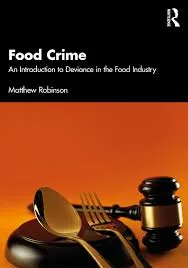
Food Crime: An Introduction to Deviance in the Food Industry

Food Crime: An Introduction to Deviance in the Food Industry

See More Products
From Fresh to Frozen in 3 Minutes Flat: Unlocking the Secrets to Temperature Control Webinar Sponsored by Air Products

Related Articles

  • Storage Bins for Spare Parts

    3 steps to take control of spare parts inventory

    See More
  • SupplyPoint storage

    SupplyPoint solutions help plants and warehouses take control of handheld assets

    See More
  • Beef traceability systems: If not now, when?

    See More

Related Products

See More Products
  • food safety.jpg

    Food Safety in the Seafood Industry: A Practical Guide for ISO 22000 and FSSC 22000 Implementation

  • The 10 Principles of Food Industry Sustainability

  • food-crime.jpg

    Food Crime: An Introduction to Deviance in the Food Industry

See More Products

Events

View AllSubmit An Event
  • April 25, 2013

    Food Plant of the Future: Global Food Safety Impact on Facilities

    On demand SQF 2000, FSMA, ISO 22000/PAS220 and other standards continue to gain traction in an attempt to create safer foods and beverages.
View AllSubmit An Event
×

Stay ahead of the curve. Unlock a dose of cutting-edge insights.

Receive our premium content directly to your inbox.

SIGN-UP TODAY
  • RESOURCES
    • Advertise
    • Contact Us
    • Directories
    • Store
    • Want More
  • SIGN UP TODAY
    • Create Account
    • eMagazine
    • Newsletter
    • Customer Service
    • Manage Preferences
  • SERVICES
    • Marketing Services
    • Reprints
    • Market Research
    • List Rental
    • Survey/Respondent Access
  • STAY CONNECTED
    • LinkedIn
    • Facebook
    • YouTube
    • X (Twitter)
  • PRIVACY
    • PRIVACY POLICY
    • TERMS & CONDITIONS
    • DO NOT SELL MY PERSONAL INFORMATION
    • PRIVACY REQUEST
    • ACCESSIBILITY

Copyright ©2026. All Rights Reserved BNP Media, Inc. and BNP Media II, LLC.

Design, CMS, Hosting & Web Development :: ePublishing