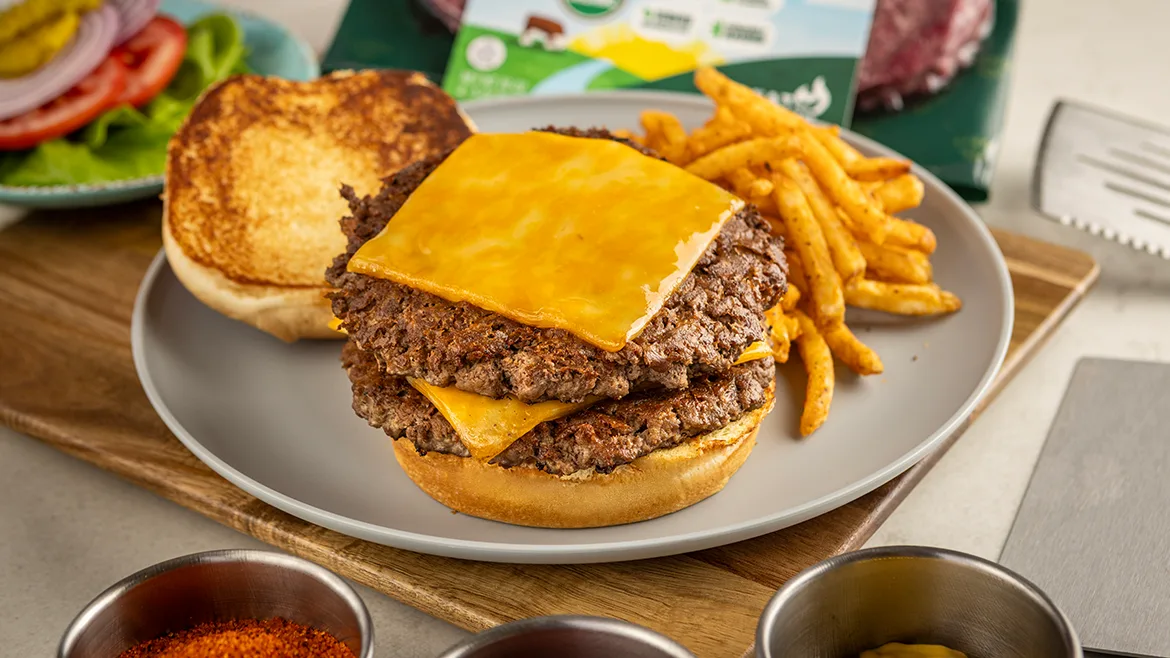
2014 Consumer Trends Report: For the love of protein
Rising meat prices have changed consumer shopping patterns, but meat and poultry remain on the menu.
Newspapers and news Web sites have spent considerable ink (or kilobytes) this year talking about the rising prices of meat and poultry products, and some pundits questioned if there would come a price point where consumers had to stop buying meat altogether. If there is such a cliff, the market hasn’t found it yet.
In reality, consumers bought meat at supermarkets or restaurants as much as they ever have. They may have reallocated their shopping dollars or switched proteins, but they kept meat on the plate more often than not.
“Everything that we see says that demand is holding up, so the consumer wants to buy beef,” says John Lundeen, executive director of market research for the National Cattleman’s Beef Association.
Lundeen disputes the notion that there is a set price where consumers will suddenly stop buying beef. The financial model is not like a cliff, he says. Rather, it’s more like a set of stairs.
“People with lower income are having to be more careful, and they’ll seek out ground beef more often,” he explains. “As you move up the economic scale, people have the wherewithal to have a great steak whenever they want it. As prices go up, you have another percentage of consumer who have to be a little more careful in allocating their dollars.”
The NCBA’s retail sales data shows that Ribeyes and strips remain the two top sellers in the steak category, and foodservice data shows that steakhouses are among the fastest-growing segments. To Lundeen, this information indicates that consumers are still in the mood for a quality steak, even if they can’t afford it quite as often as in the past.
“That’s not trading down or staying out,” he adds. “They’re staying in the category, carefully allocating their dollars to get a great product.”
Pork has seen an increase in prices as well, but John Green, director of strategic marketing for the National Pork Board, says that the demand for pork remains similarly high; there has even been a benefit from the high beef prices.
“As consumers have traded down, they can find pork to fit some of their needs at a more convenient price point,” he says. “For example, trading a New York strip steak for a New York chop. They both work very well on the grill, and the eating experience, while different, is still something that most meat-eaters would find very satisfactory.”
Michael Uetz, president of Midan Marketing, says that his company’s research has indicated that some consumers have switched between proteins, with chicken and pork picking up some of the sales from beef. Ground beef, too, has increased in sales among consumers who traded down within the beef category. Uetz also notes that more consumers are looking for alternatives within the beef category.
“They’re taking home cuts that aren’t as frequently used, so they’re pretty unfamiliar with them,” he says, pointing to end cuts instead of the middle cuts.
The problem with the unfamiliar cuts of beef is that consumers run the risk of having a bad eating experience because they cooked them improperly. That bad experience results in consumer frustration, because they just spent their steak dollars on a product that they can’t enjoy.
To help alleviate any potential problem, Uetz advocates providing as much information as possible to consumers.
“Do everything you can to ensure that they have success with that product when they get it home,” he says. “That’s something we here at Midan Marketing have always preached. If you’re going to introduce something new to the meat case, you’ve got to tell your customer what’s different about it and why they should pay the price that they’re paying from it.”
That extra information could come in the form of on-pack directions, processor Web sites or information found at the meat case. The butcher, once a labor-intensive job that supermarkets were trying to phase out, may see a resurgence thanks to a renewed interest in butchery.
“The thought of getting more involved in the center-of-the-plate item is something that consumers get really excited about,” Uetz says. “The problem is they can’t fully invest in becoming butchers, so having someone at the meat case who is knowledgeable to help take them a little bit further down the path is something we are seeing more interest in.”
A growing place for poultry
The U.S. Department of Agriculture estimates that total chicken consumption for 2014 at 83.5 pounds per person, which is up about 2.5 pounds since 2009 and 0.4 pounds from last year. That number leads the major proteins, with beef at 53.8 pounds, pork at 45.9 pounds and turkey at 15.6 pounds.
Tom Super, vice president of communications for the National Chicken Council, pointed to a 2014 NCC consumer survey to show the increased demand for chicken.
“The number of meals or snacks that contained chicken eaten by survey respondents in the two weeks prior to the survey was 6.1. This is up from 5.2, or 17 percent, from the 2012 findings,” he says. Millennials, or consumers in the 18-34 range, were the most likely to eat chicken meals or snacks frequently (7.7 times in the survey results).
Per capita domestic consumption of turkey has remained relatively flat, reports Joel Brandenberger, president of the National Turkey Federation. However, the share of the consumer dollar going to turkey has increased.
“What that tells you is that we’ve got members out there that are developing turkey cuts and product lines that consumers are getting excited about, and they’re willing to pay a little more for them,” he says.
While the fourth quarter of the year is still the turkey industry’s peak time, less than one-third of all turkey consumed during the year comes from whole birds sold during the holiday times. Consumers, therefore, are finding reasons to eat turkey throughout the year.
Turkey’s health claims still resonate with the public, but taste is an important factor in any purchase.
“One of the exciting things that is happening is that not only are new product lines being introduced, but you’re seeing the evolution of some existing product lines,” Brandenberger says.
Turkey breakfast sausage has been a popular item in both the foodservice and retail segments, and there are more varieties than ever, from pre-cooked sausages to maple-flavored patties to sausage crumbles. For the other meals, there are turkey brats, patties, corn dogs, franks and even a white-meat only frank. Many items come ready to cook or fully cooked for added convenience.
“We know we can’t just rest on the health laurels. We have to have things that people want to eat,” Brandenberger notes.
Comfort foods
While many consumers are eager to try out a new entrée, there is an unmistakable satisfaction in turning back to an old reliable meal. Many restaurants will try to capitalize on those comfort food favorites as they update their menus.
US Foods, one of the nation’s largest food distributors, chose “Fall Homecoming, a Celebration of Culinary Traditions” as the theme of its fall menu. Sylvia Wolf, senior vice president, center of the plate at US Foods, said that the theme was chosen to recognize the role that restaurants play in creating and carrying on family traditions. The products in the line include everything from craft sodas and potato chips to a gastro pub favorite like its Chef’s Line Braised Short Ribs.
“Meat products fit into the Fall Homecoming program by meeting the criteria of being authentic, seasonally appropriate and offering value to the operator,” Wolf explains. “Our Chef’s Line Pat LaFrieda All Natural sausages and meatballs are made with all-natural ingredients. They contain authentic Old World spice blends and coarse-ground meat.”
Also on the menu from US Foods are the Metro Deli All-Natural Smokehouse Uncured Ham, a whole-muscle product that is open rack-smoked with hickory chips.
“Cold weather comfort foods like braised short ribs, roast chicken and pork belly will remain a growth opportunity,” she adds. “Regional favorites such as pulled pork, fried chicken and bratwurst now play on the national stage and are being reinvented into new menu offerings such as pulled pork poutine.”
Super notes that the tight beef supply and high prices have opened up opportunities in all areas of the foodservice sector for chicken.
“Where those opportunities will come from will probably build on success of the past, rather than new products,” he says, pointing to affordable gourmet sandwiches with whole-muscle breast portions, new flavors of dinner or breakfast chicken sausage or a meatloaf made with ground chicken.
Wolf also pointed out that chicken for breakfast has grown 20 percent over the last four years, and the foodservice sectors will continue to explore the use of chicken as well as beef for new breakfast dishes. She notes chicken apple sausages and chicken and waffles as two breakfast dishes gaining in popularity. Chick-fil-A is featuring a chicken and waffle dish as part of a limited-time breakfast menu being tested in select areas of the country.
The bacon craze, while not at the fevered pitch of a couple years ago, is still firmly in place. Green points to the growing number of bacon festivals as a reflection of the consumer’s enthusiasm. The National Pork Board has also seen an increase at the foodservice level in pork shoulder, which is used for pulled pork.
“Bacon has a unique flavor, and barbecued pork has a unique flavor, so it makes sense that there is some linkage,” he explains, “that the flavor profile the pork offers is being discovered by people as they look for something beyond bacon.”
Barbecue, which is largely a pork category, has had regional appeal, but it is starting to show up in unexpected places, like the center of a major Wendy’s campaign. The restaurant chain recently added three new items to its menu for a limited time: BBQ Pulled Pork Sandwich, BBQ Pulled Pork Cheeseburger and BBQ Pulled Pork Cheese Fries. Given the regional differences among BBQ lovers, Wendy’s offered a choice of three custom-crafted sauces – Sweet, Smoky or Spicy – to fit consumers’ personal barbecue style.
A new look at an old diet
For years, consumers have been told by their doctors that a low-fat diet is the best diet. Years of that advice helped to stigmatize red meat, whole milk and cheese, to name a few. However, a renewed focus on fat has, for the first time in a long time, put meat on the positive side of the health debate.
Nina Teicholz’s book The Big Fat Surprise: Why Butter, Meat & Cheese Belong in a Healthy Diet takes a critical look at just how the low-fat diet became the accepted “healthiest diet.” The book’s success may not have completely changed the health discussions taking place in doctor’s offices around the country, but it has at least raised the possibility that a bacon cheeseburger can now be eaten without the typical side of guilt.
Consumers are also beginning to appreciate the healthful qualities of red meat and poultry. Green says that the NPB has conducted a number of consumer focus groups over the last 12 months, and participants are much less concerned about fat than they have in the past.
“We hear a great deal more positive mentions or positive stories about the need for protein, and not as much concern for the fat that might come along with that protein,” he says.
The health trends that NCBA’s Lundeen have noted include the increased interest in protein, as well as an interest in lowering calories.
“A great thing about beef is that you can get great protein for a relatively low number of calories,” he says, adding that the beef industry has removed a considerable amount of fat from the product for those who still prefer the low-fat diet.
“We’re lower fat than we’ve already been,” he adds. “I think this discussion is just starting, but we love this dialogue of ‘Should you be as fat phobic as in the past?’”
Uetz says that the meat industry will be challenged to get its healthful message out to consumers, particularly since products like yogurt are already touting the amount of protein that they contain.
“I don’t think that, if you asked 10 consumers, you could get even half of them to say the best source of protein is going to be meat,” he says. “It’s a challenge for the industry and one that we have to work on — we’ve got iron, B vitamins and a whole host of other things that consumers look for and take supplements for, but they could get it naturally through the consumption of our product.”
Looking for a reprint of this article?
From high-res PDFs to custom plaques, order your copy today!