Provisioner logo
Provisioner logo
search
cart
facebook twitter linkedin youtube
  • Sign In
  • Create Account
  • Sign Out
  • My Account
Provisioner logo
Provisioner logo
  • NEWS
    • Industry News
    • Supplier News
    • Case Studies
    • Recalls
    • Regulations
    • New Consumer Products
  • EXCLUSIVES
    • Newsletters
    • Source Book
    • Sponsored Insights
    • Events
    • Webinars
    • Classifieds
    • White Papers
    • Provisioner Store
    • Market Research
  • MEAT PROCESSING
    • SUSTAINABILITY
    • Processing
    • Packaging
    • Ingredients
    • Formulation
    • Food Safety
    • Special Reports
    • Commentary
  • PROFILES
    • Processor Profiles
    • Processor of the Year
    • Top 100 Processors
  • MEDIA
    • Videos
    • Podcasts
  • DIRECTORY
  • MIHOF
  • INDEPENDENT PROCESSOR
  • EMAG
    • eMagazine
    • ARCHIVE ISSUES
    • Contact
    • Advertise
  • JOIN!
Meat and Poultry Industry News

FSIS issues public health alert for pork due to possible Salmonella contamination

By Industry News
August 3, 2015

The U.S. Department of Agriculture’s Food Safety and Inspection Service (FSIS) is issuing a public health alert due to concerns about illnesses caused by Salmonella that may be associated with pork products, specifically whole pigs used for pig roasts.

FSIS was notified of Salmonella illness clusters (groups of illnesses) on July 15, 2015. FSIS suspects that there is a link between the illnesses associated with whole pigs used for pig roasts and eight illness clusters based on information gathered in conjunction with the Washington State Department of Health and the Centers for Disease Control and Prevention (CDC). Case-patients have been identified in Washington with illness onset dates ranging from April 25, 2015 to July 21, 2015.

This investigation is ongoing. FSIS continues to work with the Washington State Department of Health and the CDC on this investigation. Updated information will be provided as it becomes available.

Roasting a pig is a complex undertaking with numerous potential food handling issues. FSIS urges consumers to keep the four food safety steps in mind: Clean, Separate, Cook, and Chill.

  • CLEAN: Obtain your pig from a reputable supplier. Have the supplier wrap it in plastic, or a large plastic bag to contain the juices. Keep the pig cold until it is time to cook it. If you can’t keep it under refrigeration or on ice, consider picking it up just before you are ready to cook it.
  • SEPARATE: Anything that comes into contact with whole pig should be washed with hot soapy water afterwards. This includes hands and utensils.
  • COOK: FSIS recommends that all pork products are cooked to a minimum internal temperature of 145º F with a three minute rest time. Make sure to check the internal temperature with a food thermometer in several places. Check the temperature frequently and replenish wood or coals to make sure the fire stays hot. Remove only enough meat from the carcass as you can serve within 1-2 hours.
  • CHILL: Once the meat is cooked, transfer to clean serving dishes. Pack leftovers in shallow containers and refrigerate within 1-2 hours. It is not necessary to cool before you refrigerate it.

FSIS advises all consumers to safely prepare their raw meat products, including fresh and frozen items, and only consume pork products (such as pork roast or tenderloin) that have been cooked to a minimum internal temperature of 145° F with a three minute rest time. The only way to confirm that whole pigs are cooked to a temperature high enough to kill harmful bacteria is to use a food thermometer that measures internal temperature.

Source: FSIS

KEYWORDS: FSIS pork Salmonella

Share This Story

Looking for a reprint of this article?
From high-res PDFs to custom plaques, order your copy today!


Recommended Content

JOIN TODAY
to unlock your recommendations.

Already have an account? Sign In

  • A cow eating grass and a chicken standing next to it in a field.

    The Top 100 Meat & Poultry Processors of 2026

    The 2026 Top 100 Meat & Poultry Processors highlights...
    Processor Profiles
    By: Fred Wilkinson
  • Breaded chicken nuggets on a white plate.

    Food safety programs prioritize prevention, verification, and traceability

    Across processing operations, food safety strategies are...
    Food Safety
    By: Sammy Bredar
  • An open double cheeseburger on a white plate, the top bun beside it, along with a side of seasoned fries.

    How convenience is driving summer grilling innovation in 2026

    Demand for high-quality, convenience-driven formats...
    Meat and Poultry Industry News
    By: Sammy Bredar
You must login or register in order to post a comment.

Report Abusive Comment

Manage My Account
  • eMagazine Subscriptions
  • Manage My Preferences
  • Newsletters
  • Online Registration
  • Subscription Customer Service
  • Connect with The National Provisioner

More Videos

Sponsored Content

Sponsored Content is a special paid section where industry companies provide high quality, objective, non-commercial content around topics of interest to the The National Provisioner audience. All Sponsored Content is supplied by the advertising company and any opinions expressed in this article are those of the author and not necessarily reflect the views of The National Provisioner or its parent company, BNP Media. Interested in participating in our Sponsored Content section? Contact your local rep!

close
  •  two individuals standing by a farm gate
    Sponsored byPIC

    When PRRS Hits Home: The Chinn Family’s Story and a Hopeful Future

  • A smiling man carrying a grocery basket is reaching down to pick up a package of meat in a grocery store.
    Sponsored byPIC

    The Green Light: New Data Shows 12-to-1 Support for Pork from PRRS-Resistant Pigs

  • Close up of a grocery cart full of groceries, a cropped image of a couple pushing the cart and a blurred background of the vegetable aisle.
    Sponsored byPIC

    New Market Research Finds Consumers in Eight Key Pork Markets Are Likely to Purchase Pork from Gene-Edited Pigs

Popular Stories

Butchers processing hanging beef carcasses in meat processing plant

Meat Institute says meatpacking industry restructuring won’t lower beef prices

JBS USA logo

JBS USA closing pair of processing facilities

Kroger logo

Kroger to acquire Giant Eagle for $1.65B

2026 Top 100 Meat & Poultry Processors Report

Events

July 16, 2026

Strengthening Food Safety Plans for Modern Processing Operations

The live webinar will explore the latest technologies, emerging risks, and practical strategies shaping food safety programs across meat and poultry processing operations. Attendees will hear from industry experts on key challenges impacting processors today, along with approaches for strengthening and updating food safety plans across their facilities.

January 1, 2030

Webinar Sponsorship Information

For webinar sponsorship information, visit www.bnpevents.com/webinars or email webinars@bnpmedia.com.

View All Submit An Event

Products

Food Crime: An Introduction to Deviance in the Food Industry

Food Crime: An Introduction to Deviance in the Food Industry

See More Products
The National Provisioner 2026 Food Safety Report

Related Articles

  • USDA's FSIS logo

    FSIS issues public health alert for raw pork chorizo products due to possible foreign matter contamination

    See More
  • hawaii-big-island-beef.png

    FSIS issues public health alert for ground beef products due to possible E. coli O157:H7 contamination

    See More
  • newsbriefs

    FSIS issues public health alert for RTE entrees due to possible Listeria monocytogenes contamination

    See More

Related Products

See More Products
  • salmonela.jpg

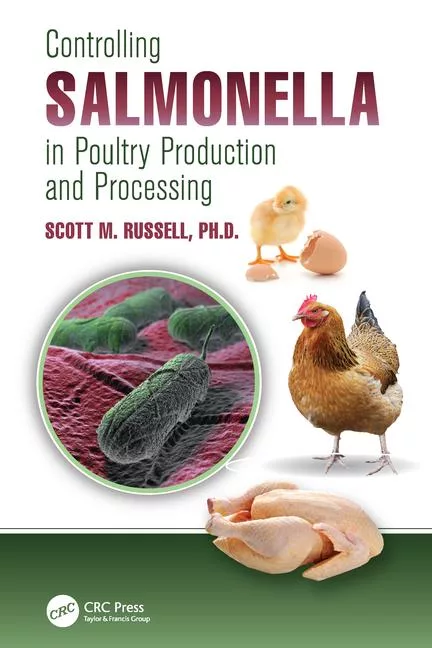
    Controlling Salmonella in Poultry Production and Processing

  • Handbook of Food Products Manufacturing: Health, Meat, Milk, Poultry, Seafood, and Vegetables, Volume 2

  • food safety.jpg

    Food Safety in the Seafood Industry: A Practical Guide for ISO 22000 and FSSC 22000 Implementation

See More Products

Related Directories

  • National Pork Board

    The U.S. pork industry has had a 100 percent legislative checkoff program since 1986. Congress created the Pork Checkoff as part of The Pork Promotion, Research and Consumer Information Act of 1985. Pork producers had requested the legislation so they could take advantage of having all producers and importers participate in a checkoff program designed to strengthen the position of pork in the marketplace.
×

Stay ahead of the curve. Unlock a dose of cutting-edge insights.

Receive our premium content directly to your inbox.

SIGN-UP TODAY
  • RESOURCES
    • Advertise
    • Contact Us
    • Directories
    • Store
    • Want More
  • SIGN UP TODAY
    • Create Account
    • eMagazine
    • Newsletter
    • Customer Service
    • Manage Preferences
  • SERVICES
    • Marketing Services
    • Reprints
    • Market Research
    • List Rental
    • Survey/Respondent Access
  • STAY CONNECTED
    • LinkedIn
    • Facebook
    • YouTube
    • X (Twitter)
  • PRIVACY
    • PRIVACY POLICY
    • TERMS & CONDITIONS
    • DO NOT SELL MY PERSONAL INFORMATION
    • PRIVACY REQUEST
    • ACCESSIBILITY

Copyright ©2026. All Rights Reserved BNP Media, Inc. and BNP Media II, LLC.

Design, CMS, Hosting & Web Development :: ePublishing