Processing Tech
Find the sweet spot: Marinated meat and poultry
As the prominence of meat and poultry with marinades increases, the importance of leveraging the most efficient operating technologies becomes crucial.
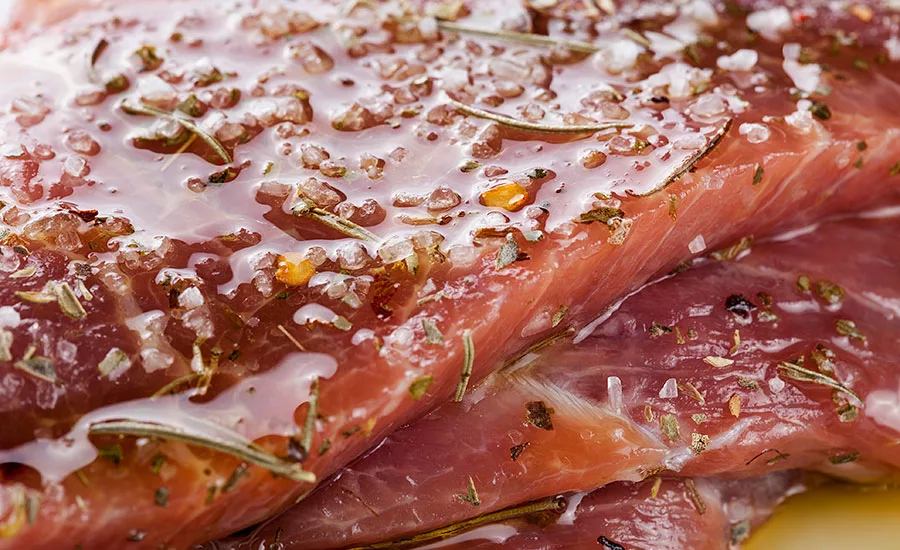
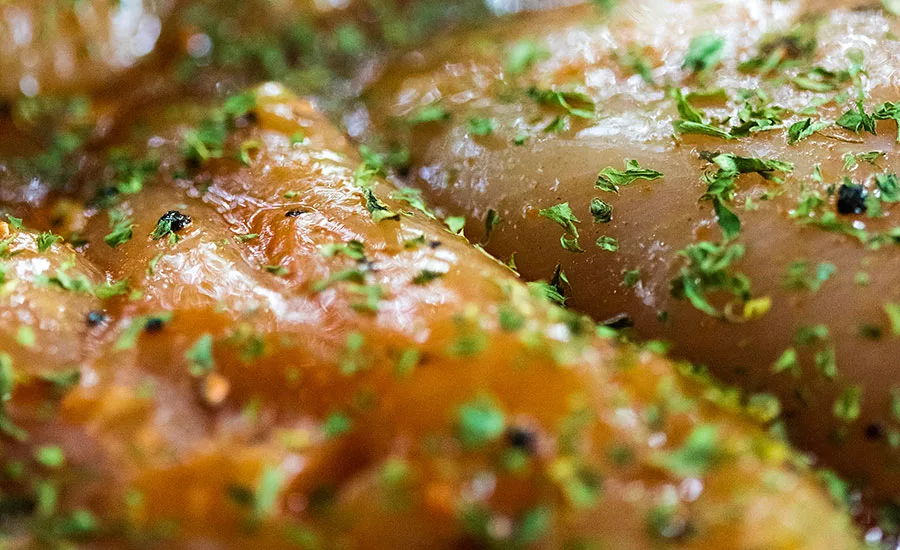
Marinated meat and poultry is becoming more popular and lucrative for processors and retailers.
Sales volume for marinated/seasoned offerings is up 4.1 percent for the 52 weeks ending Oct. 1, 2016, reports Nielsen Fresh, a Chicago-based fresh foods consulting and research firm.
While large meat and poultry inventories contributed to an average category retail price decline of 5.4 percent over the last year, the healthy demand for marinated/seasoned offerings led to a category price decrease of just 1.7 percent, Nielsen Fresh notes.
Marinated/seasoned items have an average retail price of $4.29, compared with $3.19 for non-marinated proteins.
Forty-one percent of shoppers, meanwhile, say they sometimes or frequently purchase value-added meat and poultry, up from just 23 percent in 2015, notes the Power of Meat 2016 report. The Power of Meat is published by the Arlington, Va.-based Food Marketing Institute (FMI) and the Washington, D.C.-based North American Meat Institute (NAMI).
Fueling the increasing interest in marinated offerings are such factors as the greater focus by Millennials and other population groups on different flavor profiles; the growing popularity of ethnic foods with valued offerings, such as pre-marinated fajita meat; the greater need for speed and convenience in preparing meals as the economy recovers; and a quest for protein variety, the reports note.
While value-added accounts for a small percentage of overall meat and poultry activity — about 6.7 percent of total pound and 8.6 percent of total dollar sales in 2015 — its 6.4 percent annual growth was slightly faster than that of overall meat and poultry sales, according to the Power of Meat 2016.
A focus on flavor
Pork is among the most prominent marinated categories, with value-added items accounting for 9.3 percent of sector sales volume in 2015, the report shows.
Also in demand are value-added beef (accounting for 8.9 percent of total beef sales volume); lamb (6.9 percent); turkey (6.6 percent) and chicken (4.3 percent).
Value-added activity, meanwhile, is most prevalent in the relatively small veal category, accounting for 13.8 percent of total pound sales.
Among the more than 700 meat and poultry manufacturers that Nielsen Fresh tracks, 168 produced marinated/seasoned items last year, up from 158 in the prior 52-week period.
“Offering marinated/seasoned meats is a phenomenal way for processors to differentiate their offerings from conventional and traditional commodity meats,” says Mikael Olson, Nielsen Fresh associate client director. “Suppliers are doing it because it makes business sense. While many consumers want a home-cooked meal, they are demanding convenience in preparing their meats without sacrificing flavor and are willing to pay more for it.”
Many shoppers also seek a range of flavors.
Selections becoming increasingly popular include smoked bacon, garlic herb and Italian options, such as Milanese and Tuscan, Olson notes, while demand is declining for bourbon, barbecue and original marinades as more consumers focus on novel offerings.
Valued-added chicken, for instance, will likely include more fruit-based marinades along with Mediterranean, Asian and Southwest flavors, says Tom Super, vice president of the Washington, D.C.-based National Chicken Council (NCC).
Processors also will look to leverage the popularity of bone broth by adding such marinades to poultry offerings, he notes.
Ease is of the essence
“Consumers want more convenience in their prepared foods,” Super says, noting that in addition to processors and retailers marinating proteins, manufacturers will develop products that enable consumers to easily marinate their proteins at home.
“Steam-in-the-bag vegetables continue to grow in the frozen food category and transferring the technology to marinated chicken products will require a bit of a breakthrough but it will happen,” Super states. “Households with two working parents don’t want the fuss, mess and time that can be involved in preparing regular marinated foods.”
Among chicken parts, Super says more dark-meat products will carry marinades as boneless/skinless chicken thighs grow in popularity.
“Using marinades is an excellent way to extend the reach of chicken,” he notes. “And as in other food categories, there is an increasing desire by consumers to purchase products with simple and good-for-you ingredients.”
In addition to offering newer and larger varieties of marinades, more processors also are concentrating on launching value-added proteins with cleaner labels in response to greater shopper awareness about the ingredients in their foods, says Zack Levenson, chief operating officer of Golden West Food Group Inc., a Vernon, Calif.-based producer of marinated meat, poultry and other proteins.
While he says such flavors as traditional steakhouse, teriyaki and garlic peppercorn will remain popular, Levenson says Indian and Asian “seem to be the latest trend in this arena” and “cleaner, fresher and better tasting marinades” will be the wave of the future.
“Consumers also appreciate premium quality,” says Brett Erickson, director of value-added products for Wooster, Ohio-based Certified Angus Beef LLC. “Processors should start with high-quality beef and bring out its natural flavor with simple seasonings.”
Consider the consequences
Injecting marinades into proteins in lieu of tumbling, meanwhile, will likely remain the most popular marinating procedure because it enables the most consistent delivery of flavor throughout the meat, Erickson says.
Though injection machines can be more costly to operate than tumblers, “the benefits, especially for higher price point chicken products, more than offset the higher equipment expenses,” Super says.
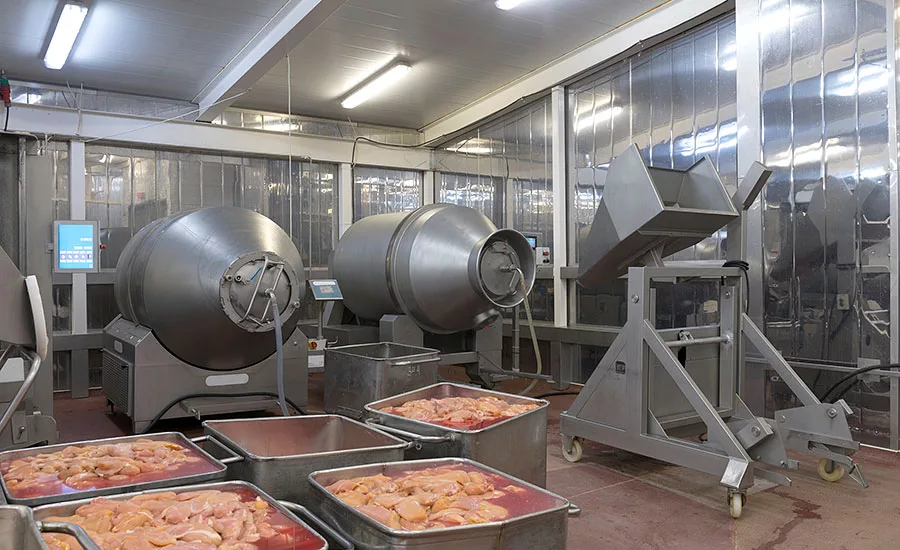
While most processors use injection as their main form of marinating, some still rely on tumbling and others combine the processes, says Christine Alvarado, associate professor in the Department of Poultry Science at Texas A&M University in College Station.
Tumbling, for instance, enables processors to effectively distribute spices throughout proteins when they are unable to include the seasonings in liquid marinades, she notes.
Herbs and spices such as oregano, pepper and basil can clog needle holes during injection and prevent the efficient distribution of marinades, Alvarado says.
“Flavors that processors attempt to inject into proteins must be non spice,” she says. “With vacuum tumbling, however, operators are able to penetrate the meat structure with spices and also coat the outside of products to get a nice appearance of color and spice blends while not affecting the penetration of marinades into meat.”
Contributing to the popularity of injections, meanwhile, is the ability of processors to break down muscle fibers with the needles for a tenderizing effect, she notes.
But the procedure also can result in food safety issues. Contamination, for instance, may occur when operators introduce pathogens from the surface of a cut to the interior during injection.
While another drawback to injectors is the need for the equipment to typically undergo longer cleanings than tumblers, the process is becoming more efficient with advent of technologies that enable users to easily remove needle heads for sanitizing, Alvarado notes.
Injection systems also enable processors to marinate meat and poultry in a much more efficient manner than tumblers, she says, by allowing operators to continuously run the equipment during the production cycle.
Tumbling requires processors to pause their operations every 20 to 30 minutes in order to remove completed products and add new proteins to the devices, she says.
“One of the greatest benefits of injecting is speed, efficiency and throughput,” says Jeff Sindelar, associate professor and extension meat specialist in the Department of Animal Sciences at the University of Wisconsin in Madison. “While processors can have enough tumbling equipment to enable them to keep up with the pace of injections, doing so will require them to relinquish valuable floor space and take on higher capital equipment costs.”
Protecting product yield
Injectors also are often the best option for increasing processing yield.
While there is a tendency for some marinades to stream out of the newly created holes in meat and poultry following injection, equipment manufacturers are designing technologies to minimize this issue, Alvarado says.
Options include an apparatus that shakes the proteins immediately following injections to help seal the holes.
“Yield and quality are major concerns for all processors from a profitability standpoint,” she says. “Improving the amount of marinades that stay in meat improves yield and the eating experience for consumers. That is especially important for branded products.”
Operators of tumblers also must deal with potential yield and product quality challenges as the technology can cause pieces of meat and poultry to break apart during processing, Alvarado notes.
“There are violent aspects to tumbling which can result in the separation of muscle, skin and other components, including bone,” Sindelar says. “Injecting causes less disruption to the proteins.”
On the positive side, tumbling injected items enables processors to more easily extract proteins from the meat and poultry, which causes larger amounts of marinades to be held in the items, he says. It results in greater yields, lower purge and improved juiciness.
“The tumbling process creates mechanical energy within the piece of meat, cut or muscle,” Sindelar says. “That energy forces protein extractions, resulting in stronger bonding formations which change the muscle structure.”
Tumbling, however, also can have a negative effect on protein texture, resulting in a firmer item and a tougher eating experience for some products, he says.
A technological turn
Equipment maintenance requirements also can vary among systems.
“Injectors require more care and have shorter operational lives as there are more moving parts and pieces,” Sindelar says. “Such elements as needles, pumps and seals require ongoing care as they can more easily wear out, sustain damage or just go wrong, which can impact performance.”
Because of the inherent pros and cons in leveraging each technology, the ideal processing system will use both injectors and tumblers, he says, adding that equipment continues to evolve with automation playing a larger role in operations.
Processors are better able to control tumbling temperatures and speed, as well as the pressure of injection needles, Sindelar says.
Operators also are more readily able to access needles that are the optimal size and density for each specific item, enabling them to equally distribute brine throughout a whole-muscle cut, which adds juiciness and improves product texture, he says.
“With the right equipment, injecting in most cases will outperform tumbling,” Sindelar says. “But tumbling still is a very effective technology for controlling protein extraction. In a perfect situation, injecting and tumbling will be combined, and their use is important as there are more marinades being included in fresh cuts than ever before.” NP
Looking for a reprint of this article?
From high-res PDFs to custom plaques, order your copy today!