Food Safety
Meat and poultry traceability: A languid movement
Despite interest by many shoppers in tracking the sources of meat and poultry, traceability initiatives have yet to gain momentum.
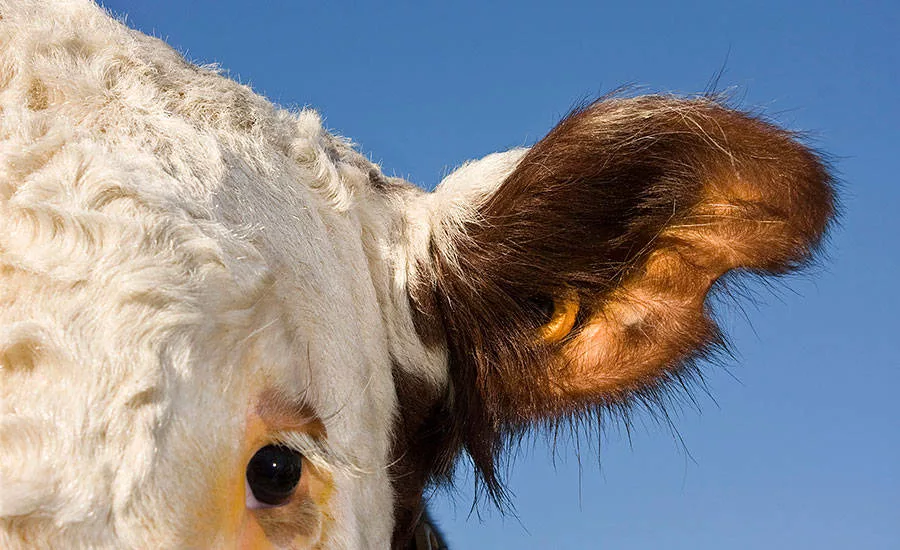
The push toward a far-reaching meat and poultry traceability system in the U.S. is going slowly.
While a base of consumers, producers and retailers indicate interest in tracking and publicizing the sources of proteins, such factors as implementation complexity and cost issues are causing the U.S. to trail other countries in system adoption.
While some initiatives are ongoing, such as the National Pork Board’s Swine ID Plan, it will likely be a lengthy period before the U.S. has widespread traceability activity.
“The size of the U.S. makes it tricky to create national tracking programs,” says Dan Buskirk, associate professor and beef extension specialist at Michigan State University in East Lansing. “Because many other countries are only the size of some U.S. states, it is easier for them to create country-wide systems.”
Yet, with interest in starting or adopting programs increasing, more U.S. operators are on course to leverage traceability systems, Buskirk says, noting smaller producers will likely generate much of the initial activity because they handle less volume, resulting in lower implementation and operating expenses and tracking complexity.
“Though about 80 percent of U.S. beef comes from four major packers, it is still not an easy task to drill down and track a package of meat to a particular production location,” he says. “It will take some time to sort that out.”
A major riddle is determining how much extra consumers will be willing to pay for traceable meat and poultry to compensate for the operators’ investments in tracking systems, Buskirk says.
The question of cost
In a national online survey of 1,360 adults on the importance of tracing the animal that was the source of their meat and poultry, respondents gave an average grade of 3.92 on a scale of one to five, with five being “very important,” notes the 2016 Power of Meat report.
Organic shoppers, who are indicating the most interest, have an average of 4.27. Next are Generation Xers (4.04), Millennials (3.92), Baby Boomers (3.91) and people age 65 and older (3.82).
Yet, because the survey does not indicate the additional cost of retail products with tracing data, it is difficult to determine whether consumers would actually pay more for the items, says Anne-Marie Roerink, principal of 210 Analytics LLC, a San Antonio-based marketing research firm which conducts the annual Power of Meat study on behalf of the Arlington, Va.-based Food Marketing Institute (FMI) and the Washington, D.C.-based North American Meat Institute (NAMI).
“While shopper interest is moderately high in the survey, in-market tests in other countries that are ahead of the U.S. in terms of transparency and traceability show pretty minimal initial and repeat uptake,” she notes.
Nevertheless, Buskirk predicts “a segment of the population will see value and be willing to spend a significant premium to have traceability information. It will enable more retailers to list attributes on product packages and prevent selections from becoming just additional pieces of meat in retail cases.”
On-pack data from traceability initiatives could include the name and location of the meat or poultry producer; indicate whether the items are natural or organic and whether they were sourced from animals that were fed grass; and note whether the producer met animal welfare standards, he says.
Traceable meat and poultry, meanwhile, will probably gain its strongest initial acceptance in the foodservice sector, Buskirk says.
Consumer segments most likely to show interest will include those with higher incomes who already are comfortable paying a premium for the proteins at white tablecloth restaurants and are not affected by spending even more to learn the background and attributes of menu selections, he says.
While supermarket shoppers looking for locally produced foods also are a potentially vibrant user base, Buskirk adds, it will take more than just sporadic consumer interest to trigger program rollouts.
Complexity conundrum
In addition to absorbing the cost of launching and maintaining systems, which depending on size can be tens of thousands of dollars or greater, producers also must have traceability technologies that can accurately track the movement of a plethora of animals and cuts before and following fabrication.
Possible elements include radio frequency identification (RFID) ear tags and two-dimensional (2D) bar code labels, along with paint sticks to mark animals.
“The biggest hurdle is dealing with a complicated supply chain involving many parties,” Buskirk says. “Cattle can potentially change hands several times before it gets to the processor. Because the animal bounces from place to place, all the locations in the production chain need to be tied together with an electronic system.”
It also is difficult to track the multitude of pieces from a single animal, he says, noting “there may be a couple of hundred cuts coming out of one beef carcass and that doesn’t include ground beef, which is another traceability challenge.”
In addition, it is critical for operators to leverage technologies that won’t slow the production process, he says.
“It is often difficult to keep track of batches coming from a very large supplier or farm,” Buskirk says. “It is much easier when there are 40 or 100 head of cattle a day going through a line in a smaller plant rather than the 2,000 that big plants may be dealing with.”
Despite such potential impediments to operator participation, some systems continue to progress.
A pork industry initiative, for instance, is the Swine ID Plan, which was developed in 2004 by the Des Moines, Iowa-based National Pork Board (NPB) to monitor the movement of swine and enable parties to react swiftly in the event of an animal health situation, notes Steve Larsen, NPB assistant vice president of science and technology.
Users can identify pigs individually or as part of a group or lot and track movement to premises or harvest facilities. Records list the animal’s or group’s identification number; the ID of the sending and receiving parties; number of head moved and the reason for movement.
Operators maintain records, which are available to animal health officials, for three years after the swine leave their premises.
Problem with privacy
The procedures can help pinpoint the origin and movement of diseased animals in order to contain outbreaks, Larsen says.
Yet, even with the potential benefits, some operators are reluctant to leverage the Swine ID measures because of perceptions that releasing data on their animals and plants can lead to undesirable consequences, including greater regulatory scrutiny, Larsen notes, adding such an occurrence is “more myth than fact.”
While such beliefs are contributing to sluggish traceability activity in the U.S., tracking meat and poultry is just a component of a much faster growing transparency movement that already drives greater meat and poultry sales, Roerink says. The movement includes identifying products as being organic, natural, antibiotic free, hormone free and grass fed, she says.
“It is very important to provide shoppers with a level of transparency that helps build the trust level between the shopper, the store and the producer,” Roerink says. “Trust drives loyalty, which in turn drives repeat spending.”
Traceability, meanwhile, will add to that trust and is in position to accelerate after major operators begin leveraging systems, Buskirk says.
“Adoption will be slow and it will start with the smaller processors,” he says. “But once a program from one of the big operators begins to take hold, it will drive other meat and poultry companies to launch initiatives as well.” NP
Looking for a reprint of this article?
From high-res PDFs to custom plaques, order your copy today!