2017 Food Safety Report
Food safety apparel: Wear it well
Requiring workers to wear sanitized apparel while guarding the garments from contaminants is crucial for enhancing food safety in meat and poultry plants.
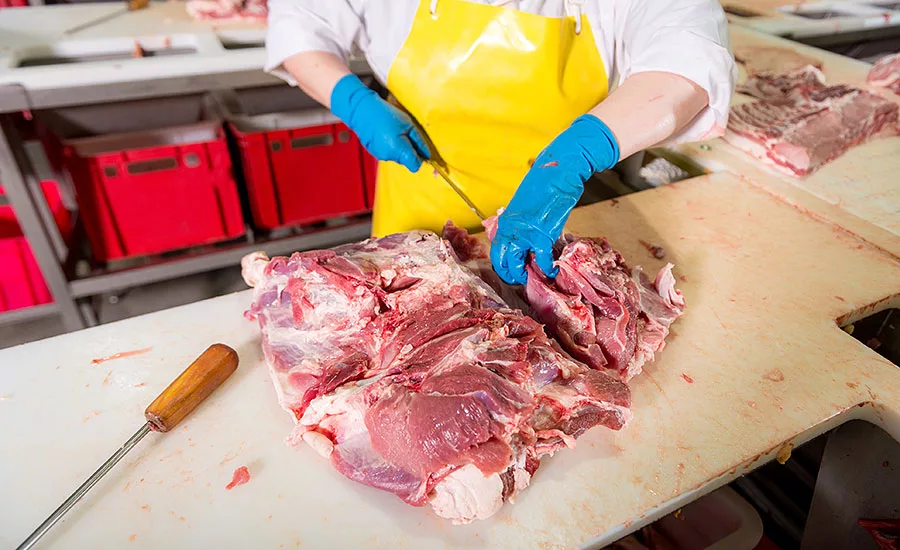
Apparel can be a powerful enemy in the battle to contain pathogens in meat and poultry facilities.
Because worker garments often harbor bacteria, it is vital for plant managers to aggressively combat the threat of food contamination by leveraging the optimal attire and operating procedures.
That includes preventing employees from working in bacteria-strewn street clothes during their shifts.
By neglecting to change from contaminated apparel into sanitized outfits when arriving at facilities, or by wearing uniforms with contaminants as they move within production areas, workers are ripe candidates for triggering foodborne illnesses.
“It is very important that there is no cross-contamination in plants by making sure that the employees’ work apparel and footwear is not worn outside buildings and that their work garments are not only clean, but sterilized,” says Gary Ades, president of G&L Consulting Group LLC, a Bentonville, Ark.-based food safety consulting firm.
To help meet such objectives, plant operators often have regulations that govern how workers can dress on the job, while also providing apparel that are less likely to harbor pathogens, such as garments that are free of crevices, grooves and seams.
The most effective apparel is made of plastic or rubber, says Hal King, chief executive officer of Public Health Innovations LLC, a Fayetteville, Ga.-based public health consulting firm.
“Because pathogens can grow inside the material, it is best to avoid anything that is made of fabric,” he says.
Adopt a cleanliness mindset
While many operators require employees to change into company-supplied sanitized outfits when arriving for their shifts, and to remain in designated work areas, others are less vigilant.
“You wouldn’t want anyone going into a child’s room in a hospital after visiting another patient who was sick with a contagious disease,” King says. “Yet some plants allow workers to do their jobs and then move from place to place within facilities in contaminated outfits.”
In some instances, workers who are exposed to bacteria in raw meat areas are entering, and possibly spreading pathogens, in ready-to-eat sections of plants, he says. While cooking typically kills bacteria in raw meats, consumers usually do not subject ready-to-eat meals to high temperatures.
“Most plant operators typically know what needs to be done to prevent contamination, but it boils down to whether they have the desire and resources to take the proper steps,” Ades says. “But food recalls are extraordinarily expensive. You don’t usually lose money by doing the right things.”
Keeping apparel free of bacteria, however, can be arduous, as opportunities for contamination abound.
Many poultry plant workers, for instance, have their own backyard flocks, which raises the potential for transferring avian influenza and other diseases into facilities via their clothing, Ades says.
To help combat such bacterial threats, operators can provide locker rooms where workers change into the appropriate garments prior to their shifts, King says.
“The best apparel doesn’t have porous stitching,” he says. “Any clothing that is worn in wet environments where there is splashing exposes the outfits to pathogens. In such instances, it is best to use rubberized, plastic or smooth outfits that can be cleaned and sanitized as needed, even when workers are still wearing the items.”
One and done
While plant operators also can help reduce the spread of bacteria by having workers wear single-use disposable items, there is a temptation for the employees to wear contaminated apparel on multiple occasions if there are no visible signs of corruption, King says.
“That defeats the purpose of having single-use apparel, but a lot of disposables are very costly, particularly if they are made from plastic,” he says. “Disposables are a way to throw away germs, but managers must monitor that workers are using the clothes effectively.”
Gloves made of metal mesh to protect hands also should be treated as potentially potent sources of pathogens, he says.
“The mesh can harbor bacteria which can be transferred to food if they are not properly cleaned and sanitized,” King says. “As a result, many companies will require workers to wear rubberized gloves on top of the cutting gloves.”
Footwear, meanwhile, creates additional food safety and sanitizing issues.
“Employees who wear their street shoes into facilities can transfer bacillus cereus, which cannot be killed with heat,” he says. “It is very resistant and will require plants to use steam sterilization.”
Slip-proof boots with deep grooves and ridges on soles also are difficult to clean and sanitize, Ades says, noting astute operators will require workers to leverage foot baths at the start of shifts.
In fact, King says some plants have boot washes in doorways that cover the length of entrances, making it impossible for employees to enter work areas without sanitizing.
“Because Listeria is common in soil, it is important that attention is paid to shoes,” adds Benjamin Chapman, associate professor and food safety extension specialist in the Department of Agricultural and Human Sciences at North Carolina State University in Raleigh. “But many people don’t think of footwear as prime sources for picking up pathogens.”
While some plants just require employees to wear covers over their street shoes, King notes that such a measure is typically inadequate.
“It doesn’t take much to contaminate a facility,” he says.
Carrying challenges
In addition, operators frequently overlook the potential of hard hats as sources of contaminants, Ades says, noting they “rarely get cleaned,” and also allow workers to go too long before changing contaminated gloves during the work day.
While proper sanitizing of such apparel is critical for eliminating pathogens, plant operators can further enhance worker and food safety by leveraging more functional apparel materials and designs.
Some elements in apparel, for instance, can trigger allergic reactions, such as latex in gloves or cleaning residue on clothing, while removing buttons and pockets from shirts reduces the possibility of objects falling into proteins during production, Ades says.
It also is critical that apparel intended for use in cold environments is warm enough to discourage workers from also wearing sweaters and other personal clothing under outfits, he says. Such items can be difficult to clean and have fibers that attract pathogens.
To further prevent food contamination, workers should have access to a wide array of protective gear, Ades says. That includes hairnets and beard nets — also known as snoods — to guard against the bacteria in hair follicles.
Tell it like it is
Plant operators, meanwhile, can help ensure employees follow proper sanitary measures by explaining the benefits to them.
“Everyone wants to be respected and telling workers why the use of clean apparel is important makes them feel good and creates a halo effect in which they perform better with less plant turnover,” Ades says. “When you teach people why they should do something, it is more likely they will follow through.”
Such explanations also can detail how a plant might lose business if worker apparel is unsanitary.
Potential customers often audit meat and poultry plants to ensure the suppliers follow good manufacturing practices, which include a focus on cleanliness, Ades says.
“If a plant can’t provide fresh clothing to workers, they should at least furnish a smock or other covering,” he says. “But that would not be the greatest plant to buy products from.”
Facility managers also need to make it as easy as possible for employees to follow guidelines, Chapman adds.
“That includes making sure all plant-issued apparel is clean, always available and easily accessible,” he says.
A wonderful world of color
To further reduce the spread of pathogens, King recommends color coding outfits.
People who work with raw meat, for instance, might wear yellow apparel so they can be easily identified and prevented from entering areas in which they might contaminate proteins, such as ready-to-eat rooms.
“It gives operators a way to take corrective action,” King says. “The color also can indicate the type and amount of disinfectant that should be applied to specific items.”
To verify the apparel is being cleaned adequately, operators can routinely swab items and analyze microbiological cultures, he states.
“Apparel made of any sort of fabric has the potential to harbor pathogens,” Chapman says. “Correct laundering greatly reduces the risk of contamination. That includes the threat of salmonella, which workers may transfer when purge from meat is splashed on clothing.”
With apparel playing a huge role in food safety, manufacturers of garments continually focus on product improvements, King says, adding that future designs will likely include “smart” items, such as clothing that turns color when it comes in contact with contaminants or is ready for laundering.
Also on the horizon is the launch of new antimicrobial spray options containing metal that can coat apparel for greater resistance to pathogens, he says.
“Apparel can play a very significant role in transmitting pathogens from one place to another, especially if workers touch the corrupted materials with their hands. It doesn’t take much to contaminate a facility,” King says. NP
Looking for a reprint of this article?
From high-res PDFs to custom plaques, order your copy today!